The Byzantine Cat (2002): A Gentle Romance Set Against the Landscapes of Cyprus
The Byzantine Cat follows a young journalist (Jaime Murray) whose trip to Cyprus takes an unexpected turn when she meets circus performers, explores a mysterious cat monastery, and finds romance along the way.
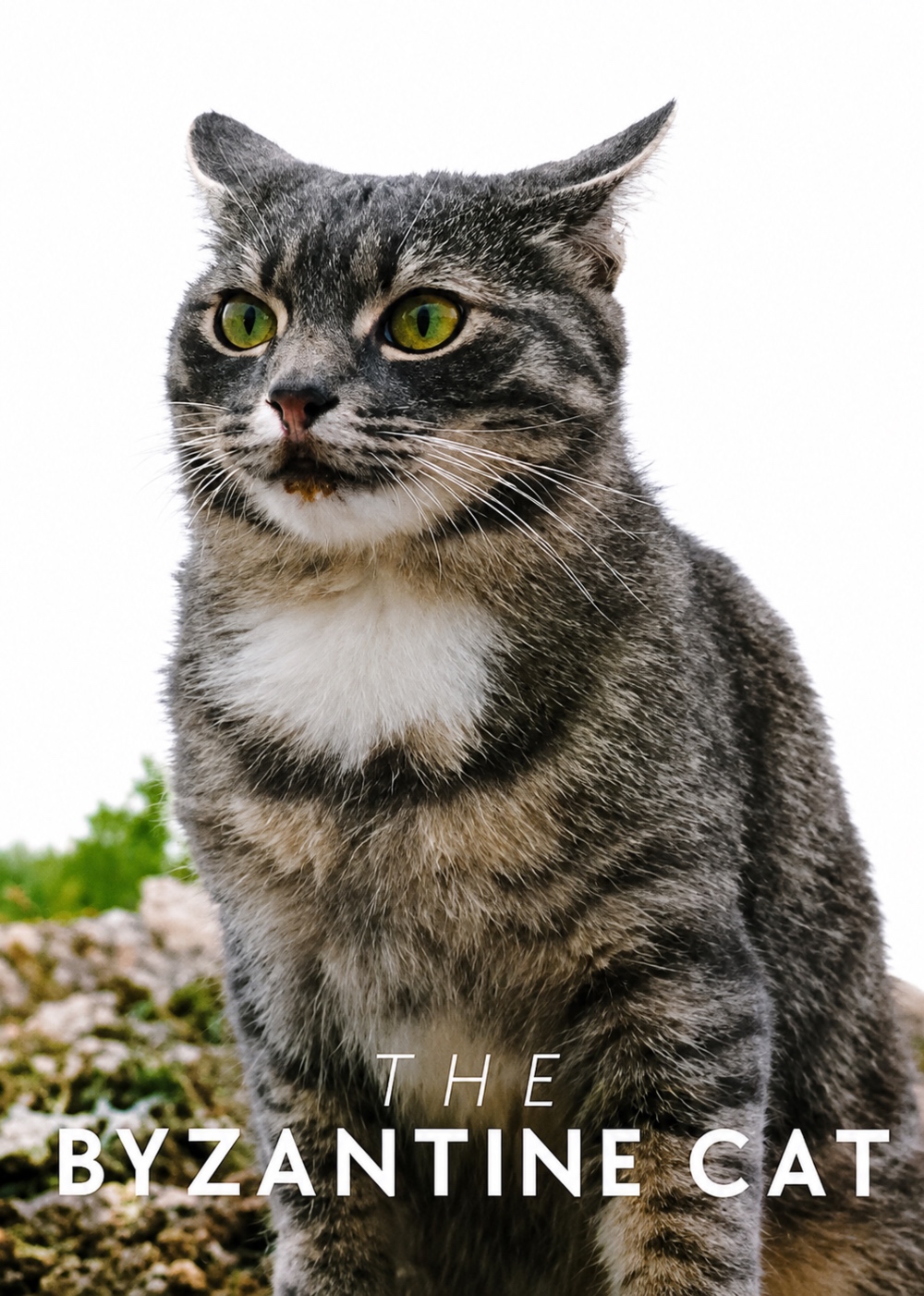
The Byzantine Cat
Original title: Ne vse koshki sery
Director: Vsevolod Shilovskiy
Country: Russia
What It’s About
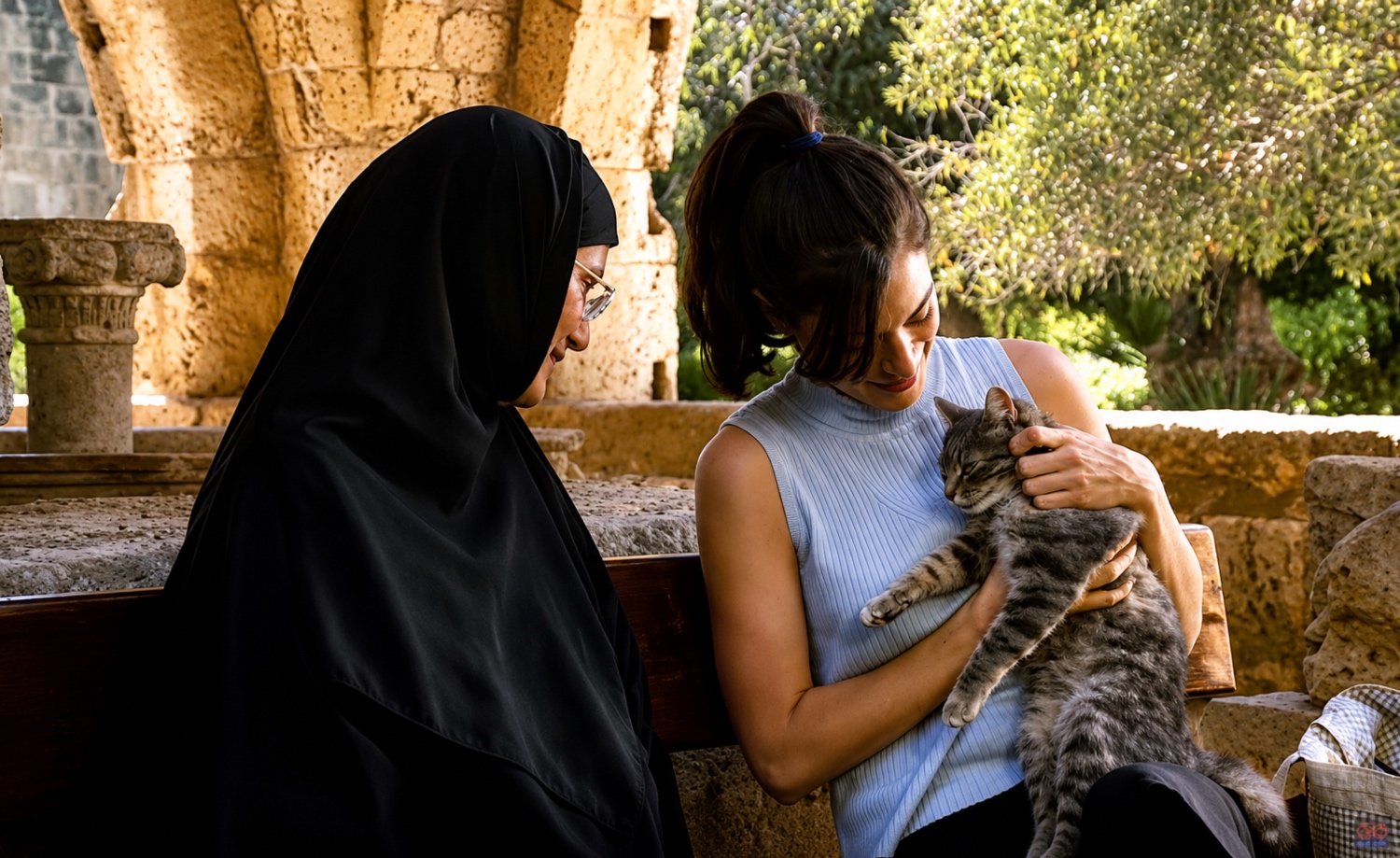
English journalist Jane Spencer (Jaime Murray) travels to Cyprus in search of an interesting story for her next article. During the drive from the airport, her driver tells her about the famous Cats Monastery, where locals believe cats have healing powers and once helped save the island from snakes. Jane immediately sees a possible story and asks him to take her there.
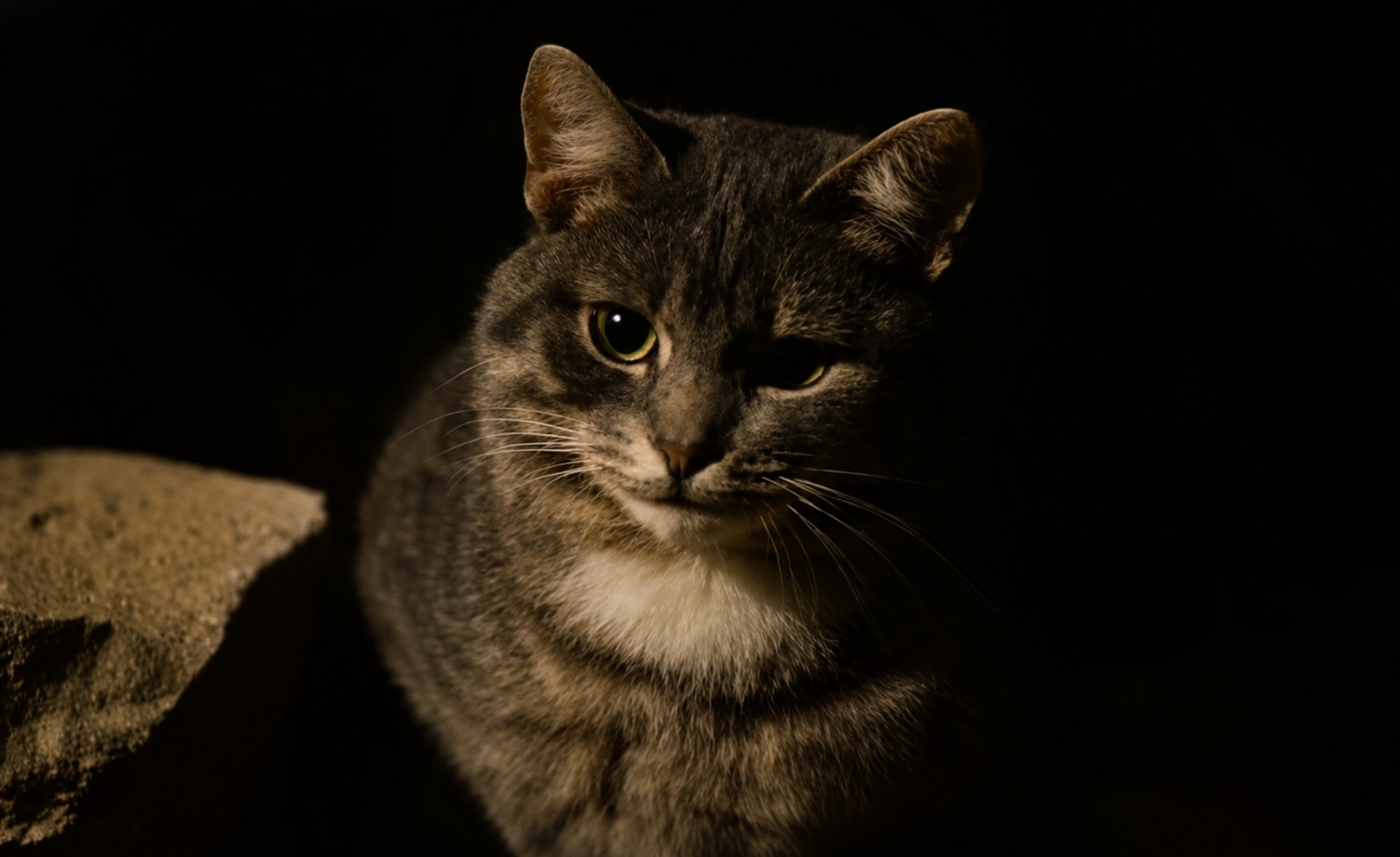
At the monastery, she meets Vesta, a cat who quickly becomes attached to her. Before long, Vesta starts leaving the monastery to spend time with Jane. Could Vesta be her guardian angel? (In Roman mythology, Vesta is the goddess of the hearth and home, a figure associated with protecting domestic life.)
Jane’s stay in Cyprus takes another unexpected turn when a stranger invites her on a boat trip across the sea. The trip ends in disaster, but Jane survives and is taken in by a circus troupe.
Among them is Andre (Vyacheslav Kulakov), a trapeze artist who instantly captures Jane’s attention. Despite having a fiancé, Alex (Craig Henderson), waiting for her in London, Jane falls head over heels in love with Andre. Jane soon starts to question her old life as she feels more at home among the circus performers and the people she has met on the island.
Meanwhile, back home, Alex has also grown distant, and when Jane’s mother (Alexandra Bastedo) becomes worried after not hearing from her, she insists that they both travel to Cyprus to find her.
Through it all, Vesta remains a constant presence throughout Jane’s time in Cyprus, almost as if the cat truly is her guardian angel. Vesta even saves her life at one point.
From the Moscow Art Theater to The Byzantine Cat
Before he directed The Byzantine Cat, Vsevolod Nikolaevich Shilovsky spent decades inside one of Russia’s most respected theatrical traditions. Born in Moscow in 1938, he studied at the Moscow Art Theater School and joined the Moscow Art Theater company in 1961. For the next three decades, the theater remained the center of his professional life. He acted, directed, and taught, and he became one of the many artists shaped by the Stanislavski tradition that placed psychological truth above theatrical display.
In interviews, Shilovsky often spoke about the importance of understanding people from the inside, even when playing characters whose actions were difficult to accept. For him, an actor’s job was not to judge a person on stage or screen, but to discover what made that person behave the way they did.
That background proved helpful throughout Shilovsky’s many film and television roles. He appeared in more than a hundred productions, including Intergirl (1989), The Favorite Woman of Mechanic Gavrilov (1981), and A Military Field Romance (1983). He was rarely the conventional leading man. Instead, he specialized in characters who brought tension, authority, or emotional complexity to a story. His performances often suggested that there was more happening beneath the surface than the script immediately revealed.
But The Byzantine Cat was an entirely different type of animal. Compared with the serious dramas and character-driven stories associated with his career, the film moves through a much lighter and more unusual landscape.
A Different Era of Russian Filmmaking
It feels worlds apart from what Shilovsky had previously worked on, and that’s because it belongs to a different period of Russian filmmaking than the one that shaped him. By the early 2000s, the Soviet cultural system that had supported institutions like the Moscow Art Theater had disappeared. Many artists of Shilovsky’s generation found themselves working in a new environment of television projects, international collaborations, and smaller productions that operated very differently from Soviet studios.
Still, one detail that connects the film naturally to Shilovsky’s previous life is the presence of performers. The Moscow State Circus is not simply a colorful backdrop in The Byzantine Cat; it situates the story among people who live through performance and centers on a subject that has occupied Shilovsky for decades: people searching for connection while playing their roles in life and in front of an audience.
The Real Story Behind the Cats of Cyprus
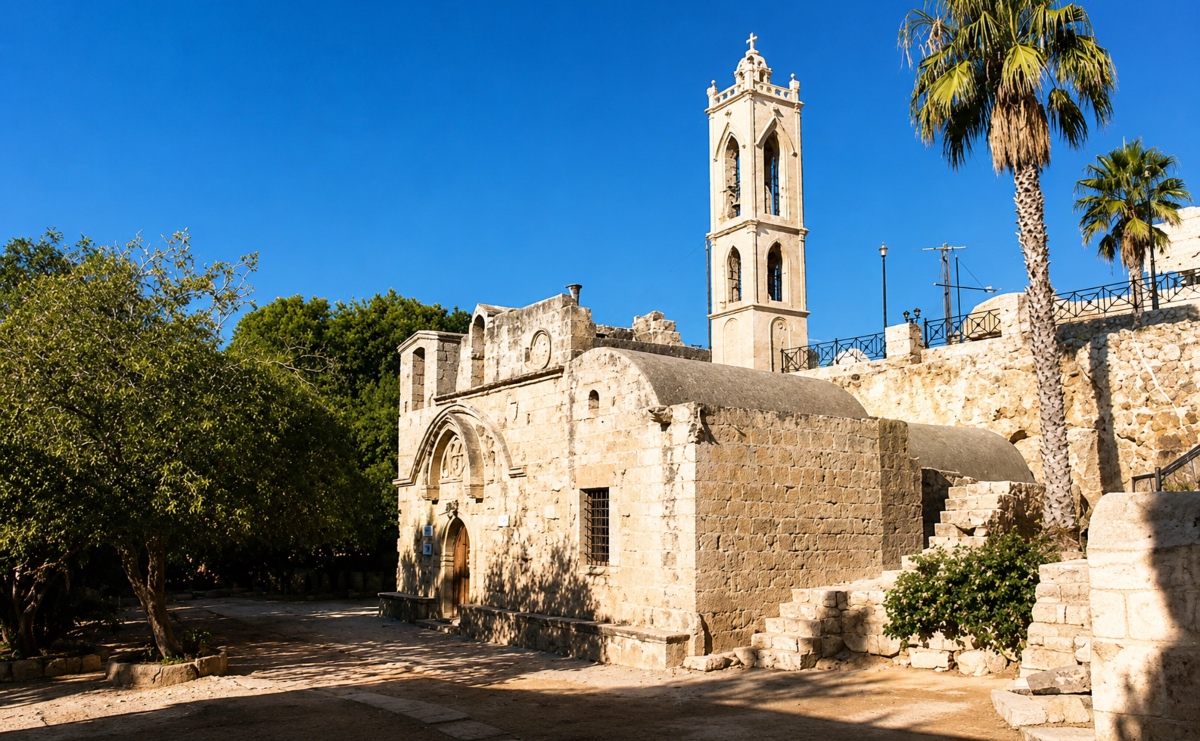
The cat monastery in the film did not come from nowhere either. Cyprus has a long association with cats, most famously at the Monastery of Saint Nicholas of the Cats near Limassol.
According to local tradition, cats were brought there centuries ago to deal with a snake problem that threatened the monastery. Over time, the cats became part of the place’s identity, with visitors coming not only for the religious site but even more so for the animals that live there.
In The Byzantine Cat, these cats are also believed to have healing powers, and the monastery becomes one of the places that draws Jane deeper into life on the island.
Cyprus was also a fitting choice for the film’s setting for another reason. The island has long attracted stories about encounters between different cultures, religions, and histories. For a film about an outsider arriving in an unfamiliar place, it provided a setting in which a circus troupe, a monastery, and a journalist could coexist in the same story without feeling completely out of character.
Have You Seen The Byzantine Cat?
If you have already watched the film, we would love to hear what you thought. Leave a comment and share your thoughts with other readers.
And if you enjoyed The Byzantine Cat, you may also want to watch The Cassandra Cat (1963), which follows a magical pet whose ability to reveal people’s true nature causes chaos in a small Czechoslovak village.
Where to Watch The Byzantine Cat
The film is currently available to stream on Netflix.