
The Cassandra Cat (1963): A Surreal Masterpiece of Czechoslovak Cinema
The Cassandra Cat (1963) brings chaos and wonder to a village when a circus cat with magical sunglasses reveals people’s true colors.
The Cassandra Cat
Original title: Až Přijde Kocour
Alternate titles: The Cat Who Wore Sunglasses, The Cat, When The Cat Comes
Director: Vojtech Jasný
Country: Czechoslavakia

Fairy Tale Allegory in the Czechoslovak New Wave Era
The fairy tale boom in Czechoslovak cinema began in the 1950s and peaked in the 1970s and 1980s. It was a period marked by the prolific production of films that featured Slavic folklore, imaginative storytelling, and innovative cinematic techniques. While only a handful, like Valerie and her Week of Wonders (1970), have gained recognition beyond the country’s boundaries, most of these titles are well-known in Czechoslovakia but obscure elsewhere.
Vojtech Jasný was among the pioneering European directors to incorporate fairy tale motifs into live-action films, breathing new life into print and oral storytelling traditions. His work utilized these elements to challenge and shed light on unresolved societal conflicts and contradictions. However, despite the biting sarcasm and critical commentary on the deceit of petty bureaucrats, Jasný’s The Cassandra Cat demonstrates how fairy tales can express joy and wonder.
Jasný was also one of the most innovative directors to emerge from the Czechoslovak New Wave of the 1960s, which included people like Miloš Forman, Jiří Menzel, Věra Chytilová, and Ivan Passer. These filmmakers focused on social criticism and innovative narrative techniques, often exploring contemporary issues and personal stories with a fresh and sometimes experimental approach.
As such, The Cassandra Cat (also known as The Cat Who Wore Sunglasses, The Cat, and When the Cat Comes) is a remarkable blend of the Czechoslovak fairy tale and New Wave movements; it embodies the distinctive features of both genres. Although the film won the CST and Special Jury Prize at the 1963 Cannes Film Festival, it has only recently gained international attention. Its global recognition grew significantly after a digital restoration by the Czech National Archive, in collaboration with Laboratorio L’immagine Ritrovata and the Karlovy Vary International Film Festival. This restoration, which involved original 1963 prints discovered in Hungary and Poland, led to renewed festival screenings, including at Cannes and Offscreen. The film was also released in cinemas across the Czech Republic, where it has been celebrated as one of the country’s cinematic treasures.
Plot
Set in the small Czechoslovak town of Telč—an early 1960s UNESCO World Heritage site in the Vysočina Region—the film opens with Castellan Oliva (Jan Werich), the narrator, peering from a window in a bell tower overlooking the square. He directly addresses the audience, warning them about the unfolding events and insisting that, despite any skepticism, his account is accurate. Using a small telescope, Oliva surveys the townspeople in the square and within their homes, exposing a stark contrast between their appearances and true natures. Most are deceitful, opportunistic, and dishonest. Even Oliva remains a mystery.
The scene then shifts to the square, where the school principal (Vlastimil Brodský), a taxidermist, shoots a bird for his collection. This act stirs controversy among the townsfolk, but he defends his actions with a hunting permit and underscores the importance of the local taxidermy museum.
At school, the principal seduces the wife of Robert (Vlastimil Brodský), an art teacher for third graders. Meanwhile, in Robert’s class, Oliva tells the children how he fell in love with a beautiful acrobat named Diana. Diana had a cat named Mourka who wore magic glasses that no one was allowed to remove. Oliva defied this rule and uncovered the cat’s eyes. This feline gaze revealed the inhabitants’ true characters through different hues: liars turned violet, thieves grey, unfaithful yellow, and amorous red. This revelation disturbed the equilibrium, causing people to distrust one another.

With this tale, Jasný sets the scene for the central events of the film. Soon after, a traveling circus descends upon the square, accompanied by cheerful melodies and a conspicuous red car. Jasný skillfully incorporates the doppelgänger motif and Brecht’s estrangement effect into the narrative as the circus introduces a magician resembling Oliva (also portrayed by Werich). He will appear that evening with a pantomime show that satirizes various townspeople. Diana (Emília Vásáryová) and her cat with sunglasses will also be performing.
Despite its peculiar eyewear, the cat appears normal and even befriends Chicha, the schoolteacher’s pet. The circus delivers an unconventional performance, blending acrobatics with costume changes. When the sunglasses-wearing cat takes the stage, perched atop a rolling ball, Diana removes its sunglasses. As predicted, the people in the audience start revealing their true selves through a spectrum of colors. Those harboring ulterior motives are exposed, while feelings of love are also laid bare. Commotion ensues. This ten-minute scene is the most striking of the entire film and is accompanied by a lively jazz composition by Svatopluk Havelka that adds to the surreal atmosphere.
Later that night, Oliva, who had been watching the chaos from a statue overlooking the square, retrieves Mourka, replaces his glasses, and sets the cat free. Meanwhile, Robert has fallen for Diana. He searches for her and invites her on a boat ride. They enjoy a romantic evening with wine by a lake and frolic happily through a field before Oliva transports them back to town in a hay wagon.

The principal is determined to restore order and organizes a hunting party to capture, kill, and stuff Mourka. However, the children find the cat first. As they walk through Telč carrying the animal, townspeople try to hide, and those who are not quick enough, turn back to color.
The children bring Mourka to Robert, but the pet is quickly taken away by the principal and his assistant. Overhearing the principal’s true intentions, the children draw and paint pictures of Mourka and post them all over town. After reclaiming the cat, they vanish with him.
The inhabitants grow frantic when they cannot find the children and hold a meeting in the square, where they confess their lies and cheating.
Robert persuades the children to return to their parents and bring Mourka back to Diana. When Diana comes to reclaim Mourka, she asks Robert to join her. However, due to a momentary distraction, he misses her chariot as it drives away. He tries to run after her but cannot catch up, and Diana leaves forever. Oliva comments that it would have been nice if this story had happened for real. He then appears to want to say something else but changes his mind and closes the window.
Political Hypocrisy in 1960s Czechoslovakia
Like many Czechoslovak fairy tale movies, The Cassandra Cat serves as an allegory, exposing political hypocrisy and reflecting the frustrations and dreams of the people during the postwar period. In the late 1940s and early 1950s, Czechoslovakia’s Communist regime conducted purges and show trials, suppressed dissent, and created economic hardships through mismanagement and collectivization, leading to widespread public disillusionment. The privileges enjoyed by party elites contradicted the regime’s promises of equality, and the lack of political freedoms further eroded trust in the government. This hypocrisy and repression fostered deep frustration and mistrust among the Czechoslovak people, a sentiment reflected in their storytelling.
Despite its serious undertones, the movie maintains a lighthearted atmosphere with slapstick elements, dance sequences, strange circus performances, and bright Orwocolour (Eastern European Agfacolour) visuals, creating an almost kaleidoscopic effect.
The Role of Jiří Brdečka and Jan Werich in Creating The Cassandra Cat
Jasný was fortunate to have a gifted crew of artists and technicians, as well as two superb screenwriters: Jiří Brdečka and Jan Werich. Brdečka, a renowned Czech screenwriter, director, and animator, was known for his contributions to animated films and collaborations with prominent Czech filmmakers, significantly shaping Czechoslovak cinema with his distinctive style. Werich, who also played the dual roles of Oliva and the magician, was a celebrated actor, playwright, and writer. He was famous for his satirical and comedic works, and his influential performances in Czechoslovak theater and film, which left a lasting impact on the country’s cultural landscape. Together, they created an odd but beautiful film that stands out because it does its own thing.
Cult Classic
The film should be viewed as a product of its time and offers a nostalgic journey into the past with its portrayal of the town and its inhabitants. The irresistible charm of Mourka, the sunglass-wearing cat who performs tricks without losing its shades, is the cherry on top. This movie offers an exciting glimpse into the Czechoslovak fairy tale and New Wave movements and is a perfect matinee treat for cat enthusiasts and fans of classic cinema.
Where to watch The Cassandra Cat?
You can find The Cassandra Cat (1963) on Amazon in DVD and Blu-ray formats.
Pin this The Cassandra Cat movie poster!

About the author
Vanessa Morgan is the editor of When Animals Attack: The 70 Best Horror Movies with Killer Animals, Strange Blood: 71 Essays on Offbeat and Underrated Vampires Movies, Evil Seeds: The Ultimate Movie Guide to Villainous Children, and Meow! Cats in Horror, Sci-Fi, and Fantasy Movies. She also published one cat book (Avalon) and four supernatural thrillers (Drowned Sorrow, The Strangers Outside, A Good Man, and Clowders). Three of her stories became movies. She introduces movie screenings at several European cinemas and film festivals and is also a programmer for the Offscreen in Brussels. When she is not writing, you will probably find her eating out or taking photos of felines for her website, Traveling Cats.
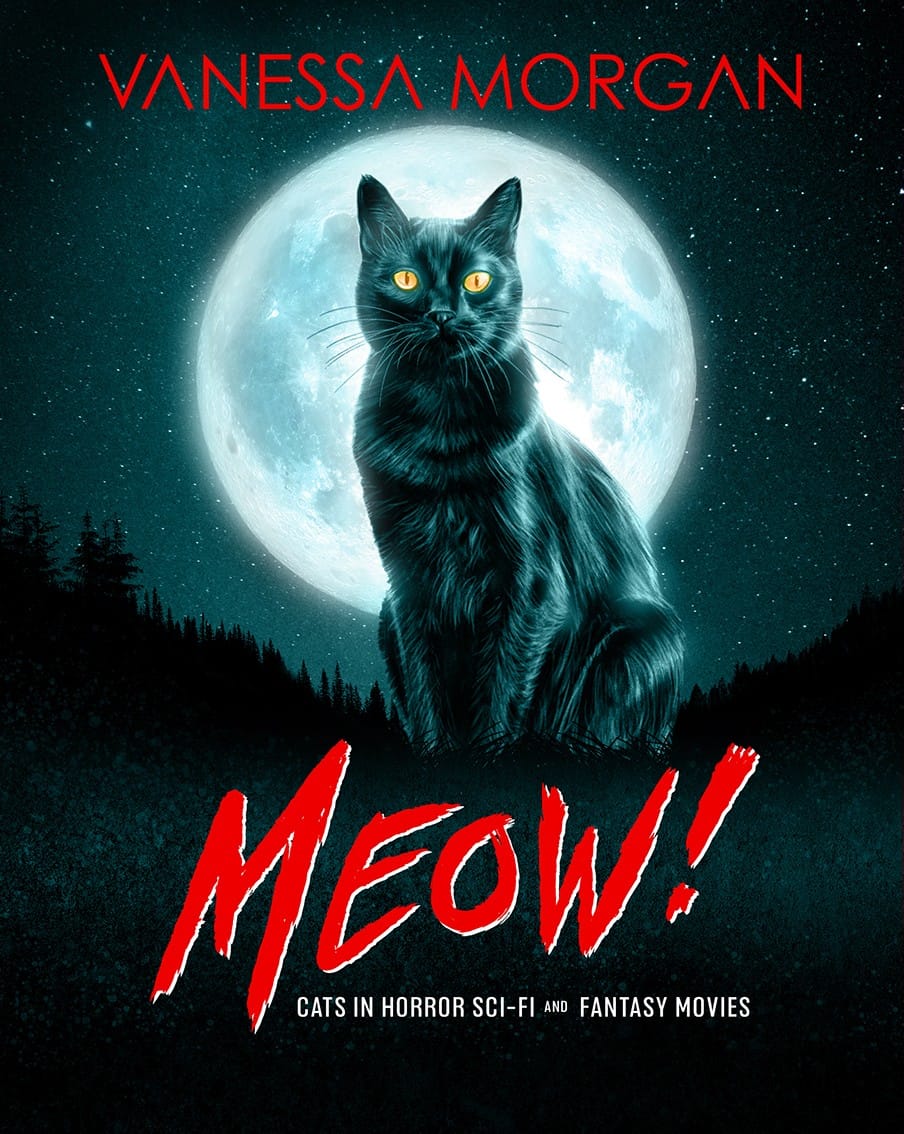
Discover more movies with cats in my book Meow! Cats in Horror, Sci-Fi, and Fantasy Movies.


Cats are most wonderful. Beautiful post.
Thank you for joining the Awww Mondays Blog Hop.
Have a fabulous Awww Monday and week. ♥