
Sirocco and the Kingdom of the Winds (2023): Cats, Storms, and a Broken Heart
From the minds behind A Cat in Paris comes a new animated fantasy about cats, storms, and a broken heart.
Sirocco and the Kingdom of the Winds
Original title: Sirocco et le royaume des courants d’air
Director: Benoît Chieux
Country: France, Belgium

If you have ever dreamed of turning into a cat or stepping inside a book, the French/Belgian animated children’s film Sirocco and the Kingdom of the Wind aka Sirocco et le Royaume des Courants-d’air might feel like a dream come true.
Sisterhood, Storybooks, and the Portal to The Kingdom of the Winds
This journey through a magical kingdom of talking cats and elemental forces starts with two sisters: the four-year-old Juliette (voiced by Loïse Charpentier) and eight-year-old Carmen (Maryne Bertieaux). While innocently exploring the attic of Agnès (Géraldine Asselin), their mother’s best friend, Juliette discovers a series of books written by Agnès titled Le Royaume des Courants d’Air (The Kingdom of the Winds).
From the book, a mysterious wooden figure emerges, drawing a magical hopscotch that opens the doorway to a parallel universe called the Kingdom of the Winds. Juliette and Carmen follow the figure and enter this fantastical realm, where they magically transform into cats—creatures that straddle two worlds, being both wild and domesticated. This transformation reflects the duality of the sisters’ upcoming journey as they navigate the boundaries between reality and fantasy, childhood and maturity.
Once in the kingdom, the girls are separated, each facing unique challenges. Juliette becomes the companion of an opera-singing duck named Selma (Aurélie Konaté), and Carmen finds herself entangled in a precarious situation where she has to marry the mayor’s son. On top of that, Juliette accidentally breaks the wooden figure, their only way to return to the real world.

Sirocco (Pierre Lognay) created this figure and is the only one who can repair it. However, the sisters are hesitant to confront Sirocco because, in Agnès’ books, he is a feared ruler who causes violent winds and storms. Selma reassures them that she once met a gentler side of Sirocco and that he is not as terrifying as the girls think. Selma’s singing moved Sirocco, and he fell in love with her. Unfortunately, his emotions trigger uncontrollable storms, so he cannot be with her if he wants to protect the kingdom.
The girls discover that Selma is Agnès’ sister. She was a scientist who studied storms, and this became her demise. In her grief, Agnès created the Kingdom of the Winds to honor Selma and cope with her loss. While Selma enjoys her new life in the kingdom, her bond with Agnès remains strong. Their shared past is the main reason she decides to take Juliette and Carmen to Sirocco so they can return to the physical world. Ultimately, the film is about confronting loss and loneliness and embracing the beauty and magic of life.

Alain Gagnol’s Signature Touch
Alain Gagnol, a familiar name to fans of animation and cats, wrote Sirocco. He is best known for co-writing and directing A Cat in Paris aka Une vie de chat (2010). This animated film takes viewers on a visually stunning journey across the rooftops of Paris as it tells the story of Dino, a cat who lives a double life. He is a little girl’s pet during the day and a burglar’s accomplice at night.
The rest of Gagnol’s work primarily consists of short films that showcase his distinctive animation style, some of which involve cats. In Un plan d’enfer (2016), for example, two thieves use catnip to attract neighborhood cats, causing a commotion with barking dogs that distract people during their heist. However, their plan backfires when the cats, still drawn to the catnip, follow them after the job. In The Cat’s Regret aka Le chat qui pleure (2018), a boy named Lucas harbors so much resentment toward his little brother that he wishes him dead. An older man with many cats offers to make his wish come true.
Though Gagnol only holds a writing credit for Sirocco, with no involvement in the animation, his hallmark storytelling is evident. He often explores how extraordinary events touch ordinary lives, weaving together playful, vibrant animation with more serious, mature themes. This ability to balance light and dark elements is a defining feature of his films, which, while accessible to family audiences, offer layered narratives and moral depth that resonate with viewers of all ages—something also present in Sirocco.
Benoît Chieux’s Distinctive Animation Style
Sirocco’s direction is in the hands of Benoît Chieux, who previously directed Aunt Hilda! aka Tante Hilda ! (2013) and various short films. He began working on Sirocco immediately after Aunt Hilda! and had plans to release it shortly thereafter. However, it took him ten years to bring the film to life. During this time, he continued creating short films, including Midnight’s Garden aka Le jardin de minuit (2017), which significantly influenced Sirocco as it helped him approach storytelling in a new way.
The concept for Sirocco originated from a series of about 30 drawings Chieux had created. These illustrations—featuring characters like Sirocco, Selma, the children, and the crocodile—were closely connected to the wind. Gagnol then wrote the screenplay based on these drawings, filling in the story’s details. This was a departure from Chieux’s usual creative process. For example, Tigers Tied Up in One Rope aka Tigres à la queue leu leu (2015) took inspiration from the book Midnight’s Garden aka Le jardin de minuit (2017) was more like the adaptation of a dream, while Le coeur fondant (2019) came from bedtime stories he used to invent for his daughter. But Sirocco emerged solely from a world Chieux had imagined, with the setting acting almost like a character.

Chieux specifically asked Gagnol not to answer every question in the story, leaving space for the audience to reflect. While Chieux conceived the wind as a central theme and envisioned the story involving two children, Gagnol fleshed out Sirocco’s personality and the relationship between Agnès and Selma. The collaboration was dynamic, with Chieux continuing to draw while Gagnol wrote.
Giving clear instructions was crucial for Chieux during the making of Sirocco. He noticed that many artists often drew in broad strokes, focusing on the overall shapes but avoiding the more challenging parts like hands and faces. One essential guideline was avoiding straight lines; Chieux encouraged animators to play with curves, influencing how elements like houses and clouds looked. Additionally, many characters in Sirocco have no legs, which creates a unique dynamic where some characters fly while others crawl. These ideas resulted in a distinctive animation style with unusual movements.
Drawing Inspiration from Mœbius, Gaultier, Fraggle Rock, and Studio Ghibli
A significant influence here was the French illustrator Mœbius, whom Chieux cites as one of his main inspirations. Mœbius stood out because he dared to break away from what most artists were doing at the time, bringing a fresh and unique approach to his work. Mœbius’ impact on Sirocco is especially apparent in the film’s imaginative and minimalist approach to creating landscapes that allow the audience’s imagination to fill in the gaps.
There were also influences from Jim Henson’s children’s TV show Fraggle Rock (1983–1987) for creating the quirky characters and Jean-Paul Gaultier for the design of Selma.

Hayao Miyazaki and Studio Ghibli also shaped Sirocco. Like Ghibli films, Sirocco transports viewers to an imagined world where nature, fantastical creatures, and youthful protagonists are central. The fluid animation, soft color palette, and dreamlike atmosphere echo iconic Ghibli films like My Neighbor Totoro aka Tonari no Totoro (1988) and Spirited Away aka Sen to Chihiro no kamikakushi (2001). Both Chieux and Miyazaki emphasize the deep connection between humans and their environment, telling stories rich with themes of resilience, exploration, and the power of nature.
However, there is a notable difference between the animation styles of Chieux and Miyazaki, particularly in how they portray characters and backgrounds. Studio Ghibli often draws their characters with simple lines, expressive features, and minimal detail. At the same time, the backgrounds are extensively illustrated, with no precise lines, highlighting the beauty and grandeur of the environment. This approach, also seen in early Disney films like Bambi (1942), allows the natural world to stand out, reinforcing its importance. In contrast, there is no stylistic separation between the characters and the environment of Sirocco. Chieux draws both with soft lines and flat colors. Everything blends in a deliberate softness that envelops the entire frame.

This choice serves a thematic purpose: in Sirocco, the magical world, especially the wind, is like a living character. It is a symbol of life, of breath. In many indigenous traditions, such as Native American and African belief systems, wind carries spirits or divine messages, representing the breath of life. Similarly, in Greek philosophy, pneuma refers to the life-giving breath or spirit, and in Hinduism and yoga, prana signifies the universal life force flowing through all living beings. The Hebrew word “ruach” and the Arabic “ruh” both mean “spirit” or “breath” and symbolize the divine energy or life force bestowed by God. The simplified visuals in Sirocco allow the wind and other magical elements to be animated with more freedom and fluidity, emphasizing their constant motion and energy. The trees, clouds, characters’ hair, and clothing all reflect this dynamic quality. By keeping the details minimal, the filmmakers give the wind and the natural forces a more omnipresent, influential role in the story.
The Sound of the Wind
Another standout feature is Pablo Pico’s score, which ties into the wind theme. Pico had previously collaborated with Chieux on Le coeur fondant, a project that tested their creative compatibility. For Sirocco, Pico became involved early in the production process, allowing the music to evolve alongside the story and animation. To guide Pico’s composition, Chieux sometimes used soundtracks from other films over his images as a reference, giving Pico a clear sense of the tone and emotion he wanted the score to convey. Chieux required an opera piece early on because the characters’ movements had to align with the rhythm and flow of the music rather than the other way around. Chieux wanted something more unconventional than traditional opera. Pico responded by bringing in jazz singer Célia Kameni. He created a musical framework for her, over which she improvised. This collaboration culminated in the film’s most iconic moment when Selma’s singing becomes a powerful metaphor for breath and wind, reinforcing the story’s central theme of life’s invisible yet essential forces.
A Festival Favorite
Sirocco runs for 80 minutes and was primarily produced in France, with Belgium providing a smaller share. The film debuted at the Annecy International Animation Film Festival in June 2023, winning the Audience Award. It screened at several other international festivals, including BIFFF, the Rome Film Fest, and the New York International Children’s Film Festival.
While it is a film for children, its depth and richness make it equally engaging for adults. Dialogue is kept to a minimum, allowing the universe, atmosphere, and music to take center stage. It is a little piece of art and a melancholic exploration of mourning.

Sirocco and the Kingdom of the Winds Age Rating
The film is suitable for all audiences.
Where to watch Sirocco and the Kingdom of the Winds?
Do you want to watch Sirocco and the Kingdom of the Winds on streaming? You can currently watch it on Amazon Prime Video.

About the author
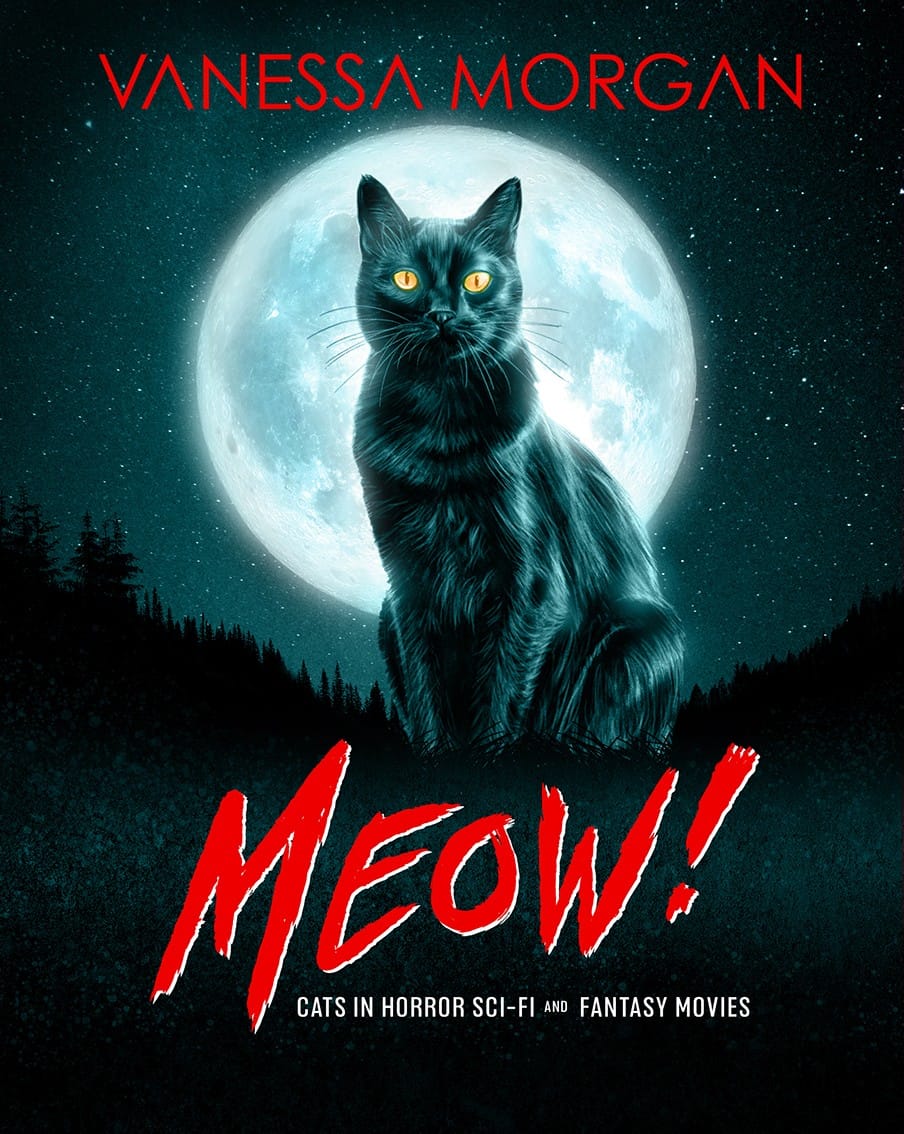
Vanessa Morgan is the editor of When Animals Attack: The 70 Best Horror Movies with Killer Animals, Strange Blood: 71 Essays on Offbeat and Underrated Vampires Movies, Evil Seeds: The Ultimate Movie Guide to Villainous Children, and Meow! Cats in Horror, Sci-Fi, and Fantasy Movies. She also published one cat book (Avalon) and four supernatural thrillers (Drowned Sorrow, The Strangers Outside, A Good Man, and Clowders). Three of her stories became movies. She introduces movie screenings at several European cinemas and film festivals and is also a programmer for the Offscreen in Brussels. When she is not writing, you will probably find her eating out or taking photos of felines for her website, Traveling Cats.
Find more fantasy movies with cats in the book Meow! Cats in Horror, Sci-Fi, and Fantasy Movies.



Sounds like a great way to spend some fun time.
Thank you for joining the Awww Mondays Blog Hop.
Have a fabulous Awww Monday and week. ♥