
Felidae (1994): An Animated Film Noir About a Cat Detective and a City Full of Secrets
The movie Felidae (1994) is an animated film noir about a cat detective named Francis who unravels a sinister conspiracy involving science, cults, and serial feline killings.
Felidae
Director: Michael Schaek
Countries: Germany, Denmark, UK, Canada, US, Taiwan, South Korea, Italy, Ireland
Felidae is far from your run-of-the-mill animated detective tale. It dives into the fur-filled whirlpool of murder, scientific experimentation, dark cults, and vengeance—all starring cats as the key players.
What sets this film apart in animation is its mature themes, complex narrative, and bold approach to dark, thought-provoking subject matter and socio-political undertones. It stands as a notable example of how animation can be used to tell entertaining stories that challenge and engage adult audiences, pushing the boundaries of the medium beyond its traditional confines.
Meet the Cat Detective: Francis
The film begins with a domesticated feline named Francis who moves to a new neighborhood with his owner, Gustav Löbel, who keeps them fed by writing pulp romances for magazines. As they settle into their new home, Francis stumbles upon a cat’s corpse in the garden.
Other Felidae Characters
Francis meets Bluebeard, a grizzled, mangled, and streetwise feline who informs him that the area is not as peaceful as it seems and that several of his friends have been murdered recently. Bluebeard initially suspects “can openers” (humans), but Francis believes there is more to the story because the cat’s throat has been shredded and not cut. Before the day is over, yet another tom is killed.
Other fellow kitties include local troublemakers Hermann & Hermann, the blind Felicity, the wise and elderly Joker, and the tech-savvy Pascal. When Felicity is decapitated, Francis spurs into action. In the attic, he stumbles upon something that looks like Frankenstein’s laboratory, full of dusty surgical equipment, which gives him clues about the possible motives behind the killings.

The Cult of Claudandus
Many neighborhood felines are also part of a cult that preaches about a utopian world where their species lives free from human interference. They worship a cat named Claudandus—an elusive figure no one has ever seen but who is said to possess miraculous healing powers.
As Francis delves deeper into the mystery, more cats are found dead, including Joker, the cult’s Master of Ceremonies. Each death is increasingly gruesome, leading Francis to suspect that the killer is not only strong but also highly intelligent.
Scientific Experiments
Francis’ investigation leads him to a tape depicting humans conducting horrific experiments on animals, such as covering them in a malic acid solution that edges its way through the skull. He discovers that these experiments resulted in a super-intelligent and physically superior cat: Claudandus.
It turns out that Pascal, the cult leader, is Claudandus in disguise. This cat was once a victim of these cruel experiments but survived and gained superior intelligence. His experiences left him with a deep hatred for humans and a belief in feline supremacy.
Francis confronts Claudandus, who reveals his plan to create a world order where cats will reign supreme and humans will be subservient or extinct. Claudandus admits to committing the murders to eliminate cats he deemed unworthy or threats to his vision—to preserve the purity that this new race required. Joker was his only ally and spread the word that a new age was dawning when Claudandus handled the project’s scientific aspects.
Confrontation Between Francis and Claudandus
A fierce battle ensues between Francis and Claudandus. Despite Claudandus’ superior strength and intellect, Francis manages to outwit him. The fight leads to a dramatic conclusion in which the evil cat is killed.
With Claudandus dead, the cult disbands, and the neighborhood cats are free from his influence.
The film ends with Francis returning to his peaceful life with Löbel but with a newfound sense of purpose and a deeper understanding of the complexities of life. Reflecting on the nature of good and evil, he says, “Don’t give up on the idea of a world where all animals and people can live together. Perhaps we all need to evolve to grow a bit more. Maybe we all need to grow into felidae.”

Based on a Book by Akif Pirinçci
The film is based on a book by Akif Pirinçci, a Turkish-born author who moved to Germany with this family when he was a child. Pirinçci began writing at a young age, publishing his first novel, Tears Are Always the End (Tränen sind immer das Ende) when he was only 21 years old.
Felidae was the first book in his series of detective novels featuring the cat protagonist Francis. It was published in 1989 and became an international success. The series included several sequels: Francis (1993), Cave Canem (1999), Das Duell (2002), Salve Roma! (2004), and Schandtat (2007).
In recent years, Pirinçci has become a controversial figure in Germany. He has published several non-fiction books and essays that have drawn criticism for their anti-immigrant, anti-Muslim, and far-right ideologies. This has led to significant backlash and a tarnished public image, with many of his previous publishers distancing themselves from him. Though overtly political, Felidae was created long before Pirinçci’s controversies emerged.
Michael Schaek’s Direction and Visual Style
Michael Schaek’s direction brings the dark and complex narrative of the book to life, making Felidae a cult classic among fans of animated films aimed at adults.
The animation is a collaborative effort between German and Korean studios, blending European and Asian animation techniques.
Despite its graphic content, Schaek goes for an animated style reminiscent of traditional children’s animation, in particular the work of Don Bluth, one of the chief animators at Disney who went on to direct An American Tail (1986), A Land Before Time (1988), and many others.
Shaek utilizes muted and dark colors to convey its mature and grim themes. The backgrounds are predominantly composed of dark, shadowy hues. The many nighttime scenes are filled with deep blues, blacks, and grays, while the occasional warmer colors provide a brief respite from the tension. These scenes depict Francis’ untroubled day-to-day life with Löbel and highlight the genuine connections he forges with other cats, such as Felicity. These moments of warmth are rare but effective.
Thanks to Felidae and subsequent films, Schaek influenced German animated cinema, particularly in the 1990s and early 2000s. Some of his other notable films include The Real Shlemiel (1995), based on stories by Isaac Bashevis Singer, Little Longnose (2003), an adaptation of a fairy tale by Wilhelm Hauff, and several films in the humorous and irreverent Werner series, based on the German comic books by Rötger Feldmann.

A Cast of Distinctive Voices
Shaek also put together an admirable cast of voice actors, featuring notable talents in both the original German and English versions.
The German voice cast includes Ulrich Tukur as Francis (known for roles in The White Ribbon and John Rabe), Mario Adorf as Blaubart (The Tin Drum, Lola), and Klaus Maria Brandauer as Pascal (Mephisto, Out of Africa).
The English dub features Cary Elwes (The Cat Returns, The Princess Bride, Saw) and John Hurt (The Elephant Man, Love and Death on Long Island, the Harry Potter series).
A Score With a Touch of Disney Magic
The score, which evokes the enchanting melodies of Disney films, is equally impressive and was composed by Anne Dudley, known for her work with the band Art of Noise (famous for the songs “Paranoimia” and “Moments in Love”) and her contributions to various film scores, including The Crying Game (1992), The Full Monty (1997), American History X (1998), and Elle (2016).
A Cult Following and Lasting Impact
While not widely known in the mainstream, Felidae has garnered a cult following over the years. Kirkus Reviews wrote about the book, “Calling this powerfully imagined parable a cat book is like describing Maus as a comic strip for people who like mice.”
Indeed, the film’s depiction of feline decapitations and electrocutions may be distressing to cat lovers, while its portrayal of cat intercourse will probably offend many others.
Nonetheless, these elements do not detract from the story’s impact and transgressive nature, highlighting its unique position as a powerful and provocative work in animated cinema.

About the author
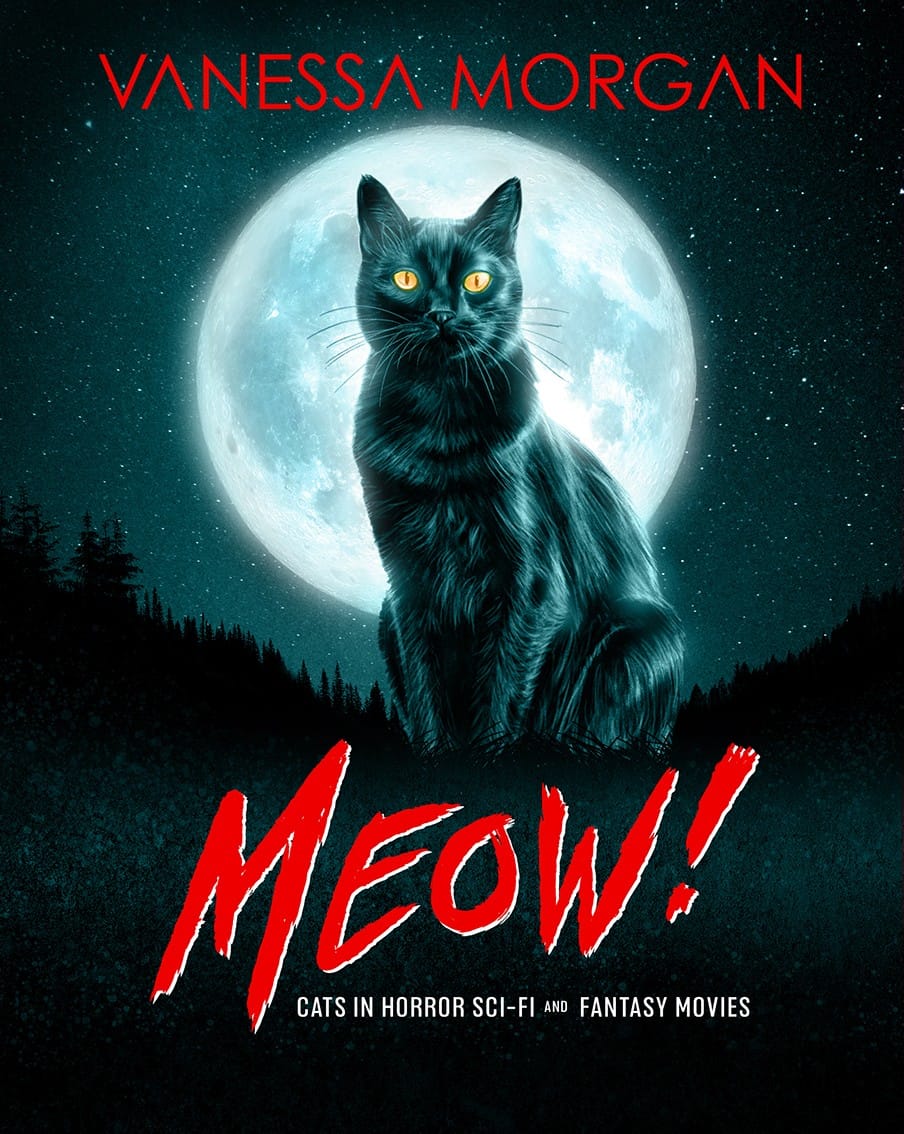
Vanessa Morgan is the editor of When Animals Attack: The 70 Best Horror Movies with Killer Animals, Strange Blood: 71 Essays on Offbeat and Underrated Vampires Movies, Evil Seeds: The Ultimate Movie Guide to Villainous Children, and Meow! Cats in Horror, Sci-Fi, and Fantasy Movies. She also published one cat book (Avalon) and four supernatural thrillers (Drowned Sorrow, The Strangers Outside, A Good Man, and Clowders). Three of her stories became movies. She introduces movie screenings at several European cinemas and film festivals and is also a programmer for the Offscreen in Brussels. When she is not writing, you will probably find her eating out or taking photos of felines for her website, Traveling Cats.
Discover more movies with cats in my book Meow! Cats in Horror, Sci-Fi, and Fantasy Movies.



A wonderful cat movie. You made me smile.
Thank you for joining the Awww Mondays Blog Hop.
Have a fabulous Awww Monday and week. ♥