
Samurai Cat (2014): Comedy and Adventure in Edo-Period Japan
The Samurai Cat movie follows a disgraced ronin sent to kill a cat, only to find himself unexpectedly attached to the animal. The movie became so popular in Japan it grew into an entire franchise.
Samurai Cat
Original title: Neko Samurai
Directors: Takeshi Watanabe, Yoshitaka Yamaguchi
Country: Japan
Every internet user knows that a single photo of their pet cat often gets more attention than a picture-perfect holiday on a pearl-white beach.
But imagine combining cats with the ancient traditions of the samurai in a feline-worshiping country like Japan—now that is attention-grabbing!
This concept forms the foundation of Samurai Cat aka Neko Zamurai, which premiered in 2013 as a two-part TV series.
Although it aired late at night, the show had a steady average viewership rating of 5%, and the feedback was overwhelmingly positive.
It quickly expanded into a successful feature film franchise.
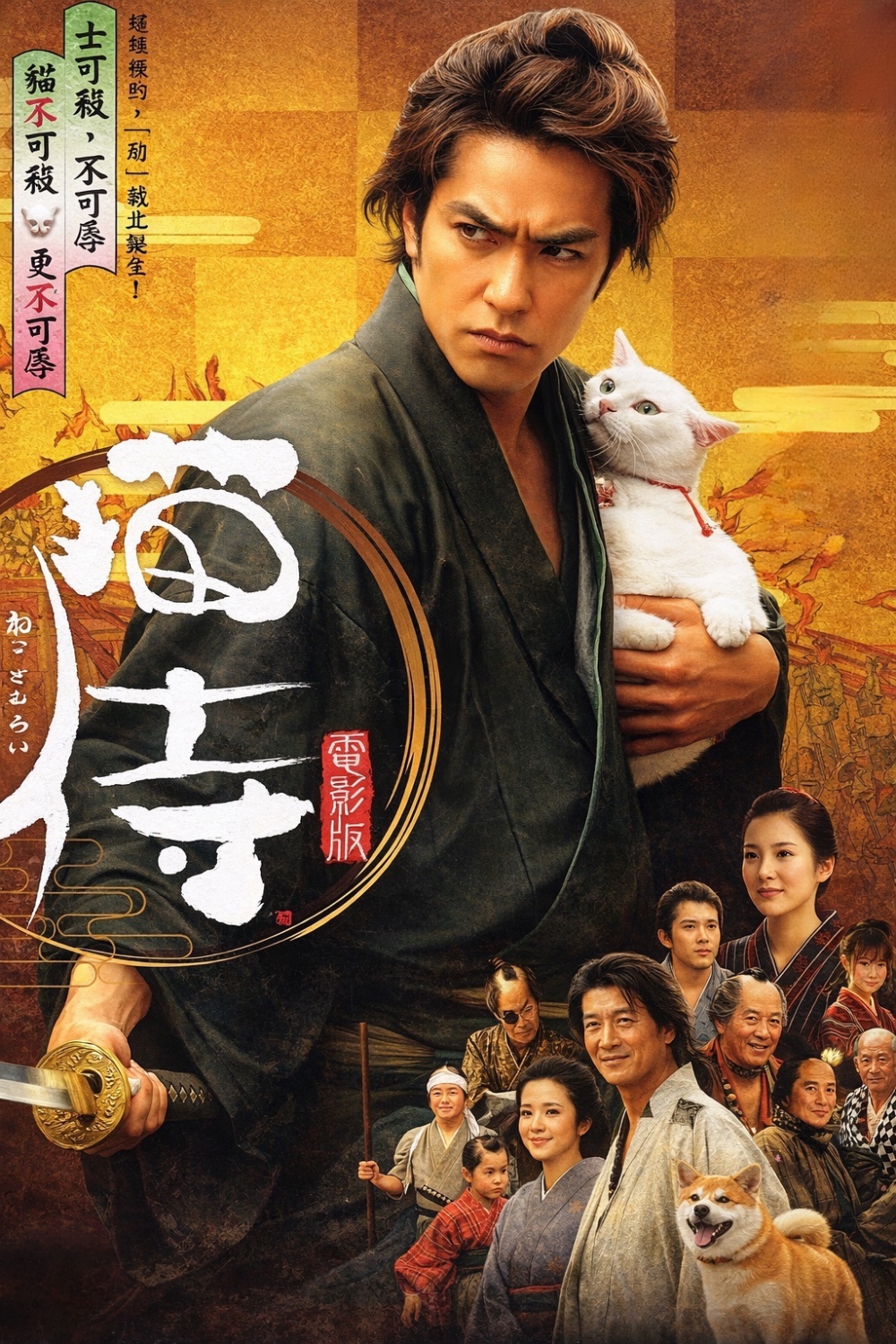
The Creative Minds Behind Samurai Cat
The first movie is the most famous, and Takeshi Watanabe and Yoshitaka Yamaguchi were at the helm of it.
You may know Yamaguchi for Arukana (2013) and Demekin (2017) and Watanabe for the Nekonin TV show (2017) and movie (2017), about a young ninja embarking on his first mission to steal a goldfish, only to be mysteriously followed by a red-nosed cat that reminds him of his estranged father. Watanabe and Yamaguchi also directed several episodes of the Samurai Cat TV show.
Life in Edo-Period Japan
The story of Samurai Cat begins during the Edo period (1603-1868) in an idyllic little Japanese village.
The opening scene introduces Kyutaro Madarame (played by Kazuki Kitamura), a down-on-his-luck gambler who quickly loses what little money he has left. Even though his piggy bank looks like a maneki-neko, the famous talisman that brings luck and prosperity, only a few coins remain. His gambling habit has left him in debt, and he is barely able to support himself through his umbrella craftsmanship.
In his past life, Kyutaro earned the name “Madarame the Devil” as a former swordsmanship instructor for the Kaga Domain. However, he lost his position and purpose and became a ronin—a masterless samurai.
According to the samurai code and the beliefs of his time, being cast out by his daimyō (a Japanese feudal lord) left Kyutaro without a life purpose, turning him into a renegade.
Cats vs. Dogs
In a small village where two rival clans are at odds—one favoring dogs and the other cats—Kyutaro’s sword skills are the perfect tool for settling scores. The dog-loving clan thinks that Tamanojō, the beloved pet of the cat clan’s warlord, is a demon that has bewitched their leader. They seek to hire a skilled assassin to kill the cat and break the supposed curse.
Although Kyutaro initially finds the task absurd, his desperate financial situation forces him to accept the job.
However, something unexpected happens when he confronts Tamanojō.
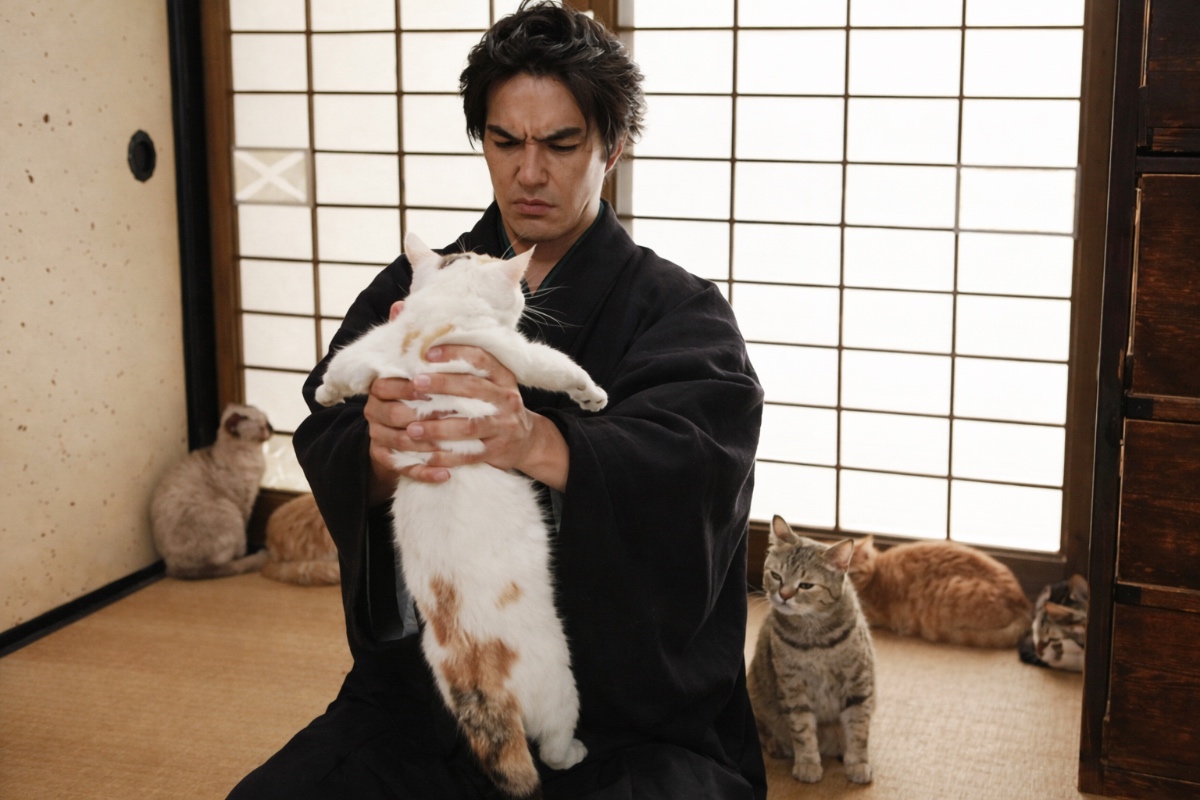
The once cold-hearted swordsman softens at the sight of the adorable, helpless white kitten with big, innocent eyes.
Instead of killing the animal, Kyutaro cannot bring himself to go through with the act. The once emotionless samurai now wants to take the cat home, but he knows this decision puts him in grave danger. If the dog clan finds out he did not complete the mission, they will execute him, and if the cat clan discovers his intentions, they will likely boil him alive. It is a perilous situation.
Kyutaro’s Plan
Kyutaro devises a clever plan: he builds a fake grave to show the dog clan when they come looking for proof.
His deception works, but Tamanojō turns out to be quite the handful. Scene after scene, the cat destroys Kyutaro’s delicate creations, refuses every meal he offers, and makes life increasingly difficult for the reluctant caretaker.
Things get so bad that the grumpy Kyutaro, whose heart had briefly softened, hardens again. He takes Tamanojō deep into a forest, hoping the animal can fend for itself.
The farewell hits hard, and back home, regret weighs Kyutaro. He leaves his back door open in case the little white fluffball finds its way back to him.
Samurai, Ronin, and the Code of Bushido
Samurai Cat is an entertaining movie that offers a unique glimpse into the evocative Samurai period.
Historically, samurai were privileged yet fiercely skilled warriors. As long as they served their masters faithfully, they enjoyed many luxuries.
However, unlike ninjas, samurai lived by strict codes of honor. If a samurai became a ronin—due to their daimyō’s death or dismissal in disgrace—they lost all their privileges. Many of these disgraced warriors, now wandering without purpose, often turned to a life of crime, using their skills as thugs or assassins for hire.
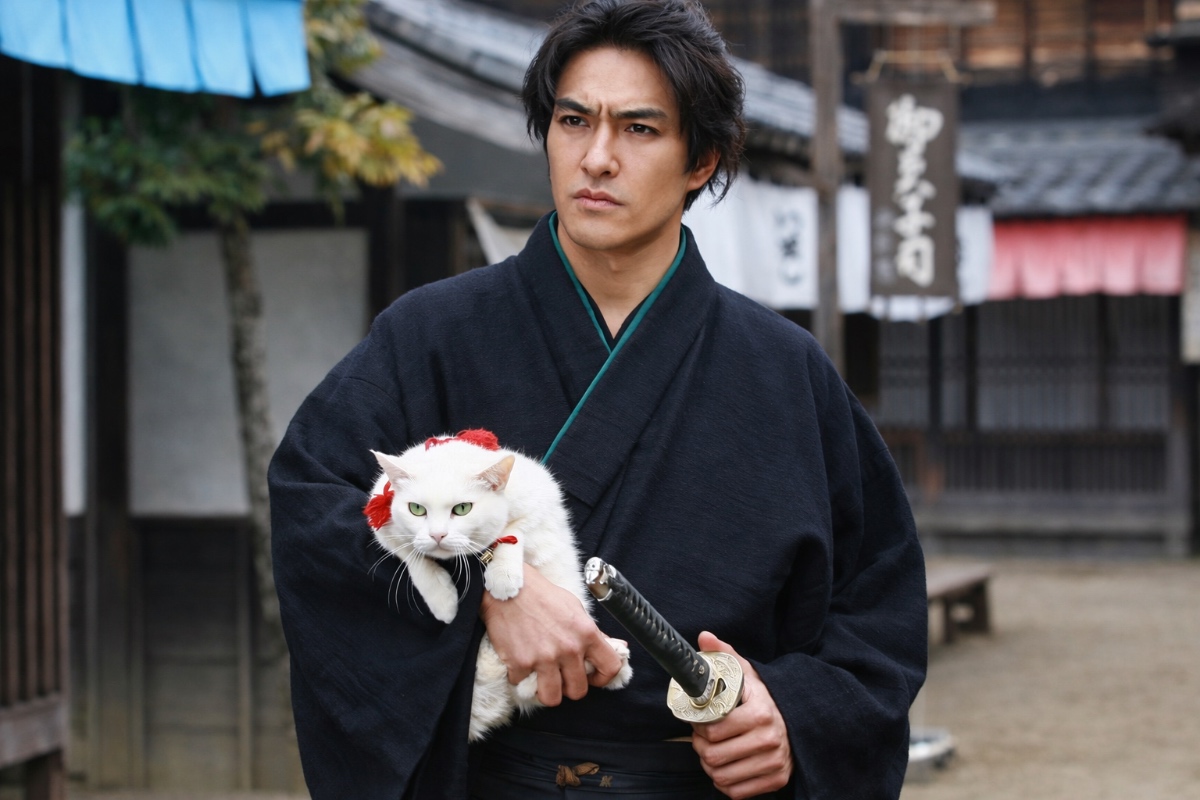
Given the title, viewers might expect more inventive samurai action scenes. However, the movie instead focuses on the emotional restraint inherent in the samurai code of conduct, Bushido, which translates to “the way of the warrior.”
The code mentioned that emotions like fear, sorrow, or joy were distractions that could interfere with a samurai’s ability to serve their lord and perform their role with honor. Stoicism was part of a samurai’s pursuit of inner strength and self-control, emphasizing facing death or adversity with dignity and composure. Showing emotions could lead to social disgrace or a loss of respect, often worse than a physical punishment. It could sometimes even lead to seppuku (ritual suicide) if the shame or dishonor was too great.
These standards make it especially surprising to see a ronin like Kyutaro fall in love with a cat. The film portrays a touching, albeit often unsuccessful, attempt at cohabitation, where the interactions between Kyutaro and Tamanojō mirror the samurai’s inner conflict.
Tamanojō’s presence stirs up emotions Kyutaro has long buried, creating tension between his current life and the past he is trying to escape.
The American Samurai Cat Books
It is essential to note that American author Mark E. Rogers wrote a series of seven books about Samurai Cat and its adventures. These are unrelated to the Japanese Samurai Cat franchise.
From TV Series to Feature Film
In 2013, Watanabe and Yamaguchi helmed the TV series Samurai Cat, which served as the basis for the 2014 film of the same name.
There are a few minor inconsistencies between the film and the series.
Unlike the movie, where Kyutaro gets caught up in the “One Year War of Dogs and Cats” between rival clans, the series has him approached by Sakichi, a clerk at Kagaya, a kimono fabric wholesaler.
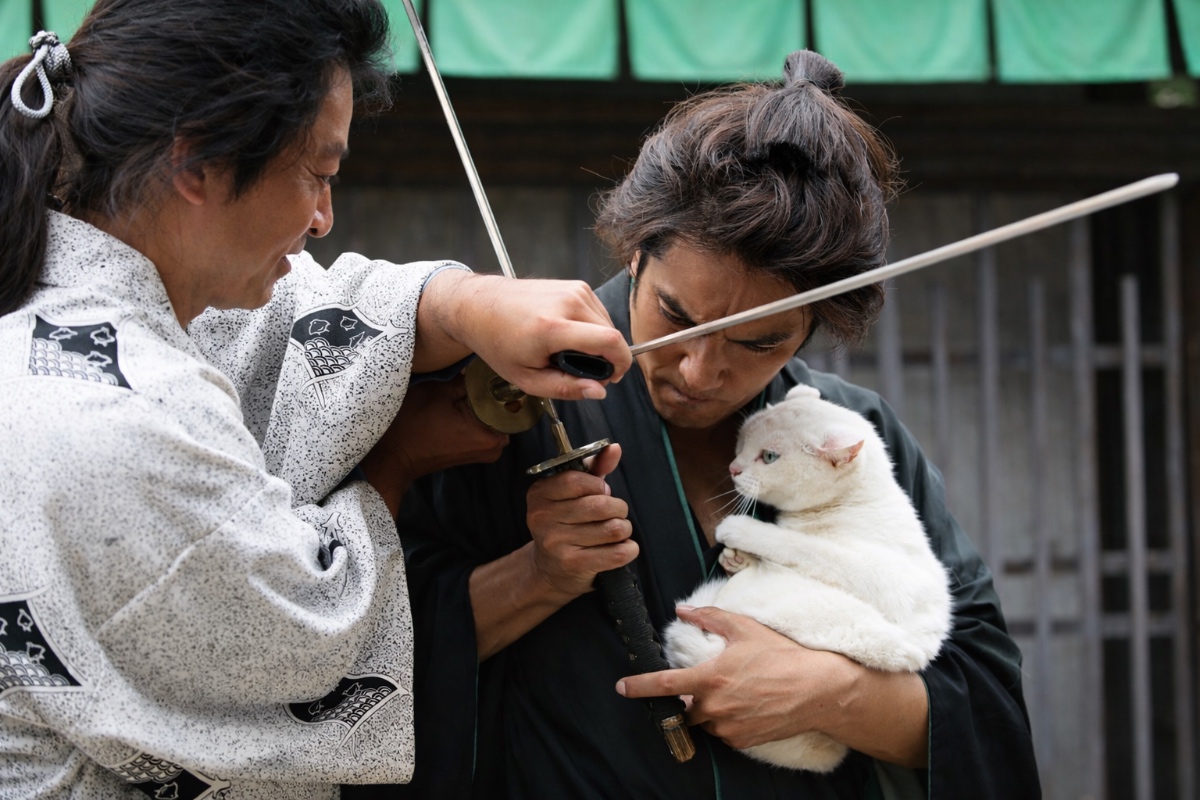
Sakichi is worried because his friend Kisuke has reportedly been under the spell of a bakeneko (supernatural cat). Concerned for his master, Yozaemon, who recently adopted a cat named Tamanojō, Sakichi fears a similar fate might befall him.
He offers Kyutaro a generous reward to kill the cat. However, like in the film, the irresistibly cute Tamanojō charms Kyutaro, and he wants to take the cat home.
Throughout the two seasons, viewers follow Kyutaro, nicknamed the “Madamare Demon,” as he navigates various adventures with Tamanojō.
However, keeping the cat hidden from his enemies forces Kyutaro to lie to almost everyone, which conflicts with his beliefs as a former samurai.
As a ronin, this deception goes against his code of honor, weighing heavily on him like a Sword of Damocles.
The series emphasizes his inner conflict between the samurai tradition and his new life and delivers many hilarious moments.
Sequels and Spin-Offs
The original Samurai Cat film received a sequel in 2015, titled Neko Samurai 2: A Tropical Adventure aka Neko Zamurai: Minami no Shima e Iku, also directed by Watanabe.
Kyutaro returns to Edo (modern-day Tokyo) to live with his wife, child, and mother-in-law. She informs the jobless ronin of an opportunity to teach swordsmanship for the Tosa Domain. Kyutaro and his fluffy companion set sail for the southern island of Shikoku despite his reluctance to leave his family.
They miss their boat to Tosa and have no choice but to row themselves there.
After surviving a whale attack and a three-day storm, they end up on what appears to be a Japanese version of Robinson Crusoe’s island.
The locals are very superstitious, and though the situation is far from ideal, Kyutaro teaches them a lesson or two—for better or worse.
Another installment followed in 2016. This TV drama, Samurai Cat: Tamanojō Goes To Edo aka Neko zamurai: Tamanojô, Edo e iku, is a prequel to the story of the legendary samurai and his cat and stops right where the series starts.
It explores Tamanojō’s life before the samurai Kyutaro took it in. Who were Tamanojō’s previous owners, and what circumstances led him to Kyutaro?
In this story, Miwa (Sayaka Yamaguch) is a new teacher at the secluded Shiratama Academy. The academy’s former principal rescued Tamanojō, and the cat now attends class with the children. Tamanojō enjoys a happy life at the school until he accidentally gets packed into a box intended for a high-ranking daimyō in Edo. Tobimatsu “The Swift” Tobiki (Naoki Tanaka) has to deliver the package. En route, he hears a “meow” coming from the box and discovers Tamanojō inside.
On his journey, he and Tamanojō bond through various adventures, with the cat helping Tobimatsu heal in unexpected ways. In time, Tobimatsu realizes Tamanojō has her own path to follow, and, despite their connection, he understands he must let his furry companion go.
The Real Cats Behind Tamanojō
The Samurai Cat franchise owes much of its success to the presence of Tamanojō.
Three cats, each with unique personalities tailored to meet the production’s requirements, portrayed this now iconic pet.
These feline stars belong to ZOO, the animal production company famous for the Scottish Fold cat, Haruma-kun, the Y-Mobile cat.
Anago, a former stray with big, round eyes, is the main star and features in many close-ups.
The other two cats are called Sakura. One is four years old, and the other is 15. The older Sakura, the cat with the plumpest body, takes on more demanding acting scenes. The younger Sakura, with her slanted eyes and straight nose, shines in action sequences.
These cats have gained immense popularity in Japan and even have photo books.
Sadly, Anago passed away in 2019 at the age of 21, reportedly leaving this world peacefully in its bed.
Japan’s Deep-Rooted Obsession With Cats
The cats’ stardom aligns with Japan’s fascination with felines, which extends far beyond the screen. The Japanese are passionate about collecting cat-themed merchandise, posters, and toys, and many famous cats even have social media profiles. These celebrity cats embody traditional beliefs in their protective and lucky qualities—just like Tamanojō.
About the Author
SVEN DAEMS explores unorthodox art forms, compiles playlists for one of Europe’s oldest active jazz clubs (Hnita-Hoeve), and spins obscure DJ sets. When he is not learning to pronounce hexakosioihexekontahexaphobia, he is probably reading about art, music, film, bizarre food, alternative politics, philosophy, witchcraft, Philippine lore, and Japanese mythology. For over a decade, he ran his websites—Svn’s Corner and Svn’s Corky Corner—and recently launched a new digital platform, Svn’s Unsane Vortex. As a guest writer, Sven wrote articles about music, film, and art for different blogs, newspapers, and magazines. He also contributed essays to the books When Animals Attack: The 70 Best Horror Movies with Killer Animals, Strange Blood: 71 Essays on Offbeat and Underrated Vampire Movies, Evil Seeds: The Ultimate Movie Guide to Villainous Children, and Meow! Cats in Horror, Sci-Fi, and Fantasy Movies.
Other reviews by Sven Daems:
Also check out Sven Daems’ writings in the following books:
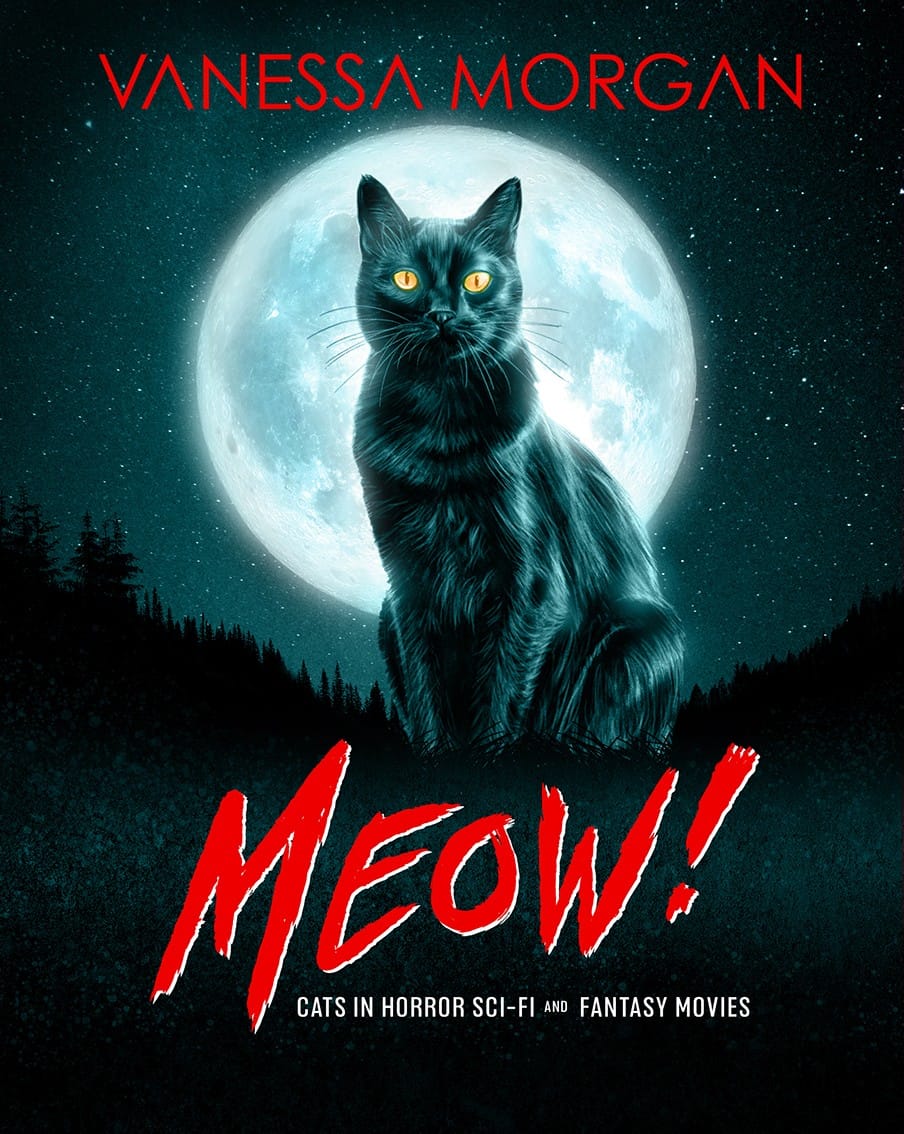
Meow! Cats in Horror, Sci-Fi, and Fantasy Movies
Strange Blood: 71 Essays on Offbeat and Underrated Vampire Movies

Evil Seeds: The Ultimate Movie Guide to Villainous Children



What an interesting premise for a movie and series! It sounds like something my Sweetie would enjoy, he is very interested in this period of Japanese history.
Interesting! I’ve never heard of it. It does seem like a solid and unique idea for a movie and even TV series. I bet people will love discovering both.
Wow, that is a thing? I don’t get out much, I guess 🙂 Certainly an interesting idea.
I have never heard about this story but it would be an amazing movie for cat lovers
Wow…this is so fascinating! I know cats were held as lucky, or good fortune in many cultures, but this movie, and premise is so interesting! I had no idea about them. Thanks for sharing and bringing t his to our attention. I have a lifelong best friend who adores everything about cats, especially books, so I know she will love this movie and your post! I will be definitely be sharing with her, and Pinning to share with others!