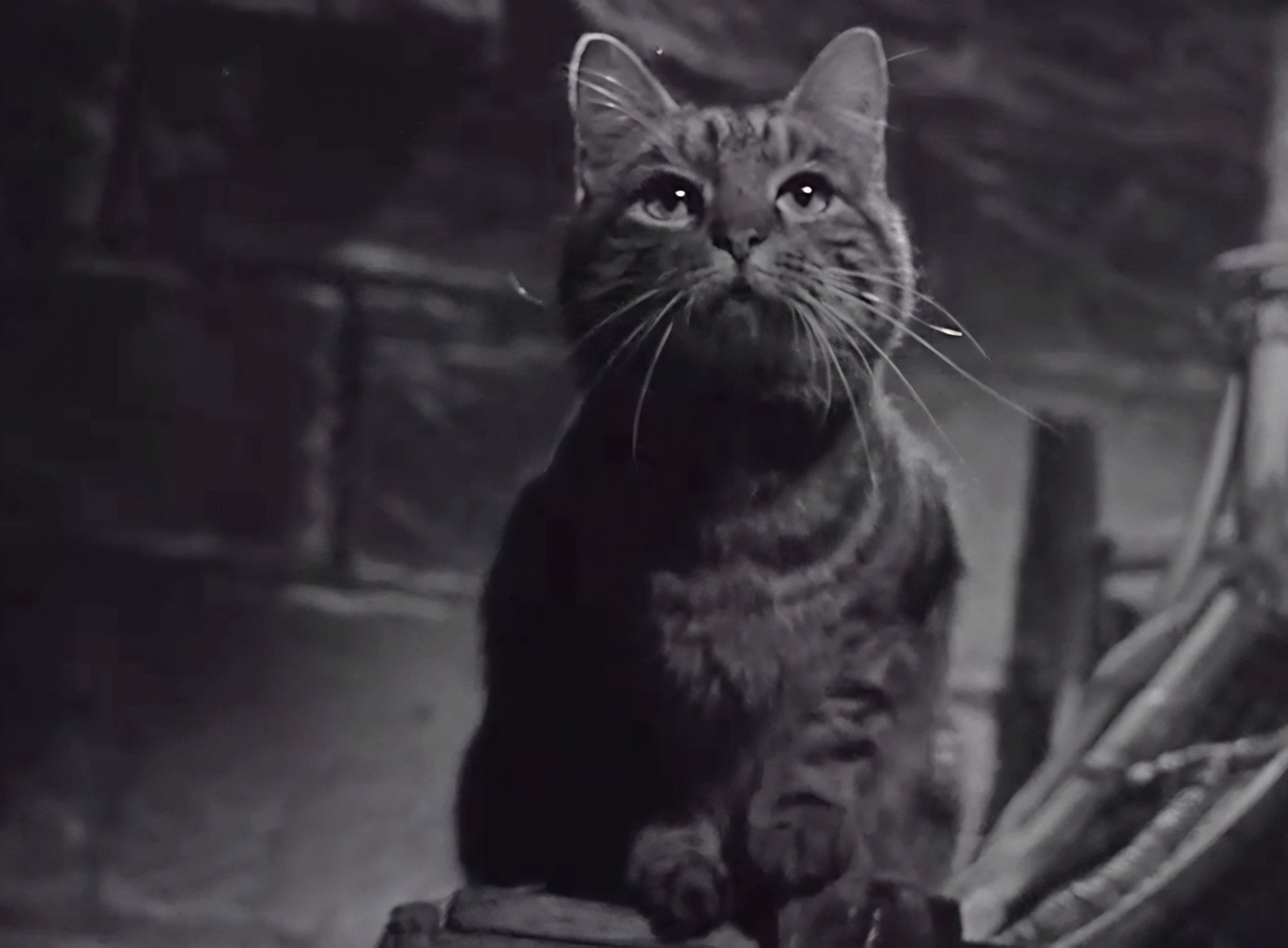
The Shadow of the Cat (1961): Classic Gothic Horror With a Vengeful Cat
The Shadow of the Cat (1961) is a classic gothic horror tale about a vengeful cat that relentlessly stalks those responsible for its owner’s murder, unleashing eerie justice within a shadowy mansion.
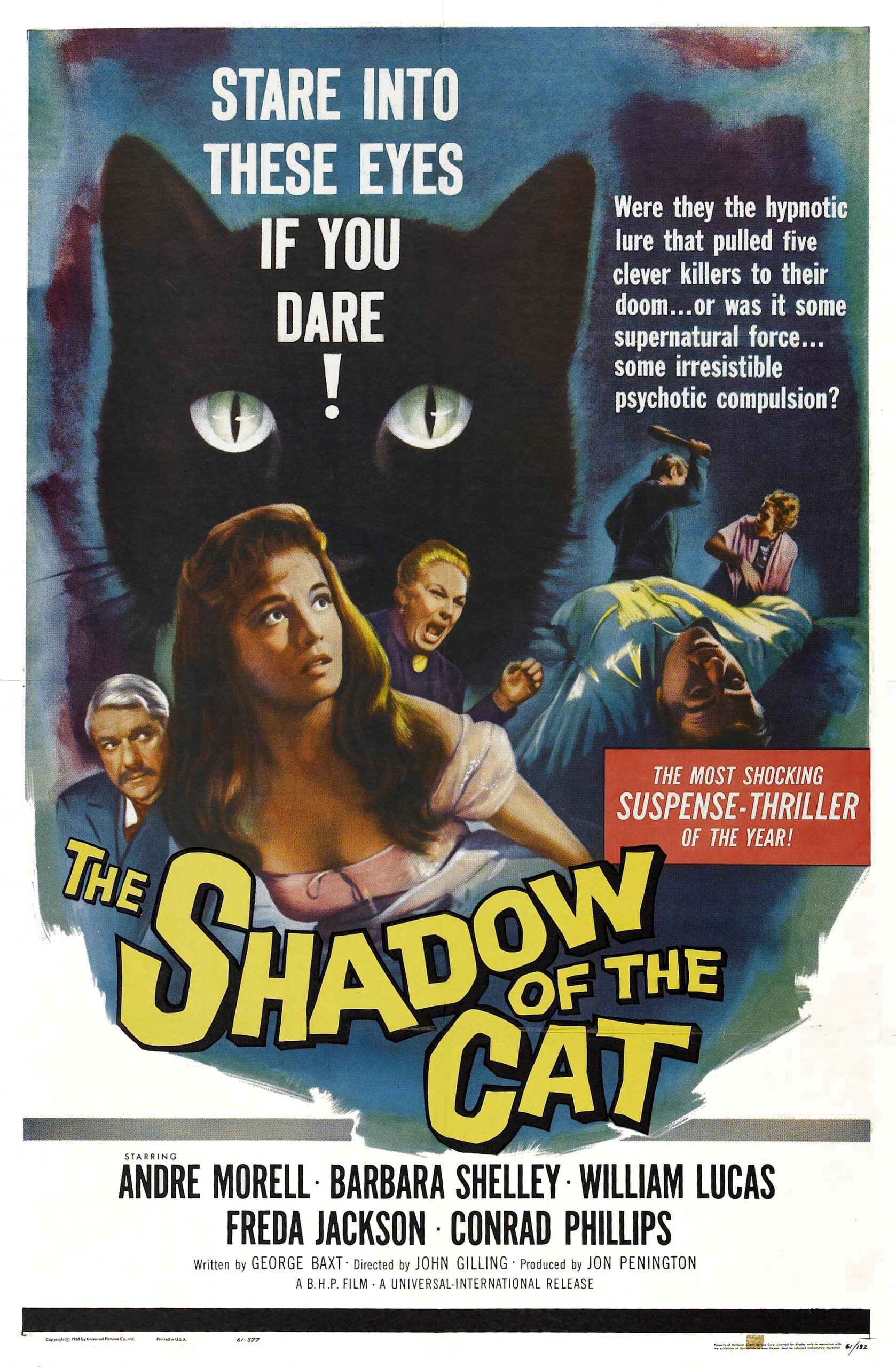
The Shadow of the Cat
Director: John Gilling
Country: UK
One cat, nine lives.
Whose?
Those of the nine occupants in a spacious, stately manor in turn-of-the-century England.
The Gothic “house on a haunted hill” sees a combination of sordid personalities at odds with one another and a persistently loyal domestic feline in a unique cozy mystery that sits reclusively on the psychological end of the horror spectrum.
Plot Summary
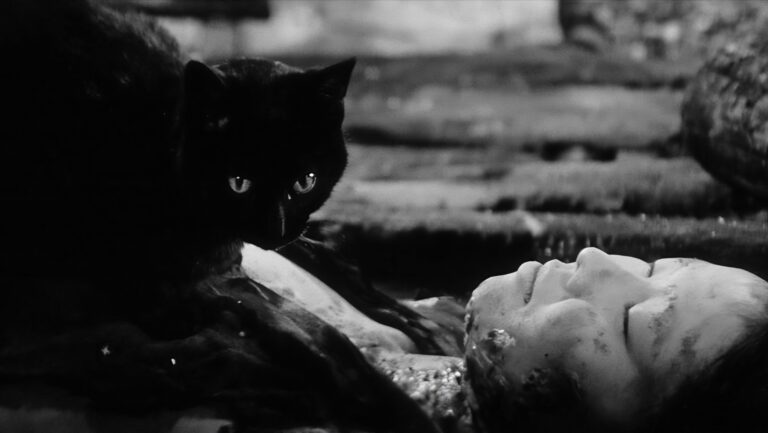
On a dark and spooky night, a housecat named Tabitha attends a deliciously macabre reading by her owner, Ella Venable, the heir to her wealthy family’s considerable inheritance.
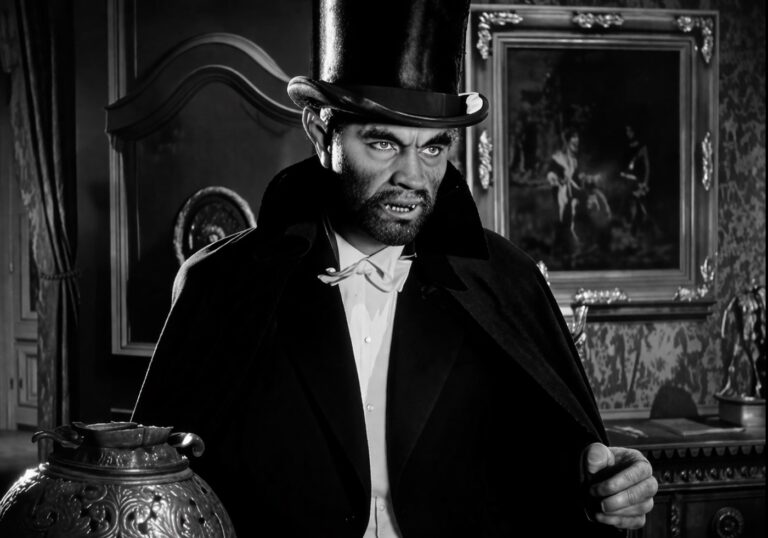
Soon, her husband, Walter (André Morell), and two trusty servants meticulously knock the cultured mum off.
Intent on marrying into the hefty fortune, Walter has craftily sped up the process by including his equally unscrupulous accomplices.
One slight issue, however, is that despite the carefully planned assassination, the shadow knows.
Or rather, the cat does.
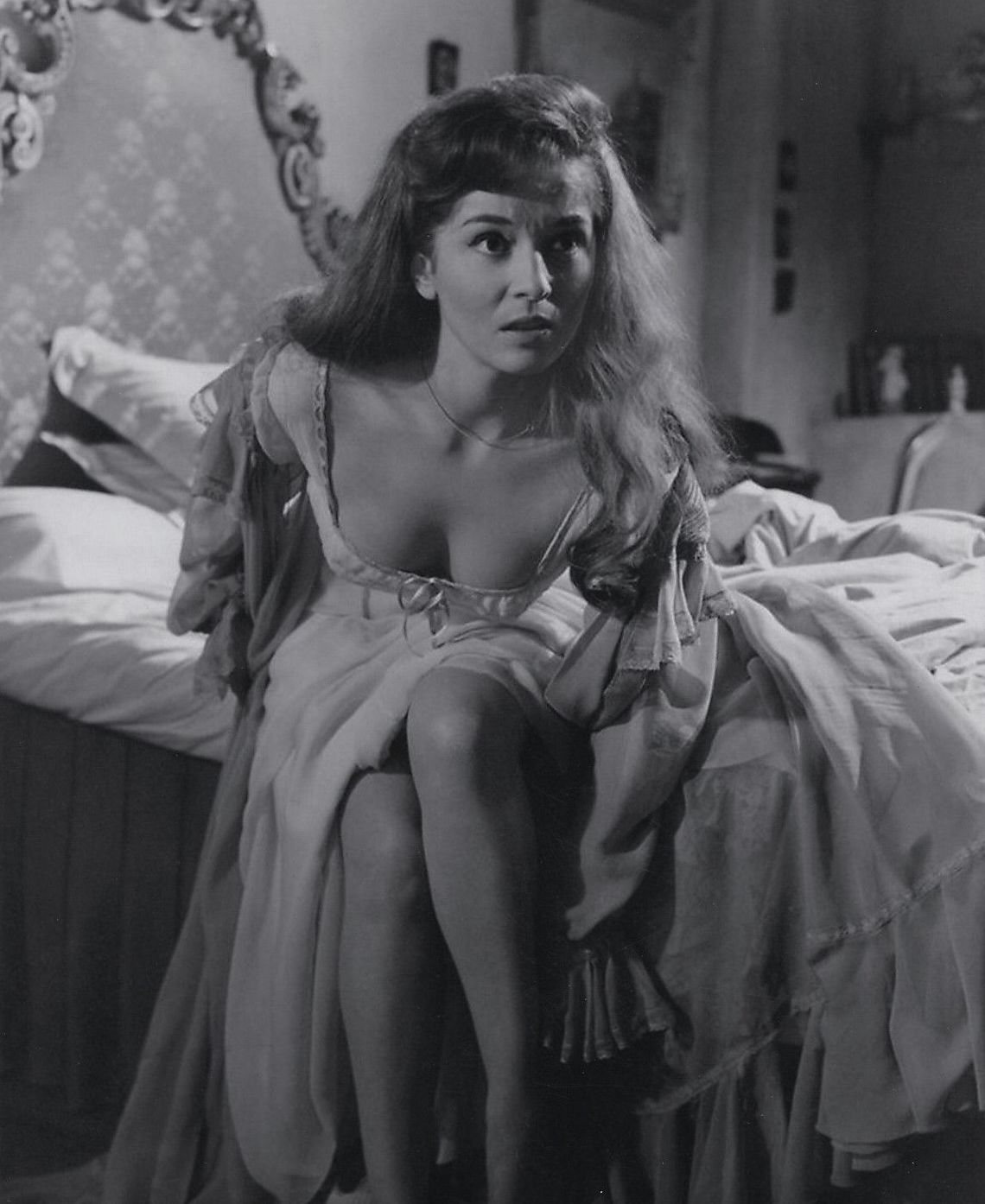
The anxious benefactor grows increasingly uneasy and perturbed by the cat’s presence, knowing it witnessed the foul act and may soon serve Walter a plate of Fancy Feast with a side order of vengeance.
Now, Walter’s machinations revolve around forging a bogus will as he searches the house to find and destroy the genuine one that excludes his name.
Walter can rightfully abscond after claiming the sizeable inheritance if the dastardly plan succeeds.
The obligatory straight-laced investigators show up, followed by a local press reporter named Michael (Conrad Phillips).
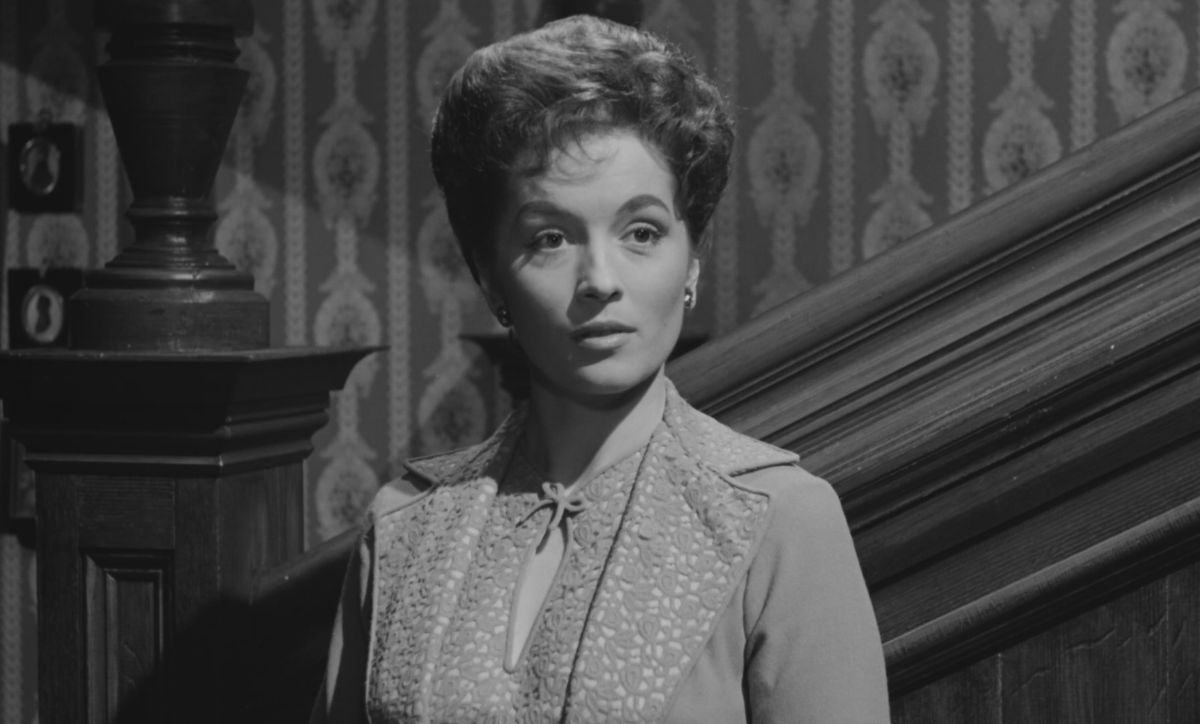
More houseguests arrive, summoned to read Ella’s will. They include her niece, Beth (Hammer starlet Barbara Shelley), the legitimate heiress. Though an obstacle to Walter, her presence is necessary for her supposed elimination. She is initially taken aback by their reaction to Tabitha and Walter’s stance on the inheritance.
Walter’s brother, Edgar (Richard Warner), his son, Jacob (William Lucas), and Jacob’s wife, Louise (Vanda Godsell), also arrive for the portentous reading but also to continue searching for the actual will.
It is at this turning point where the old dark house hosts two camps, one innocent and the other complicit in Ella’s murder.
Beginning with Tabitha shocking Walter into a state of confinement, the cat enacts its first order of retribution through a string of creatively mischievous stunts.
With intermittently flashing eyes, she startles Walter in an attic, prompting a heart attack.
This event soon leads to the demise of the nefarious butler and maid, Andrew (Andrew Crawford) and Clara (Freda Jackson).
At one point, they successfully lure Tabitha into a homemade trap but ignore Walter’s demands to destroy her, instead sending Andrew into a nearby marsh where he fumbles her and sinks into the mire.
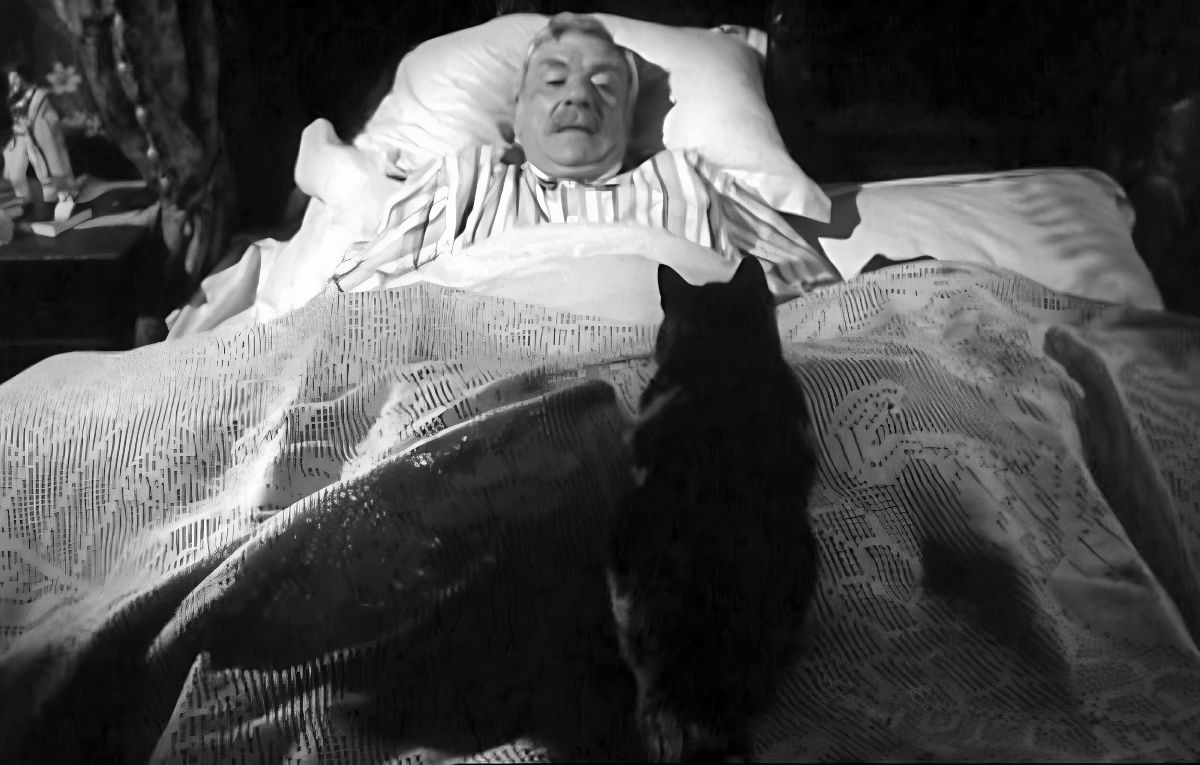
All of these cat-astrophic accidents, including Ella’s “disappearance,” point at murder, but the visiting inspector has his hands tied as the evidence continues to elude him.
Will Tabitha frighten these brandy-swilling baddies to death, or will she succumb to their poisons, traps, and treachery?
Is that penumbra emerging from the mantelpiece just their fervent imaginations or… the shadow of the cat?
Hammer Horror Connections
Shot at the illustrious Bray Studios and directed by genre specialist John Gilling, The Shadow of the Cat was released incognito by Hammer Films, regarded as the premier manufacturer of quality British horror movies in 1961.
Initially launched in the 1930s, Hammer gradually epitomized economical yet boldly sensational fright flicks with their wildly popular Technicolor embellishments of Dracula (1931) and Frankenstein (1931). The Shadow of the Cat was developed during this prolific period in which the studio was fastidiously building its blood-drenched mythology.
Obligatory doses of horror and shock amplified the mystery and suspense elements to align it with their popular and profitable product.
Often forgotten in Hammer lore, it was released almost surreptitiously under their sister company’s “BHP Productions” banner.
About the Director: John Gilling
Making his debut at the helm of the studios’ output, Gilling began work on The Shadow of the Cat shortly after forming his own London-based production company for which he wrote, directed, and produced Fury at Smuggler’s Bay (1961), starring Hammer stalwart Peter Cushing.
The well-received sci-fi picture Night Caller from Outer Space (1965) and further Hammer outings such as The Plague of the Zombies (1966), The Reptile (1966), and The Mummy’s Shroud (1967) soon followed.
Cinematography and Atmosphere
The striking black-and-white cinematography, courtesy of Arthur Grant, establishes an unsettling feel.
As Tabitha creeps through the house’s dimly lit halls, her hunters are driven to the brink of their collective sanity, their horrific encounters seen through her eyes that watch the world in a wildly distorted “lost Honeymooners episode” scope.
Mikis Theodorakis’ Musical Score
Additionally, Mikis Theodorakis’ score, his only foray into the genre, is riveting and mellifluous, evoking the necessary range to highlight The Shadow of the Cat‘s many emotive marks.
Theodorakis, an acclaimed Greek composer, later scored high-profile feature films such as Zorba the Greek (1964) and Serpico (1973). He received the Lenin Peace Prize, and his outspoken political activism and resistance to dictatorship saw him jailed and interred in a concentration camp before being eventually elected to Greek Parliament.
The Cast of The Shadow of the Cat: André Morell, Barbara Shelley, Richard Warner
An assemblage of seemingly kindred spirits, the cast benefitted onscreen from their notably familiar working relationship with each other and their director within the industry.
Before his delightfully devious performance as Walter, André Morell did time as a Shakespearian player and already had many Hammer horror roles under his belt. His highlights include The Bridge on the River Kwai (1957), The Hound of the Baskervilles (1959), and the third installment of the BBC’s Quatermass serials.
The “Queen of Hammer,” Barbara Shelley, known for her “cool and calm” heroine portrayals, enjoyed a prominent screen career that leaned toward the horror genre in the 1960s and 1970s. Her filmography includes The Camp on Blood Island (1958), Dracula: Prince of Darkness (1966), Rasputin: The Mad Monk (1966), The Gorgon (1964), and MGM’s Village of the Damned (1960).
Richard Warner, another accomplished stage and film actor, likewise served in Gilling’s Hammer stock company as well as Village of the Damned (1960) and the Soviet-produced Othello (1956).
Themes
The Shadow of the Cat is ripe with universal themes of guilt and transgressions similar to those found in Edgar Allan Poe’s “The Black Cat.”
In that short story, an abusive husband murders his wife and buries her with his black cat within a brick wall of his home.
Symbiotically, the human aggressors in both stories are undone by their greed and consciences.
Perhaps the theme of guilty visceral anxieties exacerbated by the constant presence of an obsequious pet menacing its paranoid opponents remains underused in cinema despite its effectiveness.
“It’s like living with some horrible evil spirit… not just the cat; it goes beyond that,” Beth confesses to Michael before their fears morph into passion (as they often do in horror cinema), allowing for a seemingly incongruous make-out session.
Beth is nevertheless Tabitha’s only friend in the house, though she is not immune to the madness that undoes nearly all other parties involved.
The nihilistic and greedy characters in the periphery of many Hammer films often stand in contrast to their straight-arrow amalgamate counterparts of Universal Pictures.
In Poe’s story, this madness, intensified by alcoholism and mental illness, is something the narrator has succumbed to despite the companionship of Pluto, his cat, whose “phantasm” would haunt his darkened soul.
In the short story, the narrator’s wife comments on black cats and their folklore connection to witchcraft, something that undoubtedly fails to comfort his troubled psychosis.
This supernatural element to the cat’s persona was already evident in Egyptian culture, where the cat god Bastet gave cats a sacred status, instilling in his followers a fear of the animals.
The Greek goddess of magic, Hecate, was also often depicted with black pets, and it is believed that she could transmogrify into a cat herself.
Cat lovers would be understandably horrified to learn of attempts to exterminate thousands of black cats in Europe throughout the Plague to eliminate their ominous stigma. Sadly, today, the cliché is partly responsible not only for high rates of abuse but also a shortage of black cat adoptions in animal shelters (though much of this stems from the mere fact that black cats also exist in more significant numbers than other feline varieties).
Perhaps The Shadow of the Cat further cements these phobias, subconscious or otherwise.
The narrative conjures up historical and cultural symbolisms and, for a scant moment of screen time, embodies those legends and superstitions that build on our emotions and fears.
So, if all the furry fury overwhelms you to the point that you can watch no more, you can always reach for the remote control and hit the “paws” button.
Or was that pun something the cat dragged in?
Final thoughts
Did you see The Shadow of the Cat (1961)? Or is it now on your to-watch list? Let us know your thoughts in the comments.
And if you loved this movie, be sure to also check out Eye of the Cat (1961).
Where to Watch The Shadow of the Cat
Find The Shadow of the Cat (1961) on Amazon!
About the author
CHRISTOPHER ROBINSON is a writer, filmmaker, and musician in New Jersey who began in film and TV as a camera operator in his late teens. He produced creative and commercial videos as the founder of Smoked Sausage Festival Films and Podium Productions and hosted and produced Princeton in Focus for cable access television. He has written for Cult Reviews, Rare Cult Cinema, Filmfax Magazine, and Western Magazine Digest. He also contributed essays to Vanessa Morgan’s reference guides When Animals Attack: The 70 Best Horror Movies with Killer Animals, Strange Blood: 71 Essays on Offbeat and Underrated Vampires Movies, and Evil Seeds: The Ultimate Movie Guide to Villainous Children. You can find his writings and videos at ChristopherRobinson.info.
This review of The Shadow of the Cat was previously published in the book Meow! Cats in Horror, Sci-Fi, and Fantasy Movies!