The Tomb of Ligeia (1964): Roger Corman’s Gothic Horror Film About a Sinister Black Cat
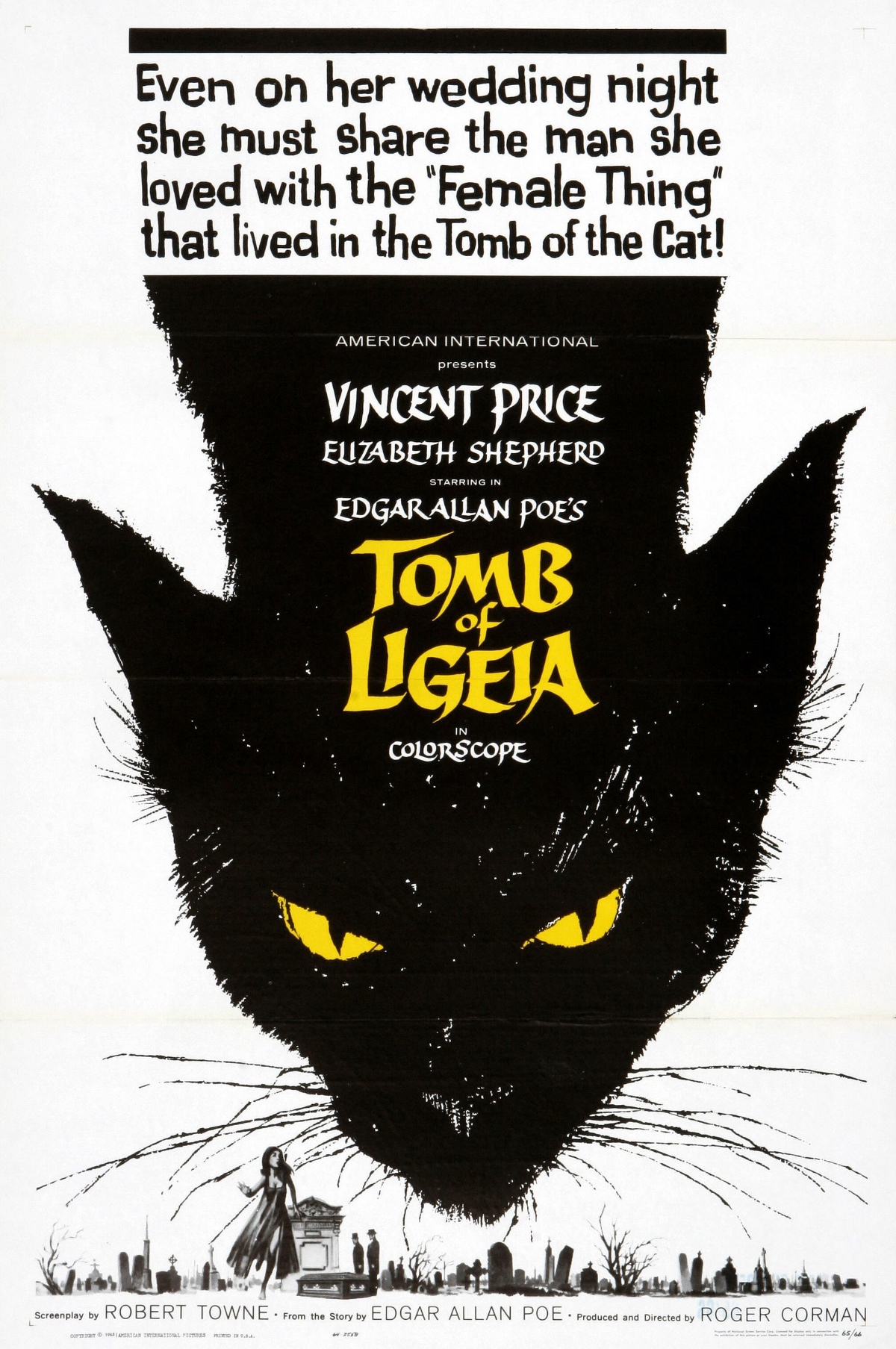
In Roger Corman’s The Tomb of Ligeia (1964), a woman returns from the grave, and her sinister black cat seems fully onboard with the haunting.
The Tomb of Ligeia
Director: Roger Corman
Country: UK
The Last of Roger Corman’s Edgar Allan Poe Adaptations
The last of Roger Corman’s Poe adaptations for American International Pictures is unique for several reasons, including the terrific on-location exteriors shot in the English countryside and the interiors on the sets of Shepperton Studios.
As with The Masque of the Red Death, shot at Elstree and released earlier that year, the increasingly ambitious producer/director was looking to explore a different look from his previous outings and recruited Hammer veteran Arthur Grant (The Curse of the Werewolf, Frankenstein Must Be Destroyed, Quatermass and the Pit) to serve as his director of photography. (This is also the rare occasion where Corman ceded producing duties to someone else, in this case, production manager Pat Green, who would serve similar duties for Die, Monster, Die!, The Oblong Box, and The Projected Man.)
The results are among the finest, well-polished entries in the excellent series.
A Grieving Widower and a Sinister Black Cat
Things begin on a sad note, with grieving widower Verden Fell (Vincent Price) laying his beloved bride Ligeia (Elizabeth Shepherd, in a dark wig) to rest on the grounds of his ancestral home, much to the chagrin of local Bible thumpers who complain that she was not a proper Christian and therefore does not deserve to lie in consecrated ground.
Fell pulls the landowner card, following up with Ligeia’s last words, “Man need not kneel before the angels, nor lie in death forever, but for the weakness of his feeble will.”
By this, he claims, Ligeia will never die.
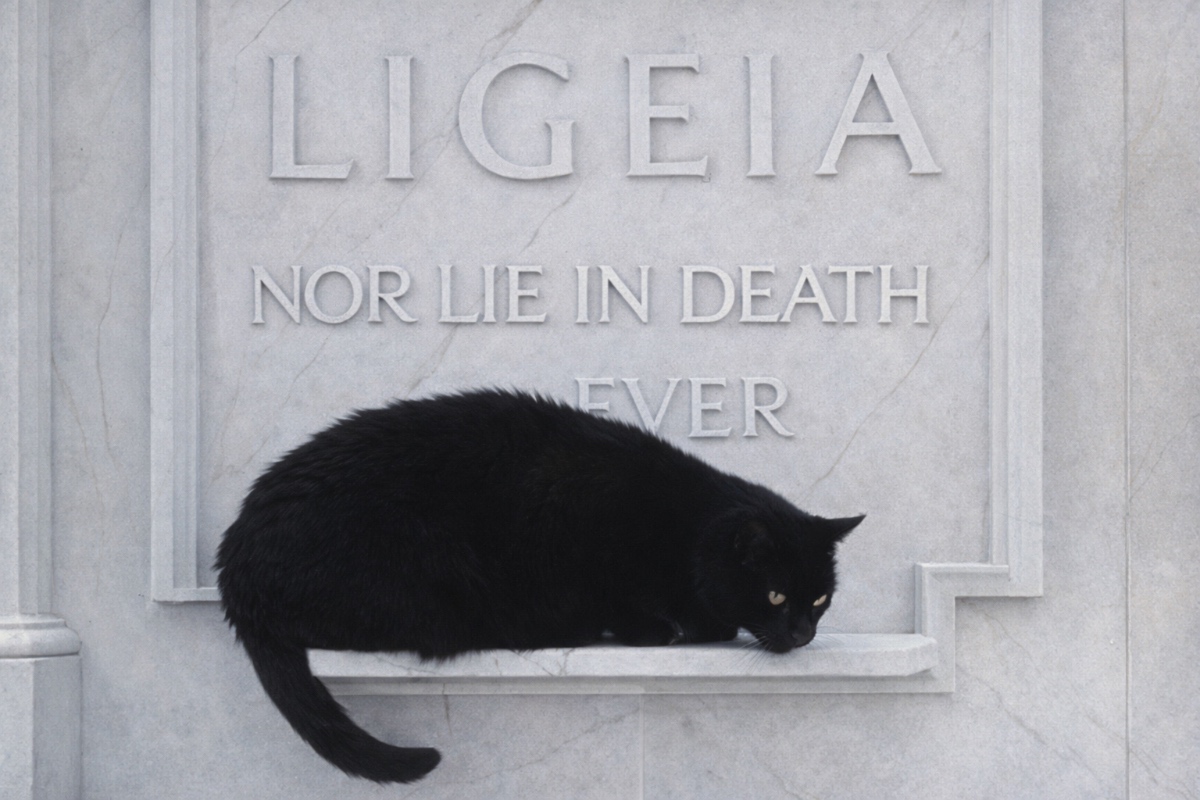
Just then, a black cat (it is Poe, after all) jumps onto the coffin, and through the glass lid, we see the corpse’s eyes snap open. Upon examination, however, it appears to have been a reflex; Ligeia’s heart does not beat, and the burial proceeds as scheduled.
Meeting Lady Rowena
Time passes, and the viewer is thrust into the midst of a well-photographed foxhunt, where we are introduced to the vibrant and willful Lady Rowena (also Shepherd, her natural ginger locks on full display).
Growing tired of the pursuit of small beasts and seeking other forms of distraction, she splits from the group, with her besotted suitor Christopher Gough (John Westbrook) following dutifully behind. The two wander unknowingly near the ancient abbey ruins where Ligeia has been laid to rest.
The same black cat spooks Rowena’s horse. She is thrown to the ground, whereupon Verden appears (sporting some groovy tinted glasses) and comes to her aid.
Immediately drawn to his mysterious nature, Rowena insinuates herself into Verden’s life, and the two happily court and marry.
Following their honeymoon, however, she observes the return of her husband’s dark mood, accompanied by increasingly strange behavior, such as disappearing each night for hours.
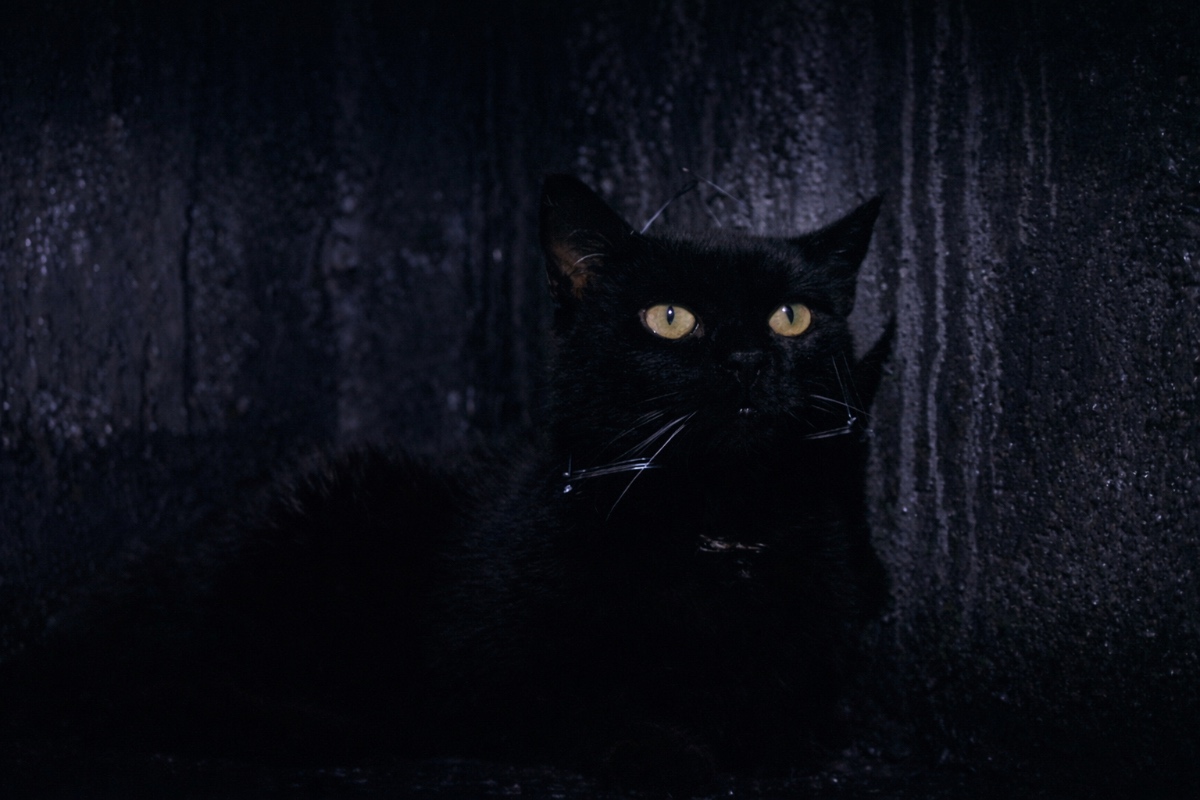
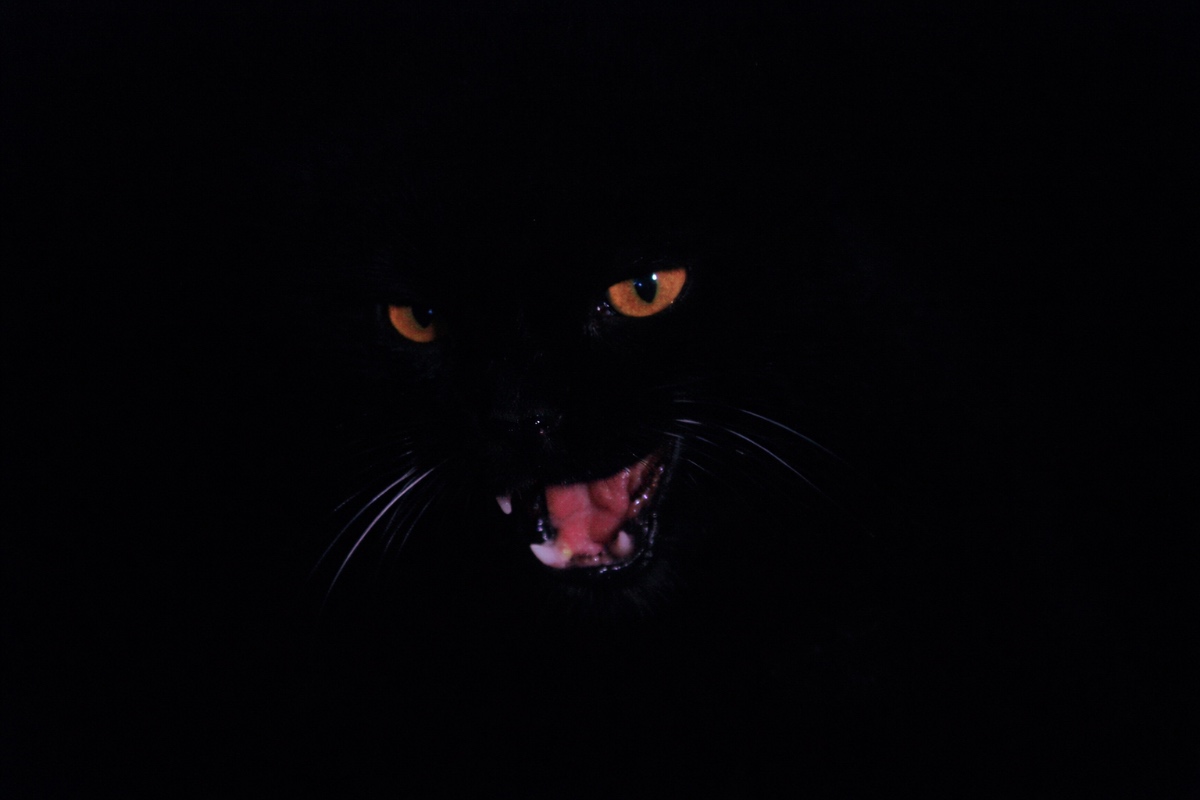
The dark-haired feline prowls around the corners of the room as if serving as a surrogate for the former mistress of the house. (The cat has already drawn blood from Rowena early on, as well as terrorizing her in a bell tower.)
Ligeia’s Influence
One night, while hosting a dinner party at which John, Rowena’s father Lord Trevanian (Derek Francis), and Dr. Vivian (Richard Vernon) are present, Verden mentions his interest in the powers of mesmerism and offers to hypnotize Rowena as an example. In a trance, the couple’s deepest fears are confirmed: the spirit of the dark, exotic Ligeia intermittently inhabits Rowena, fulfilling her dying curse that she “would be his only wife.”
Obsession and Ambiguity
Poe’s slim story “Ligeia” is not heavy on plot; instead, it is a deep and mournful meditation on obsession where the narrator’s wife dies from illness, after which he remarries, and his new bride also falls ill but then revives with the face of his former love.
Is it a grief-wrought hallucination or supernatural leanings?
As is the case with many of the author’s unreliable narrators, the answer is unclear, but Corman and future Oscar-winning scribe Robert Towne (Chinatown, The Last Detail) tease out a nimble terror piece for the target audience while also reveling in some exquisite and poetic dialogue for the headier types.
Links to Previous Poe Films
The black cat, a substitute for Ligeia’s spirit, had already shown up in the middle section of Tales of Terror (1962) and is only one nod to Corman’s former Poe efforts. Price, at one point, intones, “Nothing more, nothing more,” clearly calling to mind his turn as Erasmus Craven in The Raven (1963), and his period shades (sensitivity to light) would have nestled nicely on the nose of Roderick Usher. Verden’s obsession with his deceased wife sounds similar to Nicholas Medina’s fixation on the lost Elizabeth in The Pit and the Pendulum (1961). Almost all of the Poe films feature some sort of nightmare sequence. However, to Corman’s credit, Ligeia’s leans less on the colored filters and instead allows slow-motion and Shepherd’s haunted performance to do the heavy lifting. As for the return of the flaming chicken coop, which served as the climax for nearly all the previous installments, it is like a welcome nudge in the shoulder, reminding us that we are among friends.
Despite these familiar touches, the change of scenery has imbued new life on both sides of the camera. Corman revels in the morbid Gothic atmosphere, aided by Colin Southcutt’s excellent production design (in for Daniel Haller) and the elegant musical strains from Tower of Evil composer Kenneth V. Jones (in for Les Baxter). Towne introduces numerous unexplained phenomena (the dark hairs in Rowena’s hairbrush, Ligeia’s ghostly appearance in the finale, that darn fox) that feel in keeping with the source material’s ambiguity while also layering in Verden’s interest in Egyptian gods, ancient artifacts, and Celtic landmarks such as Stonehenge to keep us on our toes.
The Cast of The Tomb of Ligeia
The performances are superb, with Price once again diving into the role of a madman clinging to sanity with his usual aplomb. Yet, there is less mania and flamboyance this time; the actor feels more grounded than in his more fanciful (if no less entertaining) characterizations, and we welcome the change in palette.
Shepherd ably matches the horror icon in her dual roles of tormentor and savior.
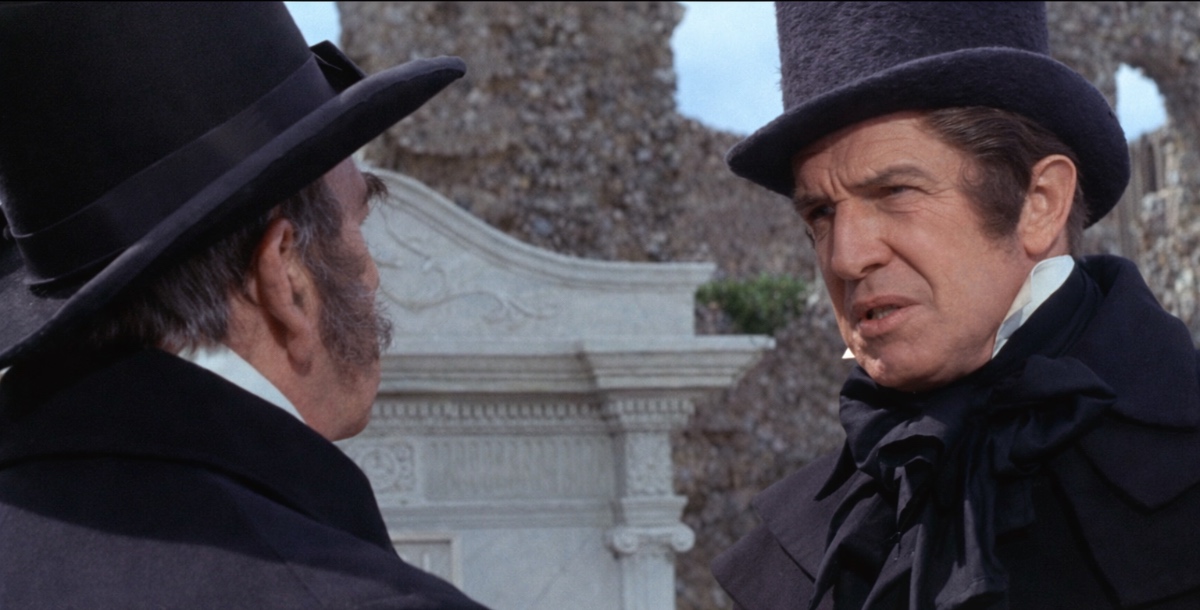
Both are given glorious support by the aforementioned Westbrook, Francis, and Vernon, with a special mention going to stalwart British character man Oliver Johnston as Verden’s loyal and conflicted manservant Kenrick. Watching Johnston skillfully weave between loyalty to his master/mistress and obscuring the truth from outside observers is pure magic; we understand his plight and empathize with him rather than judge the man.
A Timeless Gothic Horror Experience
The film was well-received upon its release and has maintained its reputation as a high-water mark of the series over the past 60 years, with several critics comparing it to Alfred Hitchcock’s Vertigo (1958), a nod Corman probably did not mind hearing one bit.
Though available in various media at this point, I recommend that fans pick up The Tomb of Ligeia on Blu-ray as part of Shout! Factory’s excellent The Vincent Price Collection II. The disc is packed with supplemental goodies, including three separate commentary tracks (1) Corman, (2) Shepherd, and (3) historian Constantine Nasr (who provides background history on pretty much everyone involved in the film, onscreen and off), as well as a still gallery, theatrical trailer, and a vintage intro/wrap-up from the star from when he hosted an Iowa public television showcase of his films. For all that, you cannot beat the Price.
About the author
AARON CHRISTENSEN (aka “Dr. AC”) is a Chicago-based actor, writer, personal trainer, and self-defense instructor. He has viewed and reviewed over 4,000 (and counting) fright flick titles for his popular blog, podcast, and YouTube Channel, HORROR 101 with Dr. AC.
Aaron is the editor of the critically acclaimed guidebooks HORROR 101: The A-List of Horror Films and Monster Movies and HIDDEN HORROR: A Celebration of 101 Underrated and Overlooked Fright Flicks (winner of the 2013 Rondo Hatton Award). He is also a founding member of WildClaw Theatre, Chicago’s only horror-centric theater.
In addition to serving on the writing staff of HorrorHound magazine from 2009-2015, he has contributed to Rue Morgue, Fangoria, Evilspeak, Famous Monsters of Filmland, and Vanessa Morgan’s compendiums, When Animals Attack, Strange Blood, Evil Seeds, and Meow!
Other movie reviews by Aaron Christensen:
Discover more horror movies with cats in the book Meow! Cats in Horror, Sci-Fi, and Fantasy Movies.