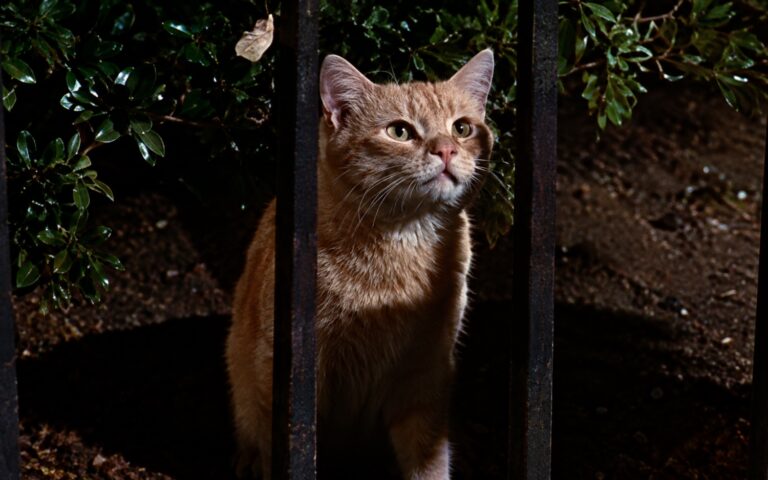
Eye of the Cat (1969): a Murder, a Heiress, and a House Full of Killer Cats
Eye of the Cat (1969) follows a scheming nephew and his lover as they plot to kill a wealthy aunt, only to face her vengeful clowder of killer cats.
Eye of the Cat
Director: David Lowell Rich
Country: USA

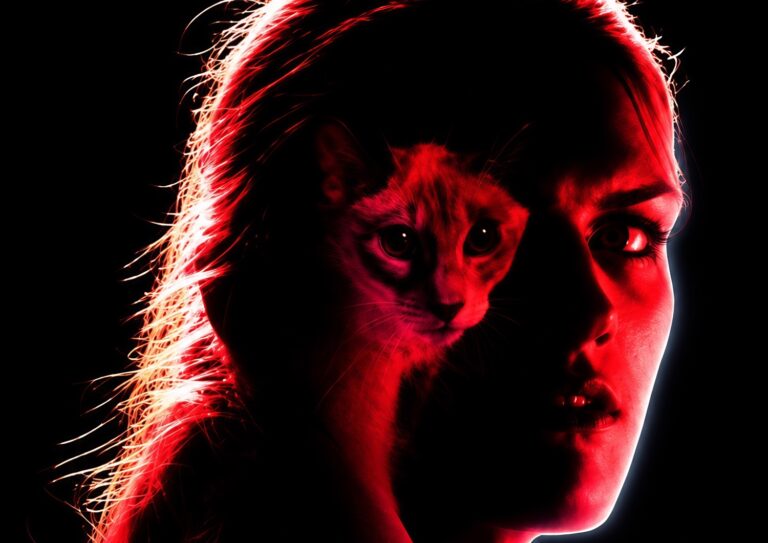
Eye of the Cat‘s splendid and mildly psychedelic pre-opening credits sequence tells us that cats will be front and center in this film. We are only getting introduced to our lead feline: Tullia, the red tabby. But rest assured, a whole clowder of ravenous cats will become a threat toward the climactic denouement.
Drawing influences from 1960s cinema, Eye of the Cat opens similarly to The Thomas Crown Affair (1968). It is a prime example of the era’s innovative use of split screens, an editing technique applied to visual storytelling. It was later popularized to perfection by Brian De Palma as his trademark style during the 1970s.
Plot Summary
This opening montage, devoid of dialogue, introduces our five leading players. Luke (Tim Henry) drives his Aunt Danny (Eleanor Parker)—in a wheelchair and supported by an oxygen tank—to the beauty shop of Kassia Lancaster (Gayle Hunnicutt). Here, Aunt Danny suffers a stroke and drops a pendant with a photo of her favorite nephew Wylie (Michael Sarrazin). Tullia, who sneaked into the car earlier, witnesses the events.
Kassia uses the photo inside the pendant to track down Wylie. He has spent most of his young adult life traveling and is now back in town.
While giving Wylie an after-hours makeover, she reveals her plan. Wylie must convince the terminally ill Aunt Danny to leave him all her money. If Wylie can get her to sign the papers, Kassia will murder the woman for half of the inheritance.
A minor but manageable complication might be Wylie’s brother Luke, who lives with Aunt Danny.
A much bigger problem, however, will be the legion of cats they share her downtown mansion with, and not in the least because they are the sole beneficiary of her financial wealth.
1960s Horror and Animal Attack Movies
Before we get down on all fours and start running with the feline pack, let us dive into the nature and genesis of Eye of the Cat.
Films of this ilk were on the rise during the second half of the 1960s and flourished well throughout the 1970s. Composed of various cinematic genre elements en vogue, it represents a varied reflection as a product of its time.
Alfred Hitchcock‘s The Birds (1963) helped create the “animal attack” genre to come. But before dogs, bears, sharks, and other vicious beasts would start terrorizing humans, domestic cats seized this opportunity first. While Hitchcock’s flock of killer birds inspired the horde of felines running around in this murderous tale, Eye of the Cat would have more Hitchcockian connections during its development.

The UK predominantly provided the contemporary type of cinema to shape Eye of the Cat. Hammer Films was already harvesting successes with psycho-thrillers like Taste of Fear (1961), Paranoiac (1963), and The Nanny (1965). Additionally, there was a European huis clos flavor with a fragrance of Italian eroticism from psycho-sexual crime pieces like Umberto Lenzi’s Orgasmo (1969), mixed with a bit of the free-spirited 1960s mindset. The theatrical trailer’s description of the plot as “an evil game of greed and lust” captures the main impetus of the movie, giving you a balanced taste of what Eye of the Cat has to offer.
Eleanor Parker and the Rise of Grande Dame Guignol Horror
Overseas, during the golden era of the 1930s, 1940s, and 1950s classic American cinema, many great women—often called Les Grandes Dames of this period—helped build Tinseltown thanks to their versatility as actresses in several genres.
But by the time the 1960s arrived, younger actresses rose to the scene. As a consequence of growing older, the roles offered to these first film stars decreased drastically in quality and quantity. With their drop in popularity seemingly irreversible, an unexpected 1960s phenomenon gave way to new opportunities: the birth of Grande Dame Guignol cinema. It also became known by the more pejorative genre term “hagsploitation,” which, in this day and age, may all too easily be dismissed as derogatory and ageist while shamefully overlooking its empowering qualities.
Having starred in many high-profile films before, Eleanor Parker—at the time 47—was cast as the big-name Grande Dame in Eye of the Cat. However, it is a stretch to think of her role as a so-called “psycho-biddy” like the ones in many hag horror offerings. She plays a lonely cat lady. She is wealthy, terminally ill, in need of affection, and perhaps just a little too fond of her nephew Wylie. But Aunt Danny is neither crazy nor a villain.
Killer Cat Scenes
If you love the sight of dozens of cats in all shapes and colors running amok inside a mansion, this film is for you.
The scenes that have them frantically jumping all over each other in the basement or hungrily chasing a blood trail up the stairs are a heart-skipping doozy. Those “damn near a hundred cats,” as Wylie puts it, need to go. So he convinces Aunt Danny to have them taken away and set free on the outskirts. Of course, they inexplicably appear again soon enough, as their presence will turn out intrinsic to the conspiracy plot.
Then there is Tullia, our furry ginger star. This cat comes separate from the pack; it is not their leader but has a plan and purpose.
As Tullia strolled around at the beauty shop when Kassia explained her murderous plans to Wylie, gullible cat lovers might believe it is eavesdropping on them.
Later, Tullia finds its way back to the mansion, hiding and stalking before ultimately becoming Aunt Danny’s protector in preventing her death. At least, this becomes evident during Kassia’s nightly attempt to cut off Aunt Danny’s oxygen while asleep.

But there is more to Tullia’s motives for not liking Wylie and Kassia. Earlier on—still at the beauty shop—Tullia revealed itself with an effective jump scare. In a panic, Wylie threw the animal straight into a heating device. It short-circuits instantly, fiery sparks explode, and before we can say “ginger cat toast,” we cut to the next scene. Did Tullia die, or did she manage to escape? The fact we do not get to see this may also emphasize the superstition of cats having nine lives.
In any case, the role of cats is ambiguous. Some people might imagine a supernatural narrative to connect everything. Gradually, the clowder seems to be causing harm to the people living in the mansion. However, they are merely tools in a murder plot that gets out of hand and turns against the conspirators. Aunt Danny and her nephew Luke take care of them inside the mansion, but the cats could also be seen as keeping the two of them as prisoners in their own home.
Gayle Hunnicutt
Gayle Hunnicutt embodies the film noir aspect of Eye of the Cat, as her character services the plot’s irresistible femme fatale. Producers initially wanted Tippi Hedren for the role—another link to The Birds—but got turned down. Fortunately, Hunnicutt delivers a standout turn as manipulative seductress Kassia.
Among the subsidiary characters, Welsh-born actress Jennifer Leak, credited as Poor Dear, plays one of Wylie’s girlfriends— a minor yet daring role, as the scene introducing her character required zero input from the wardrobe department.
Michael Sarrazin
Handsome British upcoming actor Terence Stamp was the first choice to play Wylie. However, he was off to Italy, working with Pier Paolo Pasolini and Federico Fellini, so producers settled on getting Michael Sarrazin for the role. He plays Wylie with flair, bringing some wildly confident ways to the acting table.
Vaguely reminiscent of David Hemmings’ driven portrayal of photographer Thomas in Blow-Up (1966), Sarrazin’s performance comes off as less arrogant and much more likable. Wylie thinks of the world as an oyster and loves female company (preferably with their clothes off while his boots stay on). His lines are snappy, and his actions are spontaneous, which makes his appearance in Eye of the Cat memorable. Of course, there is more going on with Wylie than just his amusing swinger’s attitude. He has ailurophobia (fear of cats) caused by an impressively complex childhood trauma.
Responsible for this insanity, exquisite dialogue, and entertaining murder conspiracy plot—with cats—was Joseph Stefano. Best known for writing the screenplay of Hitchcock’s Psycho (1960) and his work on the series The Outer Limits (1963-1964), he also revisited the psycho-horror genre with screenplays for Psycho IV: The Beginning (1990) and the lesser-known whodunit-slasher Home for the Holidays (1972).
Cat Trainer Ray Berwick
Six lookalikes with different talents played Tullia: a great jumper, a calm observer, a skilled hisser, etc.
Hollywood’s most famous animal trainer, Ray Berwick—who previously also handled the feathered creatures on The Birds—was brought in to wrangle all felines. Eye of the Cat was his first time working with cats on a major film production.
However, there are some lucky shots where a cat did something it was not supposed to, but it turned out well on camera.
The Rest of the Crew
Thanks to editor J. Terry Williams, all cat action blends in convincingly with human interactions.
Composer Lalo Schifrin’s orchestrations bring ominous moments and suspenseful paced cues to the picture.
The luxurious mansion’s interior set designs are a vintage feast for the eye. Ellsworth Fredericks and Russell Metty’s combined cinematography classes things up with luscious camera movements.
Two Different Endings
Also interesting is that Eye of the Cat has two different endings: one for the initial theatrical release and the other for TV distribution networks. The latter focuses more on Tullia’s possible grudge against Kassia, but what ultimately happens to her can as easily be considered an accident without substantial evidence of the cats being deliberate culprits. At best, given how the film ends, you can connote a metaphorical sense of poetic justice to them. Whichever account the viewer prefers, the ambiguity works out well in both.
Eye of the Cat: A 1960s Horror Cult Classic
While Eye of the Cat contains some well-executed scenes of horrifying suspense, the screenplay is too playful—much aided by Sarrazin’s energetic performance—making the viewing experience more amusing than terrifying.
One superbly suspenseful scene has Aunt Danny outdoors in a malfunctioning wheelchair, on the verge of rolling down a hill and straight onto a busy traffic crossroad. Another (humorous) highlight is Hunnicutt and Leak unexpectedly having a go at each other in a catfight at a party.
On the upside, these scenic tonal shifts offer enough delights to chew on.
If you loved Eye of the Cat (1969), check out all our other cat horror movies for even more feline frights.
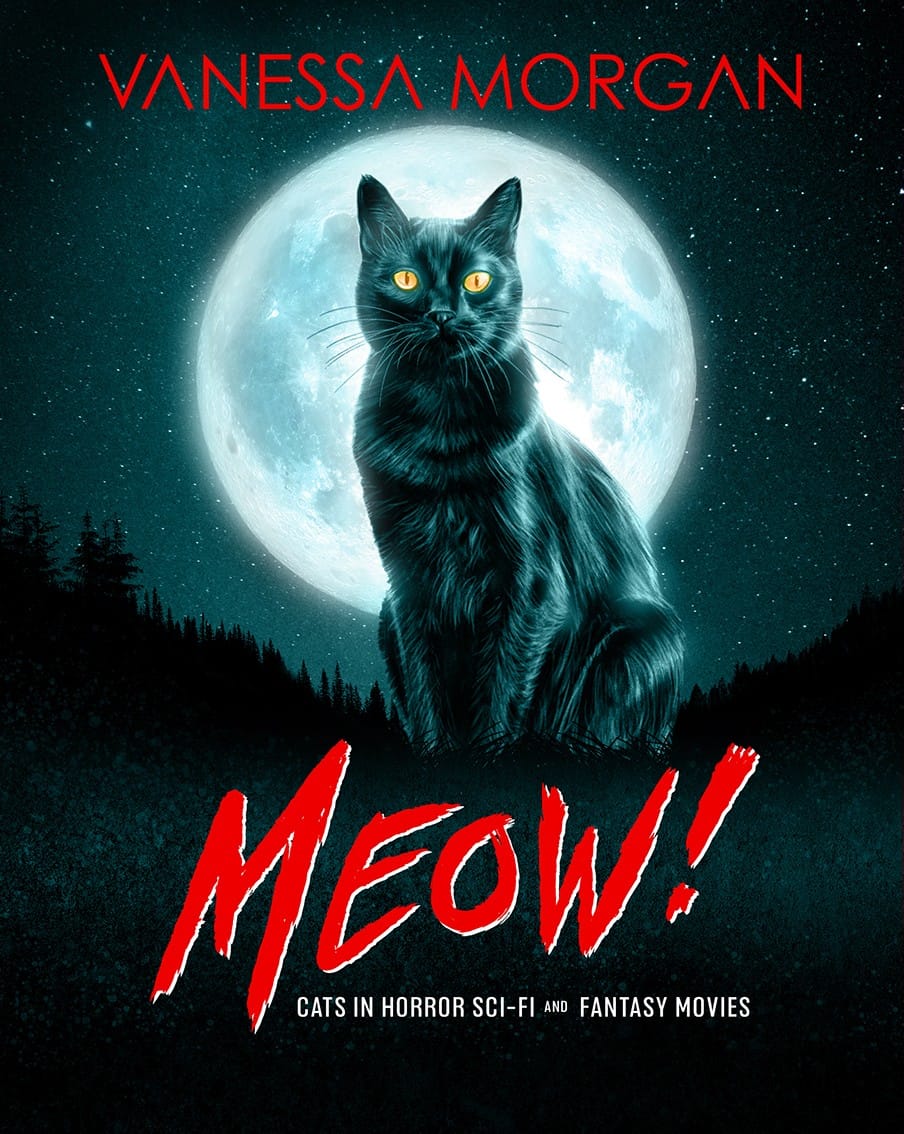
This movie review was previously published in the book Meow! Cats in Horror, Sci-Fi, and Fantasy Movies.
About the Author
GERT VERBEECK is a Belgian writer, director, producer, and musician. He received his film education at LUCA School of Arts, Brussels, and continued with The Polish National Film School, Lodz. He likes his literature, motion pictures, and music diverse, nuanced, and intense.
His independent production floor, Amoeba Pictures, offers non-exclusive creative contributions to local projects and international co-productions. Sharksploitation (Sitges Film Festival 2023, official selection) and Backgammon (BIF Market 2023, WIP section) are among the more recent collaborations.
Gert was co-founder and chief editor of the alternative genre film website Cult Reviews (2008-2016). His writings include contributions to the bi-monthly printed HorrorHound magazine (2011-2012) and 23 film essays published in five movie reference books (2007-2021).
He is also a frequent collaborator behind the scenes of the HORROR 101 with Dr. AC film podcast series.