
Night on the Galactic Railroad (1985): A Deep Dive into Kenji Miyazawa’s Spiritual Classic
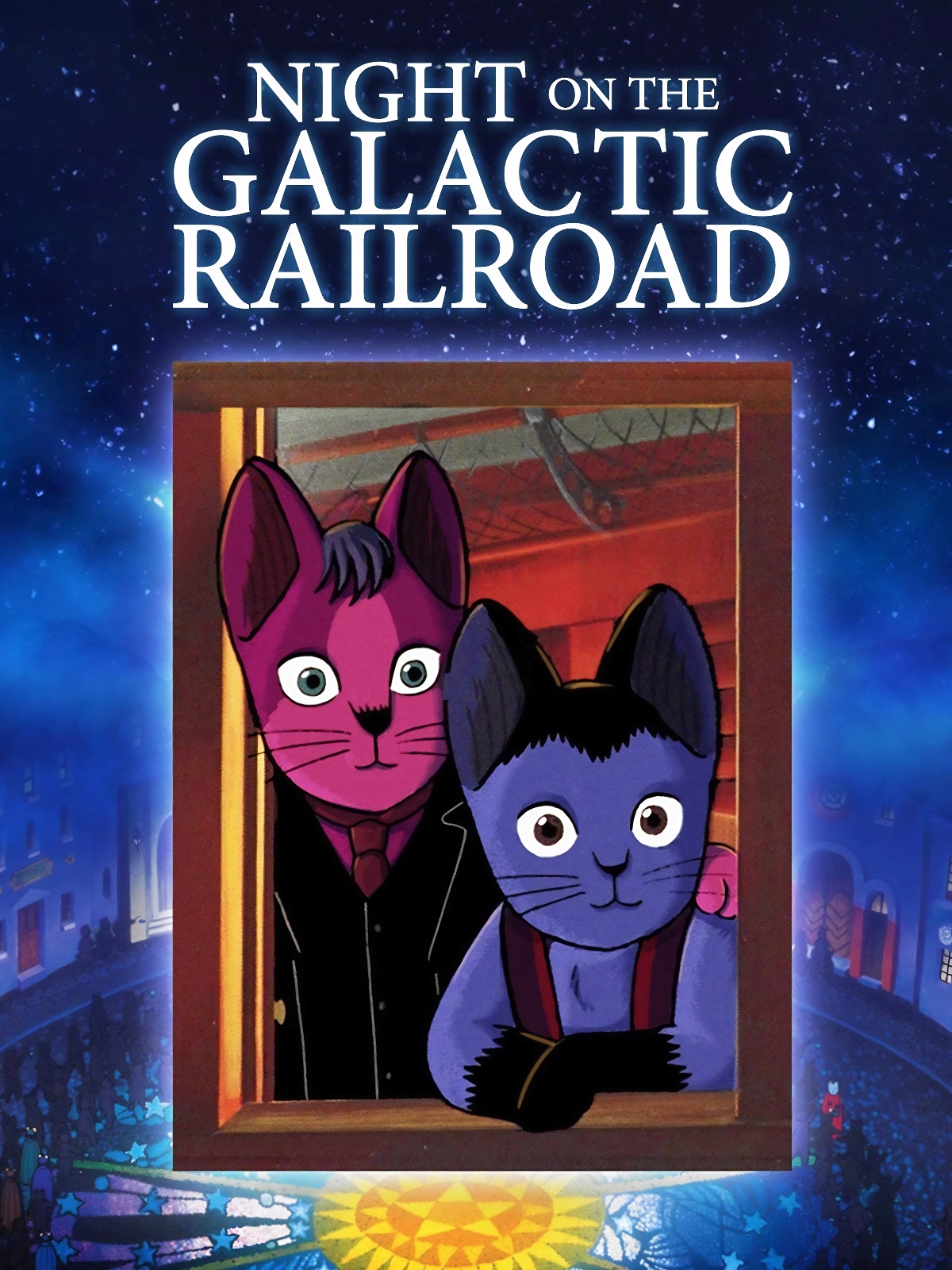
Night on the Galactic Railroad (1985) adapts Kenji Miyazawa’s beloved novel, following two anthropomorphic cats on a mystical journey through the stars.
Night on the Galactic Railroad
Original title: Ginga-tetsudô no yoru
Director: Gisaburô Sugii
Country: Japan
Most of us have probably looked up at the night sky at least once to make a wish upon a shooting star, a tradition that dates back to ancient times when people feared and marveled at things they could not understand.
Over the centuries, every culture on every continent has developed its interpretation of shooting stars.
But what might the animal world think of these tiny, sparkling points in the sky?
Kenji Miyazawa: The Visionary Behind Night on the Galactic Railroad
To fully comprehend the Japanese fantasy tale Night on the Galactic Railroad, we must take a short (train) trip into history.
Let us start with the enigmatic Kenji Miyazawa, a Japanese poet, novelist, and writer of children’s literature who began developing his famous novel Night on the Galactic Railroad around 1924.
In 1918, he had already composed two children’s tales in the form of Tanka (a type of short poetry and one of the major genres in Japanese literature).
However, unlike his poems, his fiction did not materialize quickly. Miyazawa never completed the middle part of Night on the Galactic Railroad, even though he continued to refine this imaginative yet psychological novel daily until his death in 1933.
Buddhist Spirituality and Other Themes in Miyazawa’s Work
Spirituality was essential in Miyazawa’s work. He was a devout Nichiren Buddhist, and aspects of life, death, spiritualism, and self-sacrifice are recurring themes in several of his novels, including The Nighthawk Star (Yodaka no Hoshi, 1921), The Life of Budori Gusuko (Gusukō Budori no Denki, 1932), and, of course, Night on the Galactic Railroad.
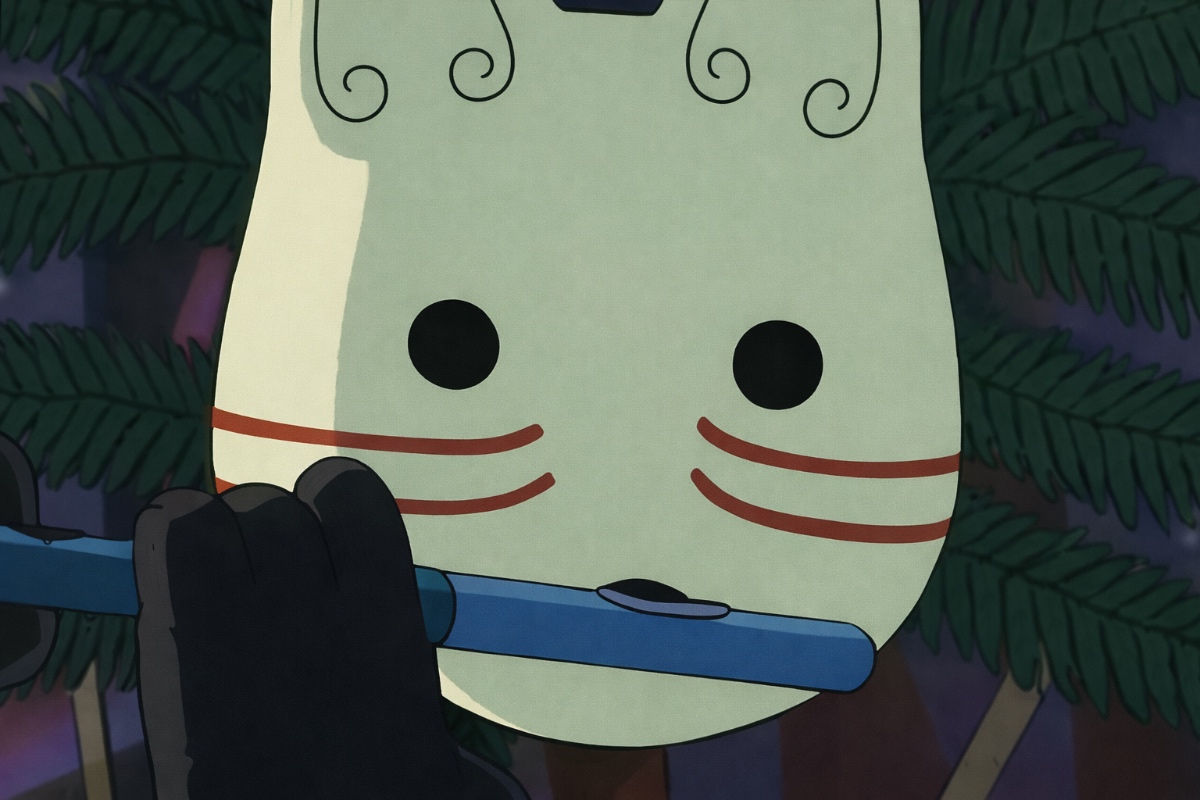
For example, the prayer wheel (historically used in Buddhist monasteries to communicate with the spirits of the deceased) is one of the reappearing elements throughout his stories that hint at religiosity.
In Night on the Galactic Railroad, Giovanni watches the spinning wheel of a weather station at the moment of his passage from the real world into the fantastic world of the Milky Way Railroad. It marks the beginning of the many symbols we encounter at each cosmic stop.
Esperanto, Language, and the Power of Words
The magic of words was another passion of Miyazawa’s, particularly Esperanto.
However, in Imperial Japan, the left wing of the Japanese Esperanto movement was banned.
Few writers were as enthusiastic about Esperanto as a poetic language as Miyazawa, so to honor this love, Night of the Galactic Railroad director Gisaburô Sugii included Esperanto chapter headings and even some words on passing chalkboards in his cinematic adaptation of Miyazawa’s novel.
Western Classical Music and Cultural Influence
Another of Miyazawa’s obsessions was Western classical music.
He loved introducing his primarily uneducated farmers to the works of Beethoven, Wagner, Schubert, and Debussy.
This element is also incorporated in the film, particularly at the end, when Handel plays when the three drowned Titanic passengers disembark at the Southern Cross stop, ready to face the afterlife.
Grief, Train Journeys, and Spiritual Transition
However, the main foundation of Night on the Galactic Railroad was a train trip to Karafuto that a grieving Miyazawa took after the death of his beloved sister, Toshi, in 1922.
In Japan (as well as in many other cultures), train journeys symbolize movement, transition, and, above all, a journey—not necessarily in miles or kilometers. Instead, it is a path toward growth, change, and spiritual guidance.
He conveyed these themes two years later in Night on the Galactic Railroad.
Posthumous Fame
Despite his passing in 1933, Miyazawa’s legacy lived on through the posthumous publication of his work. Night on the Galactic Railroad, especially the famous fourth edition, became a cult hit in Japan, and an actual rail line was named after his work.
Night on the Galactic Railroad has inspired numerous writers, manga artists, anime directors, video game developers, and musicians in modern pop culture.
They adapted his work into various forms, including stage productions, manga series, and anime films.
For example, The Night of Taneyamagahara (Taneyamagahara no yoru) was released in 2006 by Studio Ghibli, adding another classic to the studio’s impressive collection of films.
Gisaburô Sugii’s 1985 Movie
One of these adaptations was the 1985 anime film Night on the Galactic Railroad (also known as Milky Way Railroad, Night Train to the Stars, or Fantasy Railroad in the Stars), based on a screenplay by one of the most distinguished post-war Japanese screenwriters, Minoru Betsuyaku.
However, this masterpiece did not come about overnight.
Director Sugii’s fascination with animation began when he saw the 1942 Walt Disney film Bambi.
He started working at a young age at Toei Animation Company.
This opportunity allowed him to work on the Astro Boy (Tetsuwan Atomu) franchise with the “Godfather of Manga,” Osamu Tezuka. These manga books sold over 100 million copies worldwide, and the Astro Boy adaptation became the first animated Japanese TV series between 1963 and 1966 to embody the aesthetic that later defined anime, a term in Japan used for all animated works. Not bad for an 18-year-old.
Yet despite being credited for nearly 20 anime projects in the next few years, it was not until the mid-1980s that Sugii completed his adaptation of Night on the Galactic Railroad after spending more than a decade traveling across Japan by train.
In an interview, Sugii stated that through this slow form of travel, he realized insights do not come from watching the landscape flash by through the window. Instead, they come from feeling the surroundings, breathing it in, and appreciating it.
His experiences helped him create both the slow pacing and the unique anime style for Night on the Galactic Railroad, in which he explored his protagonists’ emotional states by treating both characters and backgrounds with equal depth.
Slow Animation
In Masato Ishioka’s 2012 Blu-ray documentary Animation Maestro Sugii Gisaburô (Animeshi Sugii Gisaburô), Sugii states that “not all animation has to move.”
Unlike many anime artists who prioritize flashy imagery, Sugii employs slow panning (Jiwa-Yori) and paused motion (Tome-e) to craft a phantasmagoric, surreal, yet profoundly sad atmosphere, emphasized by the ethereal music by Haruomi Hosono, founder of the Yellow Magic Orchestra.
Anthropomorphic Cats
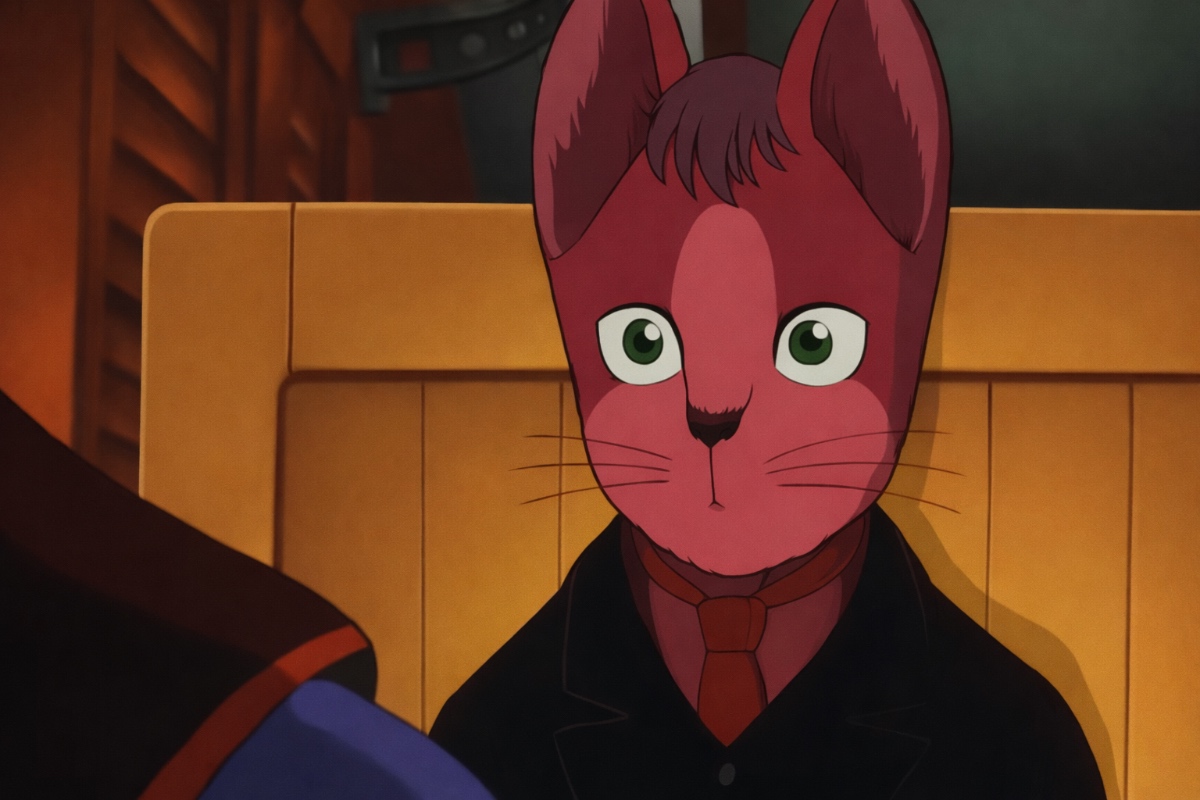
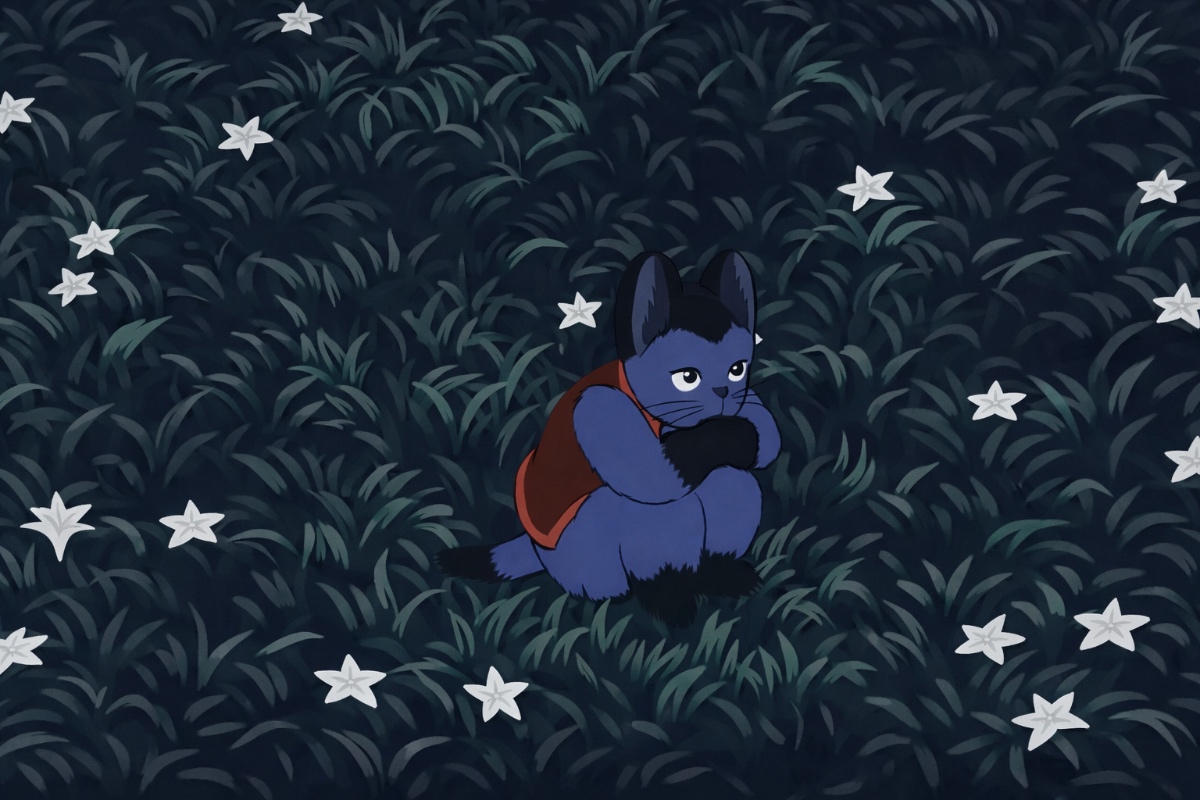
Furthermore, Sugii followed the 1983 manga adaptation by Hiroshi Masumura and portrayed the protagonists as anthropomorphic cats (Miyazawa, on the other hand, left the description of his characters vague).
Some choices, however, make the comparison with our furry friends bizarre. For example, they have Italian names, Giovanni and Campanella, and they live on what feels like a Greek island.
Sugii’s feline characters also walk on two legs despite the common complication of hindlimb weakness in cats.
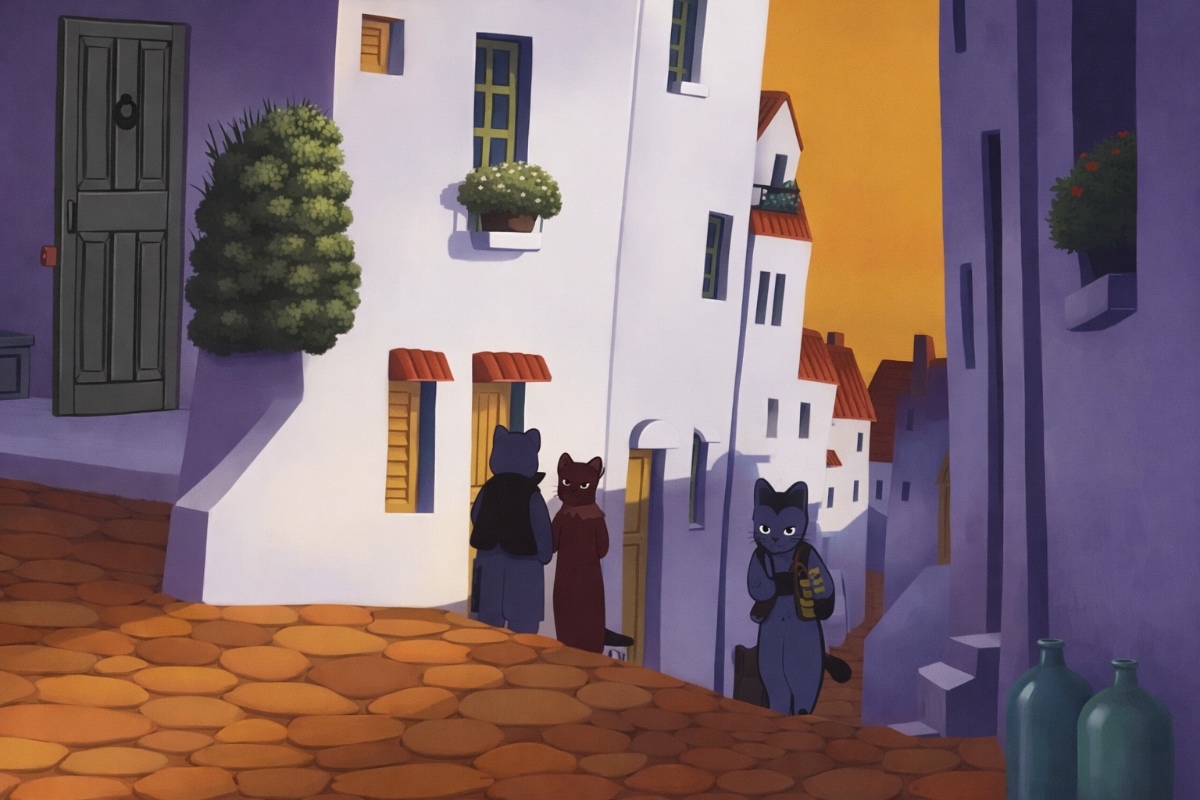
Even more surprising is Giovanni and Campanella’s empathetic nature. Recent studies have crowned cats as some of the most selfish animals on the planet. Though they may occasionally let you think you have a say, everything revolves around them. In the novel and the anime, however, Campanella tries to protect Giovanni from embarrassment by enduring the same mistreatment from bullying classmates. At the same time, Giovanni cares for his bedridden mother and faces constant ridicule from villagers due to his absent father.
Later on, as our feline travelers embark on an otherworldly railroad journey to the end of the universe, we learn that Campanella has sacrificed himself to save a village cat. They approach a black hole named Coalsack, where Campanella’s long-deceased mother is waiting for him in a lush prairie, symbolizing that he is going toward his afterlife.
Unfortunately, Giovanni is only trying to follow his friend and is not chosen to leave his world. He is devastated as Campanella steps into the heart of his belief, which Giovanni cannot follow.
Christian Symbolism, the Titanic, and the Afterlife Allegory
Throughout their journey across stars and cosmos, traversing past and present memories, encountering various mystical elements including Christian symbols, signs abound that this is a journey toward the end of spiritual life.
The railroad trip serves as an analogy for the afterlife, perhaps most vividly portrayed when Giovanni unexpectedly meets two human children and their tutor who perished in the sinking of the Titanic, journeying toward their afterlife.
Friendship, Love, and Emotional Restraint in Miyazawa’s Writing
We cannot label Giovanni and Campanella’s relationship as romantic. It is clear how deeply connected these two friends are and how they yearn for each other’s company. However, Miyazawa largely omitted romantic love or sexual themes from his literary works and his private life. According to his close friend Tokuya Seki, Miyazawa died a virgin.
Night on the Galactic Railroad is not widely known in the West, yet it is a fixture in most Japanese schools and can be likened to Le Petit Prince.
However, it has a profound underlying meaning that children can hardly grasp it. As such, this multi-layered story has challenged children and literary academics for nearly 90 years.
Night on the Galactic Railroad: Blu-ray, DVD, and Streaming Options
Fans of Night on the Galactic Railroad can experience this timeless anime in multiple formats: it’s available on DVD and Blu-ray, as well as for streaming on Amazon Prime Video.
Don’t forget to pair your viewing with a read of Miyazawa’s original novel, the classic that inspired generations of readers and animators alike.
If you love movies such as Night on the Galactic Railroad, be sure to also check out Sirocco and the Kingdom of the Winds (2023).
You can find an overview of all animated cat movies here.
About the Author
SVEN DAEMS explores unorthodox art forms, compiles playlists for one of Europe’s oldest active jazz clubs (Hnita-Hoeve), and spins obscure DJ sets. When he is not learning to pronounce hexakosioihexekontahexaphobia, he is probably reading about art, music, film, bizarre food, alternative politics, philosophy, witchcraft, Philippine lore, and Japanese mythology. For over a decade, he ran his websites—Svn’s Corner and Svn’s Corky Corner—and recently launched a new digital platform, Svn’s Unsane Vortex. As a guest writer, Sven wrote articles about music, film, and art for different blogs, newspapers, and magazines. He also contributed essays to the books When Animals Attack: The 70 Best Horror Movies with Killer Animals, Strange Blood: 71 Essays on Offbeat and Underrated Vampire Movies, Evil Seeds: The Ultimate Movie Guide to Villainous Children, and Meow! Cats in Horror, Sci-Fi, and Fantasy Movies.
Other reviews by Sven Daems:
Also check out Sven Daems’ writings in the following books:
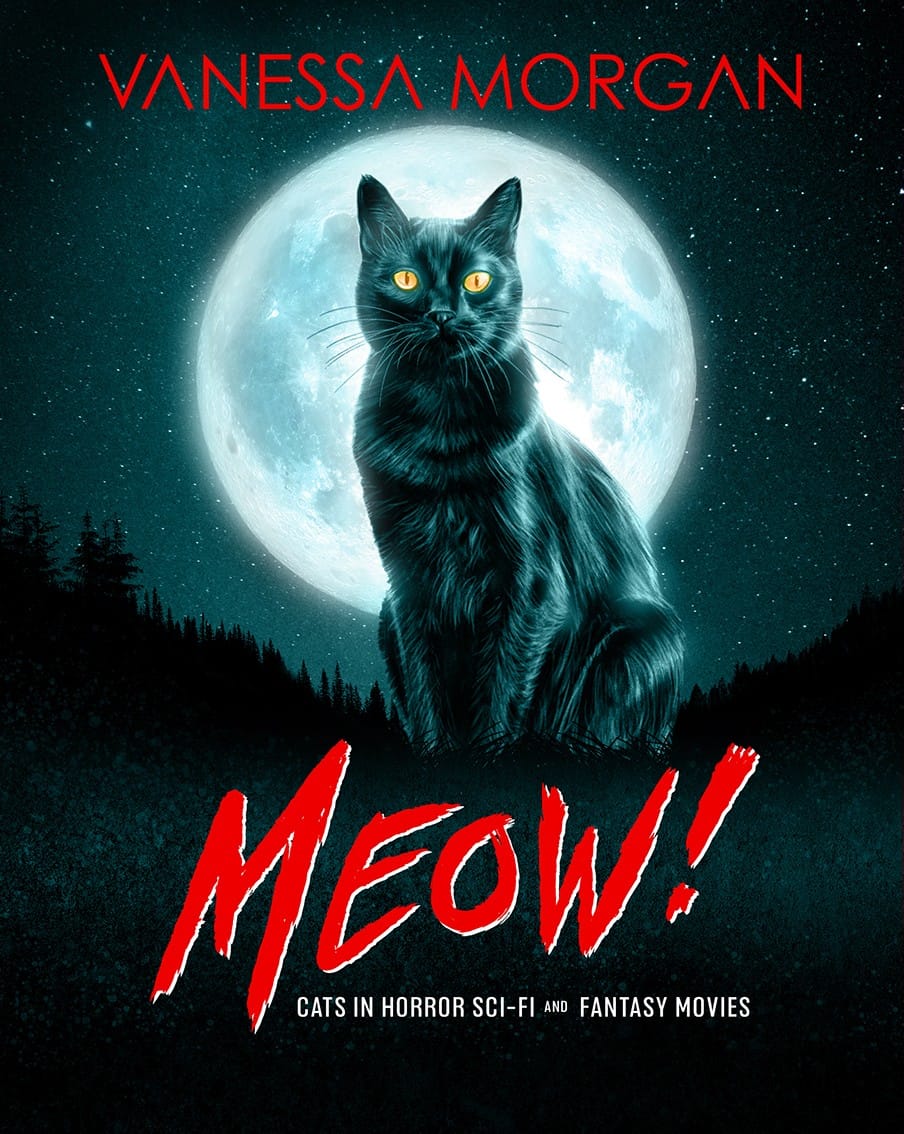
Meow! Cats in Horror, Sci-Fi, and Fantasy Movies
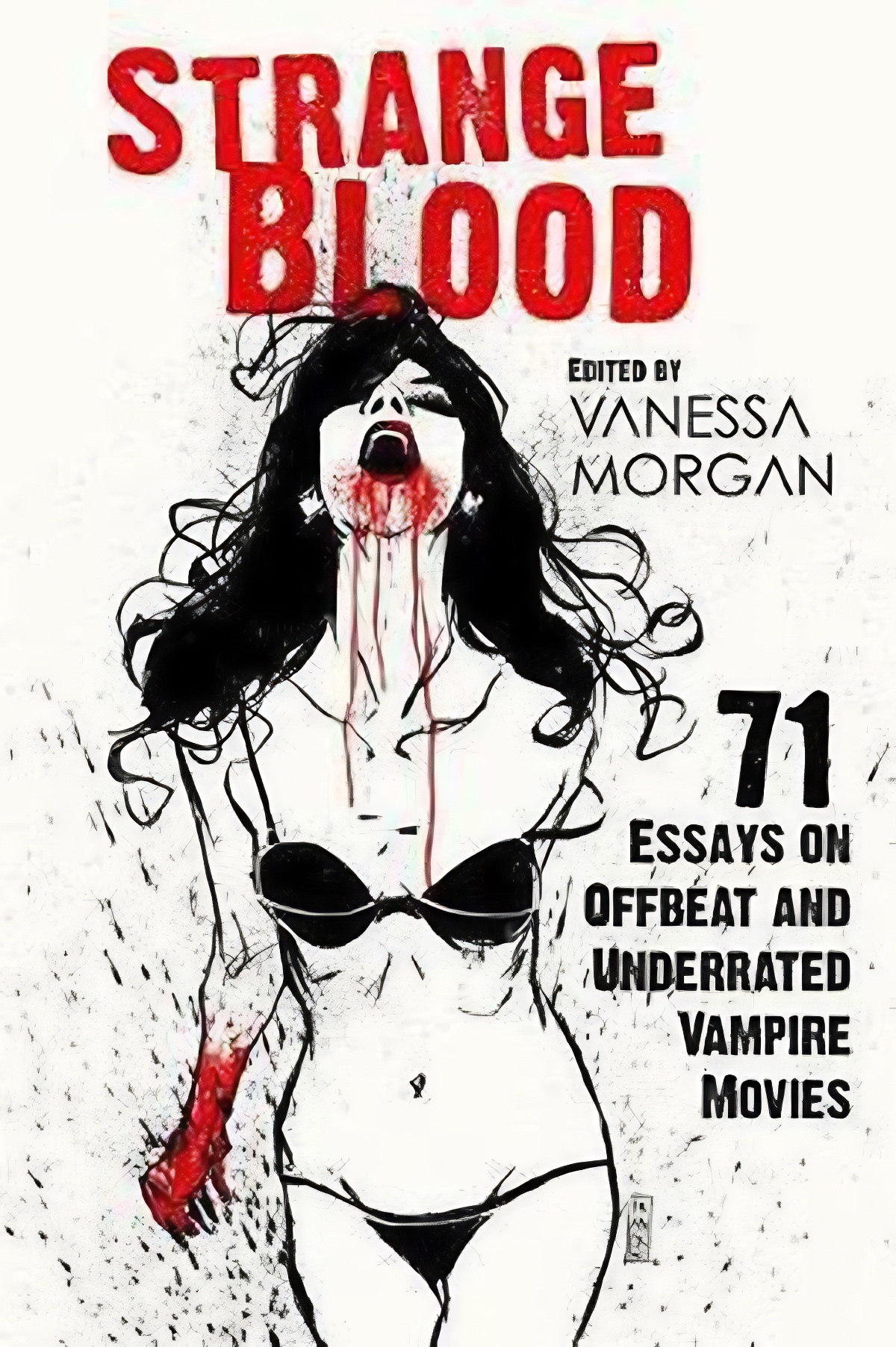
Strange Blood: 71 Essays on Offbeat and Underrated Vampire Movies
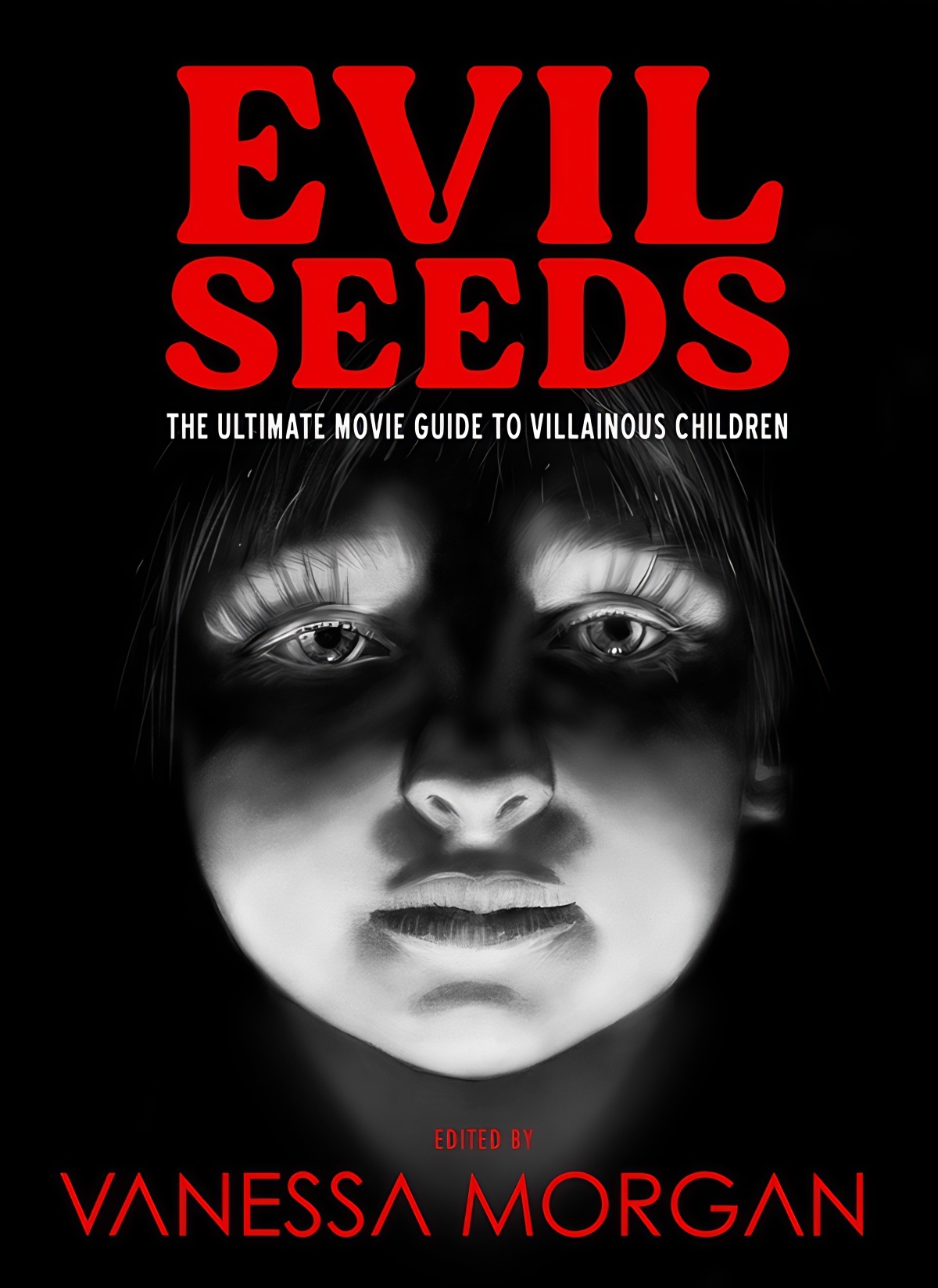
Evil Seeds: The Ultimate Movie Guide to Villainous Children



My Bigger Girl would be very interested in this, I’ll ask if she’s heard about it.