Kat (2001): A Danish Horror Film About a Possessed Cat
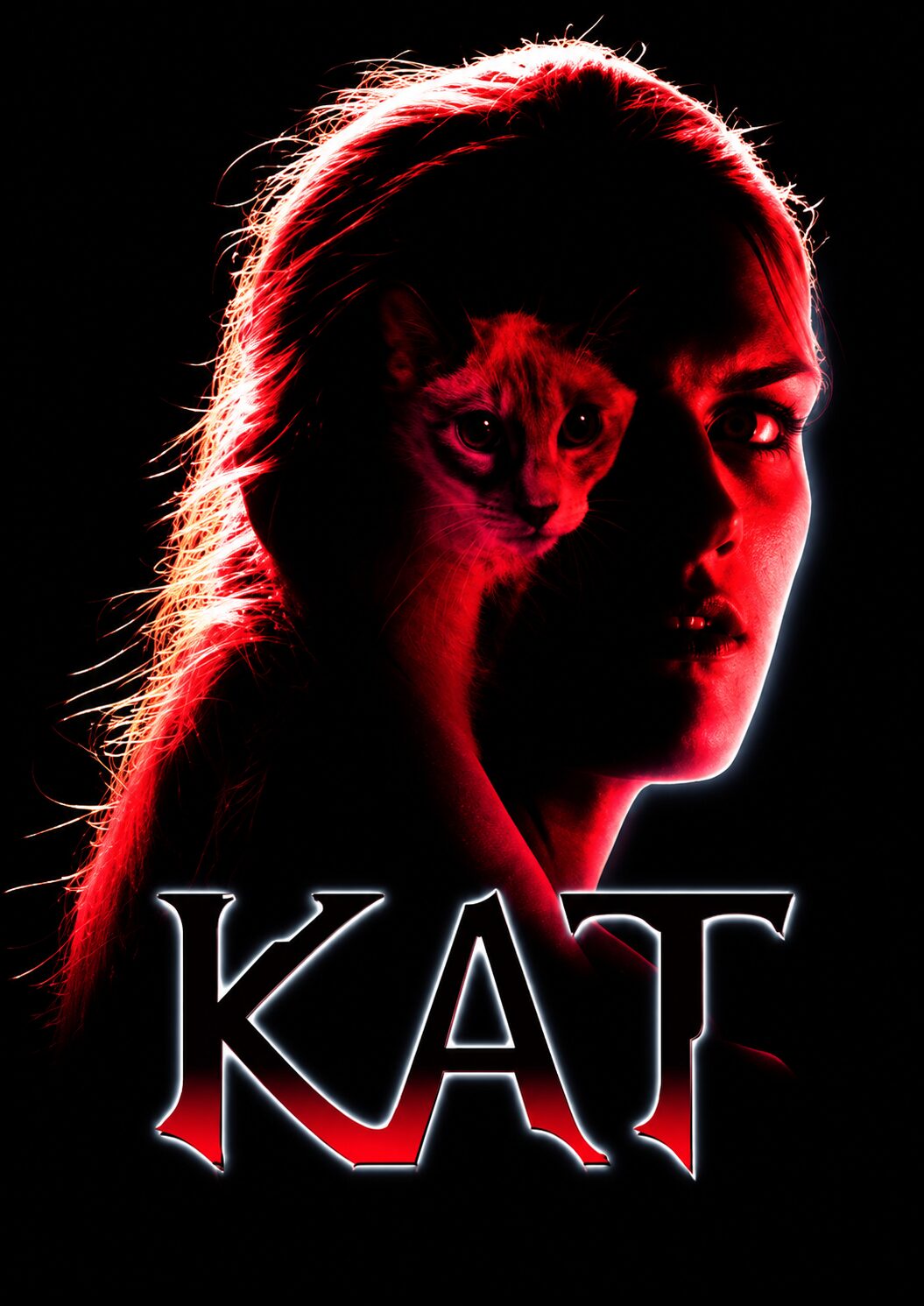
In the Danish horror movie Kat (2001), a law student begins to suspect that her beloved Siamese kitty may be responsible for a series of gruesome murders.
Kat
Director: Martin Schmidt
Country: Denmark
A New Wave in Danish Cinema
Kat is part of the Danish wave of horror and thriller films that gained popularity in the early 2000s and contributed to the growing international recognition of Scandinavian cinema in these genres. It also marked a shift in the Danish film industry, which traditionally focused on dramas and social realism.
The movement began to gain momentum in the late 1990s and early 2000s, with directors and producers looking to capitalize on the global appeal of horror and thrillers. One of the key catalysts for this wave was the success of the “Dogme 95” movement, founded by Lars von Trier and Thomas Vinterberg. While Dogme 95 was known for its strict adherence to naturalism and simplicity, it inspired Danish filmmakers to experiment with storytelling and genre conventions, eventually diversifying Danish cinema.
Several notable horror and thriller films emerged from this period. For example, Nightwatch (1994), directed by Ole Bornedal, is a psychological thriller about a law student who works as a night watchman in a morgue, only to find himself entangled in a series of murders. This film achieved critical acclaim in Denmark and garnered international attention, leading to an American remake in 1997. Another significant film is The Kingdom (1994), a miniseries directed by Lars von Trier. While primarily known for his work in art-house cinema, von Trier’s foray into horror showcased the potential of Danish filmmakers to create creepy, atmospheric stories.
In the early 2000s, the Danish horror and thriller genres continued to thrive with films like Nicolas Winding Refn’s Fear X (2003) and Martin Schmidt’s Kat (2001). The fact that these films received worldwide distribution established Denmark as a significant player in the global film industry and paved the way for future Danish filmmakers to explore horror and thriller narratives. They contributed to the rise of the now famous Nordic noir genre, with acclaimed TV series like The Killing (Forbrydelsen) and The Bridge (Broen/Bron), which have not only garnered international awards but also inspired numerous adaptations and remakes in other countries.
A Cat, a Curse, and a Trail of Blood
Many of these Danish thrillers and horror films feature strong and complex female protagonists, contributing to a shift in how women are portrayed in these genres worldwide. Kat also presents a layered, albeit weak-willed, female lead. The story centers around a young law student named Marie (Liv Corfixen). After her thesis is deemed insufficient, she faces the immense pressure of rewriting it in just a few days. Fortunately, she finds some relief from her academic stress in the company of her Siamese cat, Athena (portrayed by two similarly-looking felines trained for the role).
Strange events begin when an older woman, Gudine (Birgitte Federspiel), rings her doorbell, claiming she was invited. Maria does not recognize her and sends her away. Later, the upstairs neighbor (Holger Perfort) warns her that he is expecting guests and there might be some noise. The man insists he does not want to be disturbed. Before leaving, he performs strange ritualistic gestures with his hands. Meanwhile, Athena slips out unnoticed and sneaks upstairs.
As night falls, Maria’s roommate, Isabella (Charlotte Munck), arrives with wine, and the two spend the evening together. Isabella tries to lighten the mood, but Maria’s mind remains on her studies and the troubles with her boyfriend Henrik (Martin Brygmann), who has been avoidant lately. Maria’s mood darkens even more when Isabella mentions that she ran into Henrik the previous weekend and that he was with another girl. The revelation hits Maria hard, but there is little time to dwell on it because the older couple upstairs—Isabella’s grandparents—have begun a sinister ritual and are making strange wailing noises. Later that evening, we learn that the ritual did not go as expected when Isabella’s grandmother tells her husband, “It wasn’t Hismael. It was something else. We opened the gate.”
The following day, Maria confronts Henrik about his infidelity, which he denies. Despite this, she still agrees to have dinner with him. Maria grows increasingly frustrated over their discussions at the restaurant, nervously tapping her foot. Meanwhile, we see Athena preparing to launch a deadly attack on two people fighting in a parking lot.
When Maria returns home, Athena is waiting for her. But something is wrong. The cat does not purr nor respond when called and refuses its favorite food. The animal even has some blood on its fur, though it does not seem wounded.
More casualties follow, including a quarreling couple living opposite Maria’s apartment. Conflict seems to attract the cat. Also, each time it kills someone, Maria feels physically ill, as if there seems to be some ominous connection between her and Athena. Meanwhile, the police have begun to connect Maria to the series of murders and surveil her closely.
Confronting the Curse
Maria becomes increasingly convinced that her pet is responsible for the deaths, knowing the cat can cause her computer to malfunction and that it is covered in blood after each murder. She believes Athena to be cursed by a demon named Bartzabel, so she takes it to a veterinarian. Despite his reassurances that Athena has no critical condition, Maria insists the animal be put down. She leaves Athena behind, and later, the man is found dead.
Now sure of Maria’s proximity to each crime, the police organize a raid on her apartment. However, they are unprepared for what awaits them. Athena transforms into a monstrous, predator-sized creature. The once-small cat towers over them, growling like a feral beast, and quickly dispatches the police officers.
Henrik unexpectedly arrives to talk, and Maria realizes he has been having an affair with Isabella. Before she can fully process this betrayal, Athena strikes again, killing Henrik.
Maria manages to injure the supernatural feline. She looks down at the dying creature and tears the still-beating heart from Athena’s body. The heart continues to pulse outside the cat’s chest.
Isabella suggests they destroy the heart, so Maria puts it in the blender and then drinks her pet’s blood. As Athena’s life force courses through her, the light fades from the cat’s eyes, but Maria’s eyes change. She has become Athena/Bartzabel.
Adapting Steen Langstrup’s First Horror Novel
Kat is based on Steen Langstrup’s first horror novel, published in 1995. Known as “the Danish Stephen King,” Langstrup previously gained recognition for his thrillers and crime stories. This novel, with its vivid, almost cinematic descriptions, became an instant bestseller and established him as a prominent voice in horror. In an email interview, Schmidt told me, “The main difference between the book and the film is that in the novel, it rains constantly in Copenhagen. However, we couldn’t afford the off-and-on rain effects with our limited budget of around $1.2 million.”
Schmidt, known for Final Hour aka Sidste time (1995) and Backstabbed aka Mørkeleg (1996), adapts Langstrup’s novel with a serious tone, avoiding humor or camp. The film focuses heavily on Maria’s struggles, particularly her efforts to overcome a victim mentality. When Henrik dismisses her with, “You’re kind of boring. It’s Saturday night. You don’t just stay home,” Maria does not react; she has grown accustomed to disappointment and mistreatment.
Though Maria’s journey toward empowerment through supernatural events is a compelling premise, the film is hampered by plot holes undermining some of its credibility. While it is evident that Maria is connected to Athena and that her anger somehow transfers to her cat, it remains unclear why that happens. The motivations behind the neighbors’ ritual and the drinking of the cat’s blood are also never explained. And what is the identity of “the one who wanted to go into the darkness?” Schmidt said, “I can’t explain this since it is a far-fetched plotline that only marginally had to make sense. I probably can’t get any closer to the ‘truth’ of the story.”
A Troubled Production
Schmidt reflected on the challenges he faced, stating, “The film had trouble stamped all over it from the very beginning. If a problem could arise during production, it inevitably did. We had uncooperative actors, a tight shooting schedule, and less money than originally promised, forcing us to cut costs.”
The problems extended to every shoot involving the cats. Either things went wrong, or they took far longer than expected. “It wasn’t that I wanted the cats to do anything unnatural, just to follow commands when I said ‘Action’ and stop when I said ‘Cut!’ This required a lot of cat food and waiting around,” Schmidt said. “We also had to do several reshoots after discovering a technical malfunction in the camera. The gate was capturing a larger image than what appeared on the monitors, revealing tripods, flags, and other equipment that should have been out of frame.”
On top of that, the two main producers hated each other. “The line producer even asked me to sign a document that would have allowed one producer to fire the other. Naturally, I refused, but it shows how difficult and unfun the process was,” Schmidt said.
Schmidt also recalled that producer Peter Aalbæk Jensen, who has produced all of Lars von Trier’s films, once said during pre-production, “Martin, you have two beautiful young women in the lead, and since you have money invested, shouldn’t you consider filming a scene where the girls are showering together and flirting a little?” Schmidt said this was not happening because sex did not play that kind of role in his horror movie. “Given that Zentropa, who provided part of the budget, was producing softcore films at the time, I understood where he was coming from,” Schmidt added. “One advantage, though, was constructing the entire apartment sets in Zentropa’s studio near Copenhagen. This decision streamlined production, enabling us to efficiently film all the indoor scenes in a single, controlled environment.”
What Kat Gets Right
However, despite its challenges, Kat has a lot to offer. It is both mainstream and refined, perfectly balancing between subtle horror and gory fun.
Dirk Brüel’s cinematography is somber, using a palette of muted, cold colors like blues, grays, and blacks. In contrast, scenes involving rituals are bathed in red filters. While Brüel sometimes overuses these effects, he also captures some striking visuals. The standout shots are those of Athena and how she watches the world from her point of view. There is one particular close-up of Athena’s blue eye, reflecting Isabella’s grandmother and grandfather, that is truly memorable and clearly shows the viewer they are now being watched by an otherworldly entity.
The film was selected for several festivals (Amsterdam Fantastic Film Festival, Fantasporto, BIFFF, etc.) and won a significant money prize at the Hamburg Film Festival, which Schmidt got to spend on his next feature. Kat received a limited DVD release, but it has faded into obscurity, even in Denmark. “No one knows it still exists, and since it is not one of my priority projects, it remains an early 2000s horror film, made with a lot of love on my part but also under difficult circumstances.”
Yet, despite the challenges and lack of current distribution, this demonic furball played a pivotal role in the early Nordic horror and thriller movement, leaving behind paw prints that still echo in the genre—a remarkable achievement for such a small feline.
🐱 Ready for more feline frights? Browse are selection of cat horror movies.
About the Author
Vanessa Morgan is the editor of When Animals Attack: The 70 Best Horror Movies with Killer Animals, Strange Blood: 71 Essays on Offbeat and Underrated Vampires Movies, Evil Seeds: The Ultimate Movie Guide to Villainous Children, and Meow! Cats in Horror, Sci-Fi, and Fantasy Movies. She also published one cat book (Avalon) and four supernatural thrillers (Drowned Sorrow, The Strangers Outside, A Good Man, and Clowders). Three of her stories became movies. She introduces movie screenings at several European cinemas and film festivals and is also a programmer for the Offscreen Film Festival in Brussels. When she is not writing, you will probably find her eating out or taking photos of felines for her website, Traveling Cats.