
Lily C.A.T. (1987): An Alien-Inspired Japanese Sci-Fi Anime
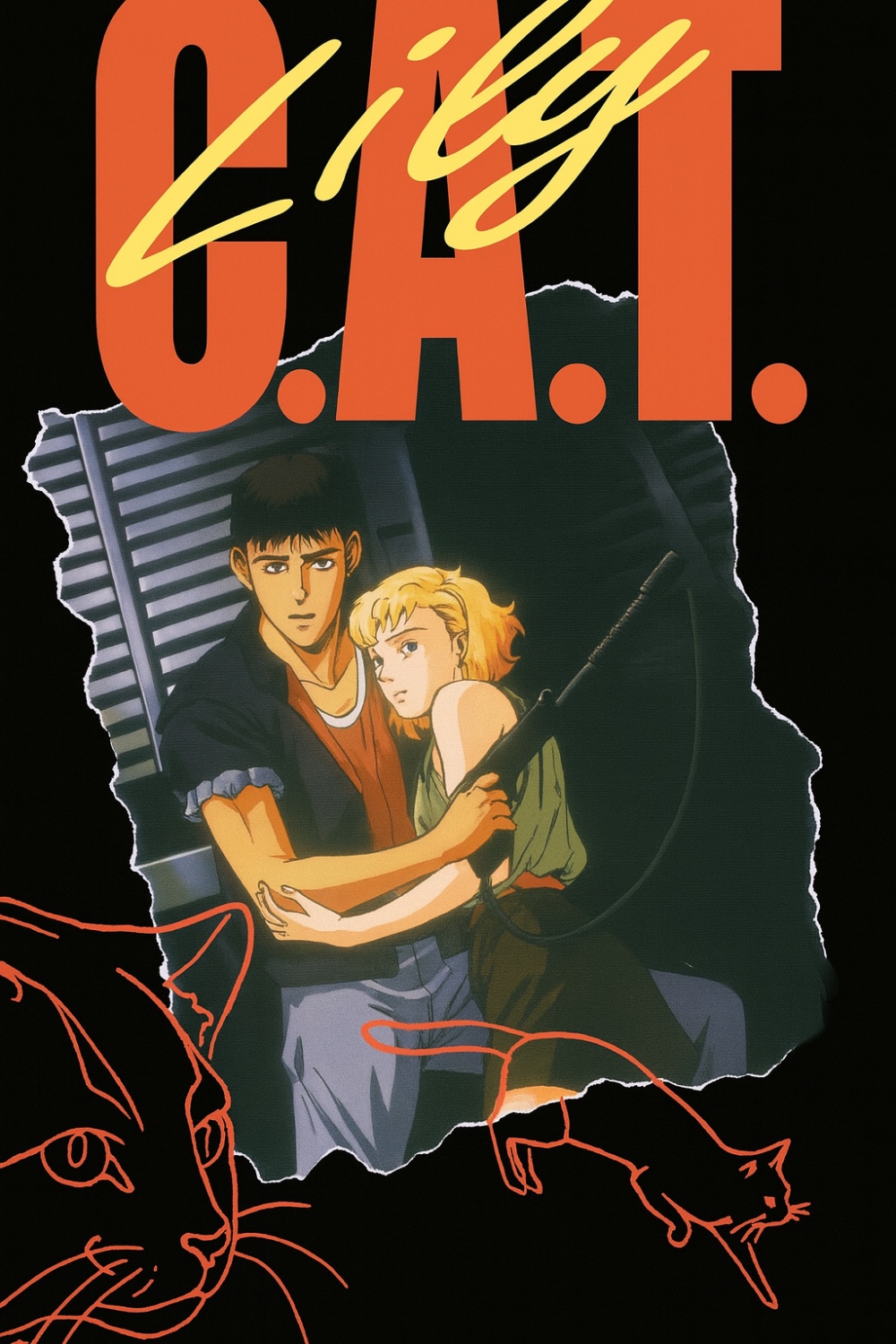
In the Japanese anime Lily C.A.T. (1987), a space crew faces deadly alien bacteria. An infected cat named Lily is at the center of the outbreak.
Lily C.A.T.
Directors: Hisayuki Toriumi (original Japanese version), Carl Macek (English-language version)
Country: Japan
Ridley Scott’s claustrophobic horror masterpiece Alien (1979) and James Cameron’s action-oriented follow-up Aliens (1986) are global hits and influential cinematic landmarks that shaped countless other films worldwide. Aliens, in particular, was a massive hit in Japan, grossing over one billion yen.
The Japanese anime Lily C.A.T. was heavily inspired by Cameron’s film and released shortly after.
Fortunately, Lily C.A.T. is not just a quick cash grab but an enjoyable and memorable addition to the genre.
Cryo-Sleep and a Cat on Board
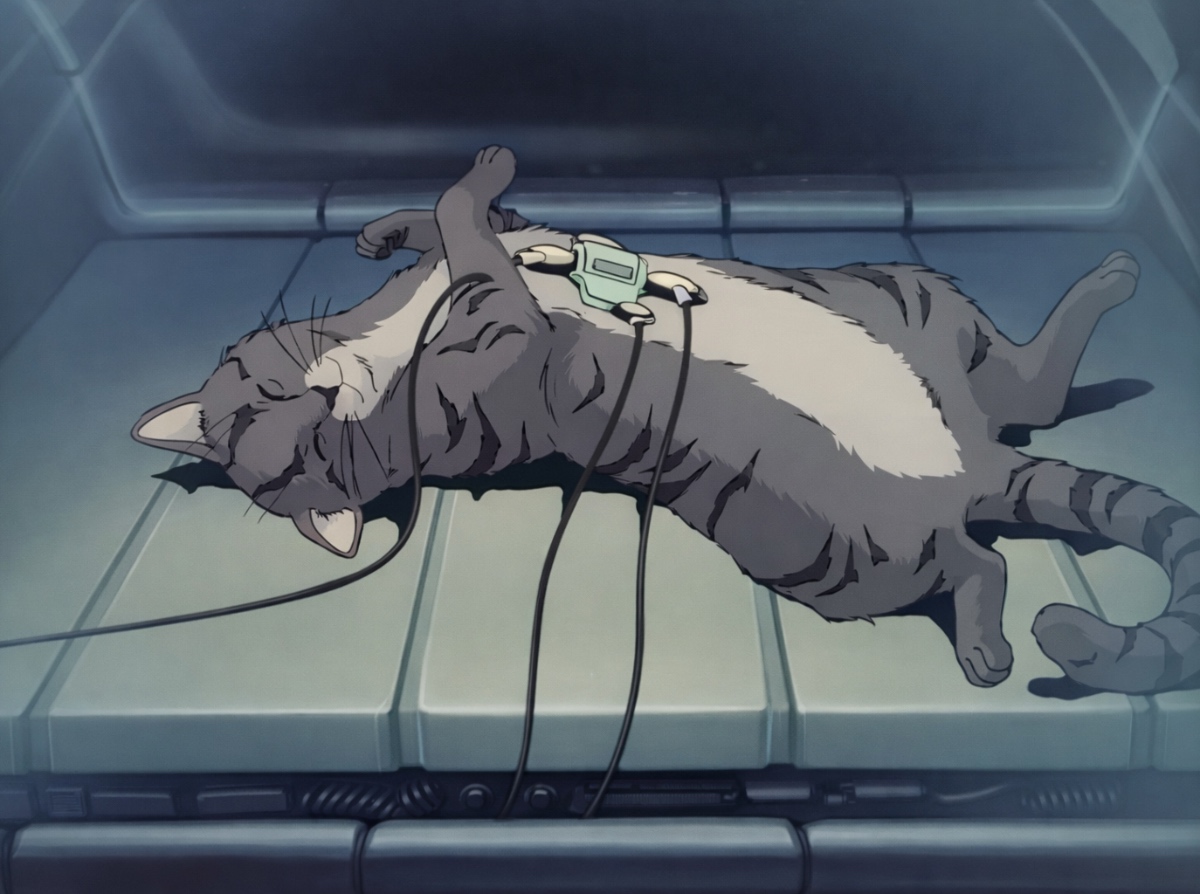
It is the distant future, and the multinational conglomerate Syncam Corporation dispatches representatives from different countries to survey a remote planet for potential mining rights. It is so far away that the crew must undergo “cryo-hibernation” (suspended deep sleep) for two decades, during which they biologically age only one month.
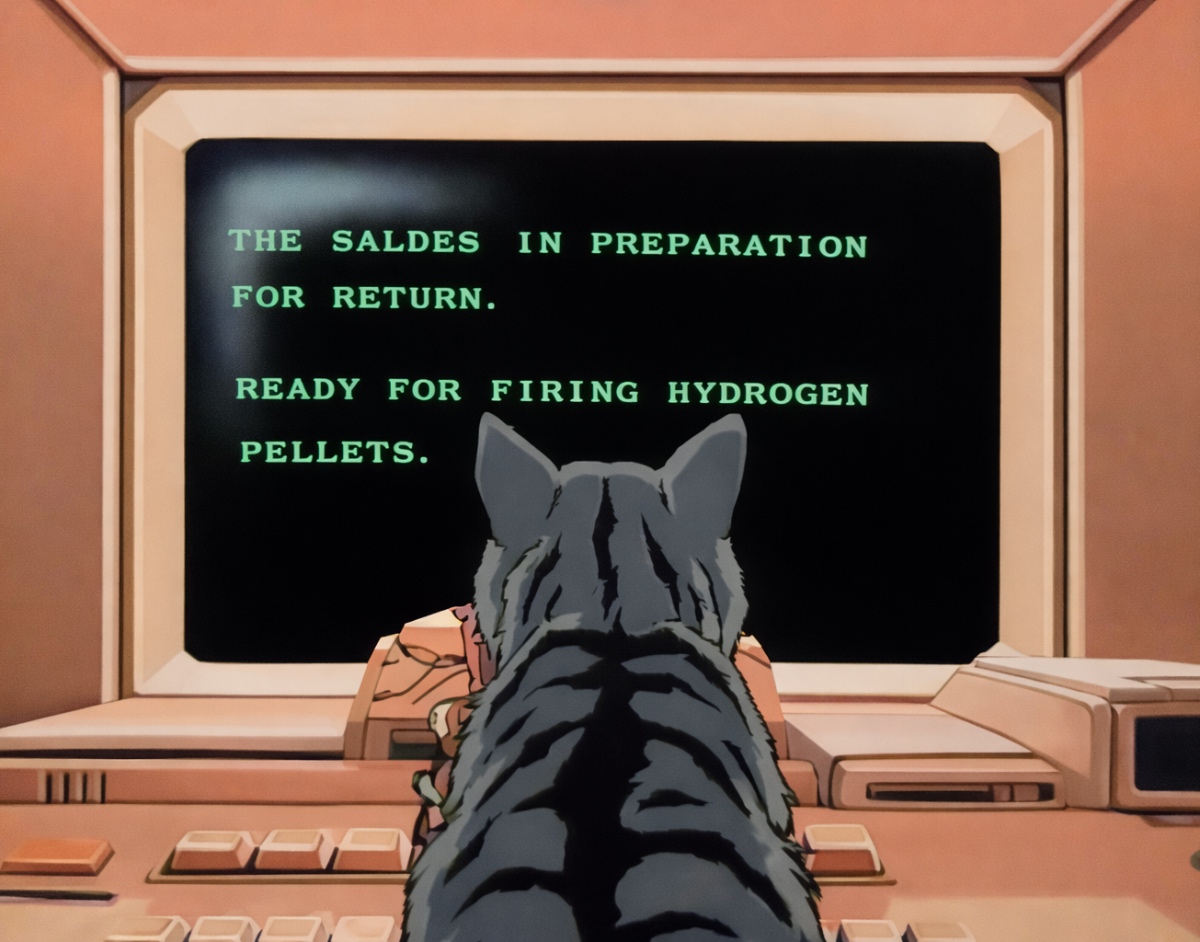
While the crew is in hibernation, their ship, The Saldes, collects a mysterious floating object that appears to be a living organism and brings it on board. Once it hits the water, the organism dissolves, becomes acidic, and burns through metal.
The resultant gas engulfs a cat named Lily (belonging to Nancy, the spoiled, immature teen daughter of the Syncam president, who has to supervise the expedition). Somehow, Lily escaped her sleep pod early. It means someone else had to be awake to let her out. Who and why has yet to be determined.
Imposters on the Ship
After the crew awakens, they receive a message from a company personnel director on Earth, informing them that two people on board are impostors. These individuals are not Syncam employees and entered the training program using false identification.
Before the crew can learn the names and see photos of the impostors, the transmission cuts out.
It turns out that the impostors set their sleep timers to wake up earlier than the others, allowing them to erase incriminating parts of the message while still informing the crew of their presence as a psychological tactic to create distrust and paranoia.
These impostors might be “time jumpers,” criminals who exploit cryogenics technology to avoid aging and evade authorities, planning to return to Earth after the 40-year round trip when they would no longer be pursued. Alternatively, they may have other motives.
Deadly Outbreak
Despite knowing criminals are on board, Captain Mike Hamilton encourages the crew to remain silent about it. They are all trapped together, and revealing the truth would only create more problems.
Moreover, they have more immediate issues to address. A broken air conditioning duct needs repair, and shortly after, US representative Morgan W. Scott is found dead with white eyes and lungs filled with bacteria.
The ship’s doctor can only speculate that it might be Legionnaires’ disease (severe pneumonia). Following this inaccurate diagnosis, the doctor is the next to die.
The two ship mechanics soon follow suit, reducing the 13-member crew to nine.
Even stranger, the bodies of the deceased vanish soon after being discovered. Did they somehow evaporate, or were they resurrected?
Lily Cat and the Mutating Alien Bacteria
Of course, the Typhoid Meowy in this instance seems to be Lily Cat, possibly infected by alien bacteria.
Worse yet, one of the saboteurs has taken control of the central computer, which now only responds to its “master,” making it impossible to ask for help or get any concrete answers about their predicament.
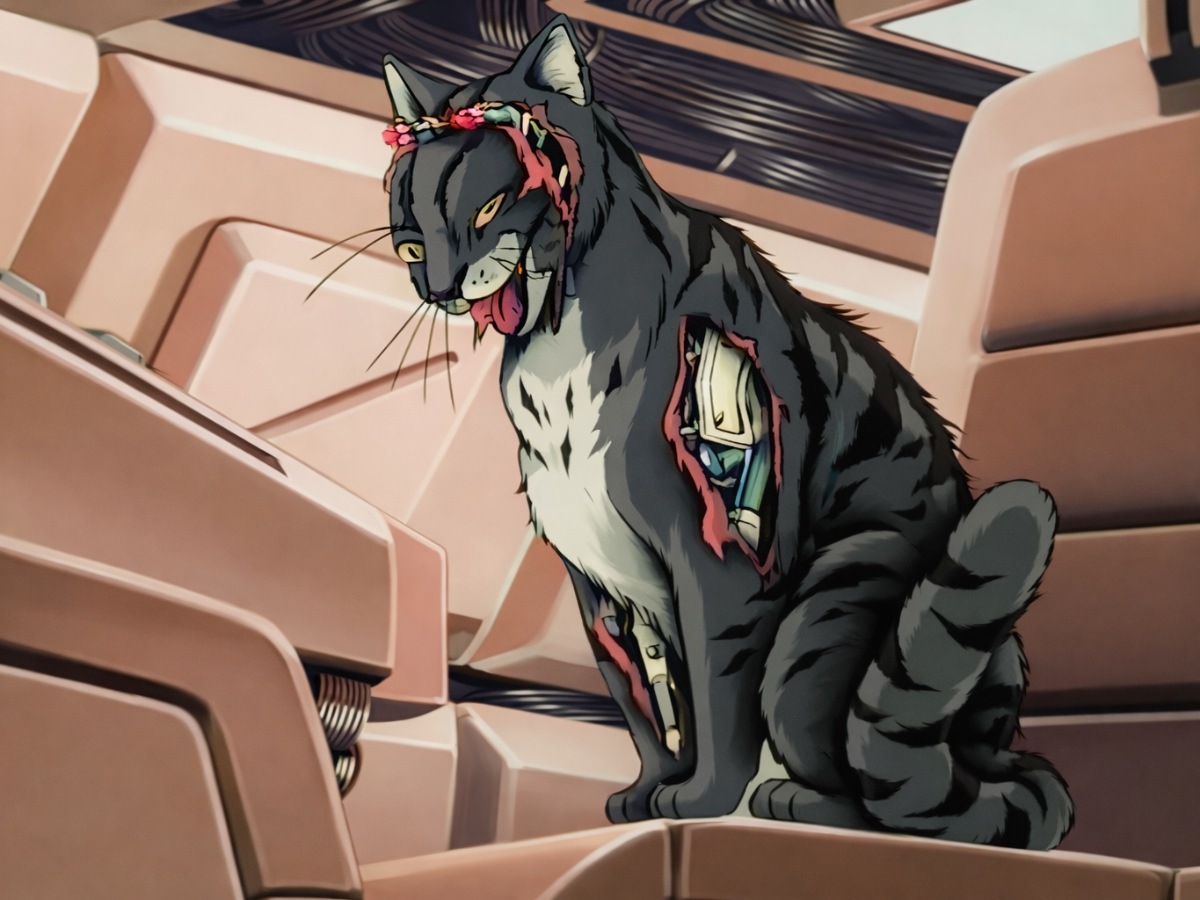
While there are several intriguing twists and turns in the story’s human and feline dynamics, the fast-moving, metamorphosing bacteria takes center stage.
This alien pathogen can change its appearance, sprout tentacles, and continually grow like “the blob” by absorbing human tissue into its alien cell structure. One character dismisses the threat by calling it “outer space chicken pox.”
The bacteria also takes on some surreal, trippy forms reminiscent of the 1982 version of The Thing, which was notably more popular in Japan than in the US at the time.
Playing With Expectations
When it comes to the spate of Alien-inspired films that saturated the market in the 1980s, this animated take is well above average.
The characters are engaging, especially the central figure of the aged, slightly embittered ship’s captain. His life has been consumed by work, leaving him with deep regrets over missed opportunities for a real life and family.
Other characters, such as the initially reserved Jiro Takagi (Syncam’s Japanese representative) and the somewhat gruff yet humorous Dick Berry (the Aussie rep), also have compelling arcs.
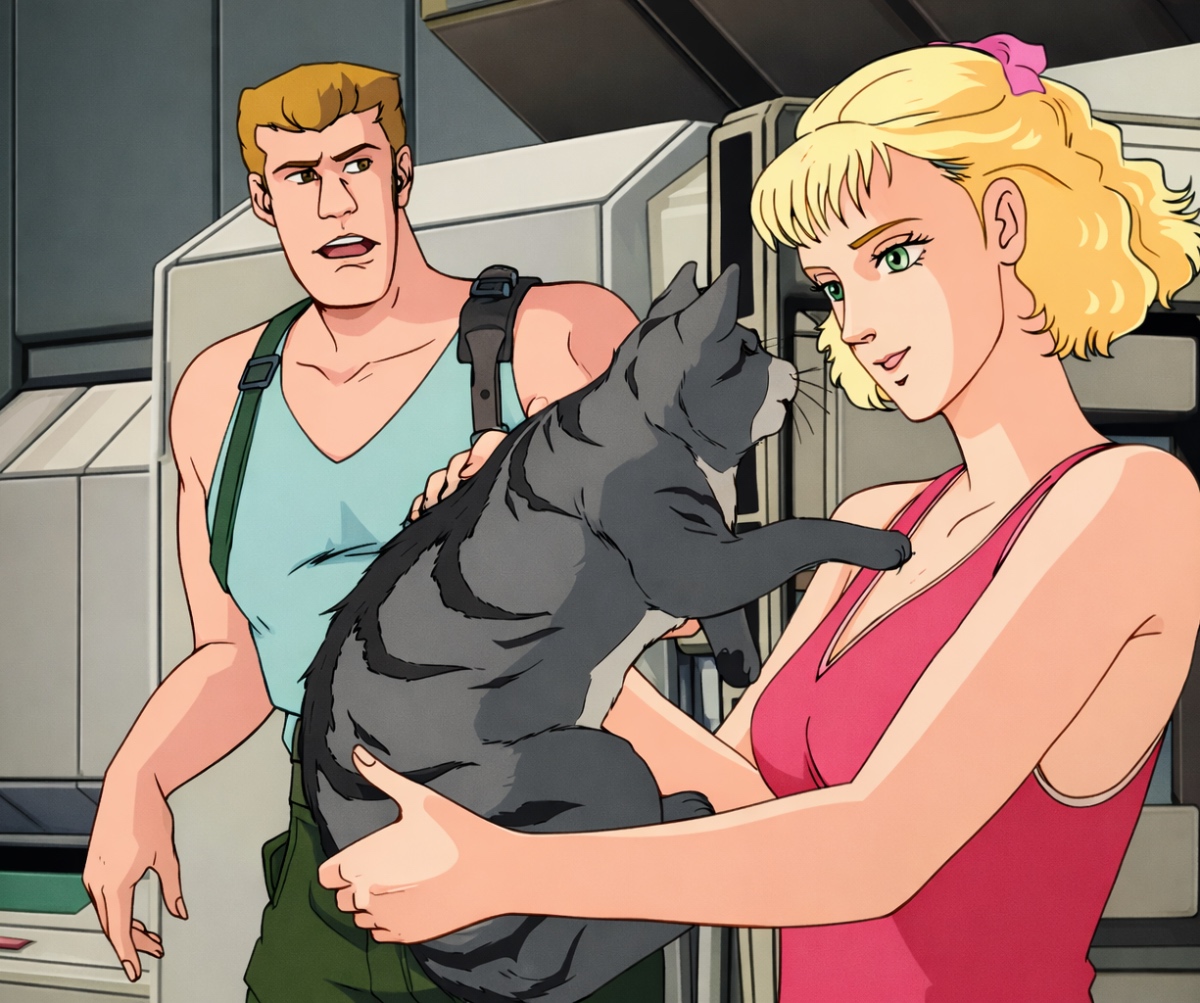
The film skillfully uses the audience’s familiarity with the Alien films to subvert expectations, notably with the square-jawed, muscular “tough guy” US rep. Despite his cocky demeanor, heavy armament, and clear nod to the gung-ho space marines of Aliens, he proves utterly inept and is the first to die. In an American production, he likely would have been the hero.
On the downside, the whiny, nepotistic female lead pales in comparison to the coolly competent Ellen Ripley.
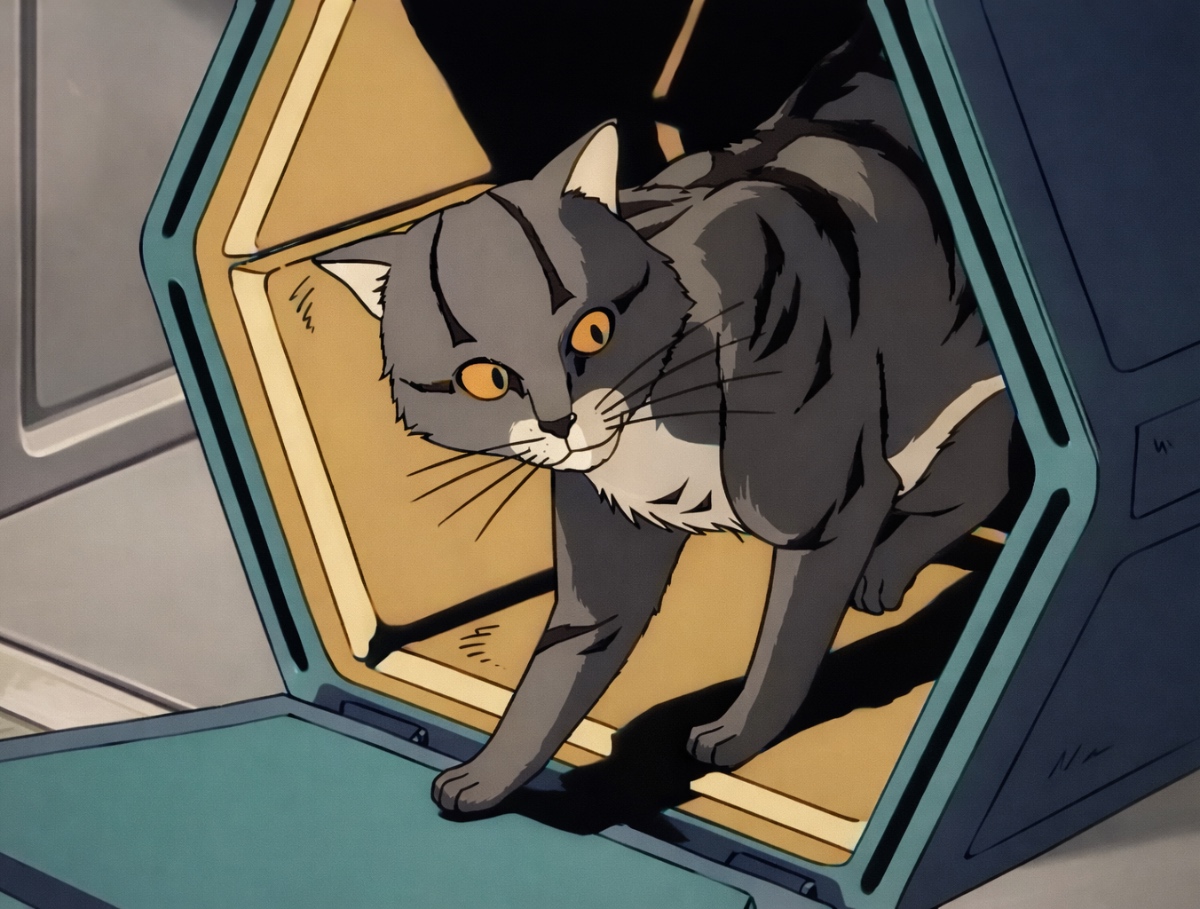
Similarly, Lily Cat is no Jonesy.
Corporate Dystopia and 1980s Anime Craft
The film also includes some social commentary on the threat of automation, how corporations don’t care about their employees, and how they view them as expendable once they are no longer useful.
For the most part, the English dub is well-executed, with solid voice acting.
Produced and directed by Carl Macek, who was instrumental in “Americanizing” many Japanese anime films for English-speaking audiences through his company, Streamline Pictures/Video Comics, which also distributed other popular anime like Neo Tokyo (1987), Twilight of the Cockroaches (1987), and Akira (1988).
A cut version of Lily C.A.T. aired on the SyFy Channel with a TV-PG rating, later updated to TV-14. A censored version that removed some of the gore and nudity also exists.
Lily C.A.T. (1987) was also featured in 10 Cat Movies Set in Space.
Curious to see more feline adventures from Japan? Explore our complete list of Japanese cat movies.
Looking for more animated cat adventures? Check out our complete list of animated cat movies.
Where to Watch the Lily C.A.T. Anime?
Lily C.A.T. (1987) is currently only available on DVD. A Blu-ray or 4K edition has yet to be released.
If you prefer to watch the film online, it’s also on YouTube.
About the Author
Justin McKinney was coerced over to the dark side by a late-night viewing of Night of the Living Dead (1968) as a child.
He has worked on and appeared in several low-budget horror films, such as Descend into Darkness 1 and 2, Brain Drain, Loonies, Dance of the Dead, Fatal Delusions, Witch Graveyard, Chubby Killer, Slice N Dice, Phantom Limb, Day of 1000 Screams, and others.
Beyond acting, he has contributed reviews to numerous websites, magazines, and books, including Horror 101: The A-List of Horror Films and Monster Movies, Hidden Horror: A Celebration of 101 Underrated and Overlooked Fright Flicks, When Animal Attack: The 71 Best Horror Movies with Killer Animals, Evil Seeds: The Ultimate Movie Guide to Villainous Children, Meow! Cats in Horror, Sci-Fi, and Fantasy Movies, Seminal Cinema, Horrorpedia, and his blog, The Bloody Pit of Horror.
His original screenplay, One Last Photo, is part of the horror anthology Screams of a Summer Day.
Other cat movie reviews by Justin McKinney:
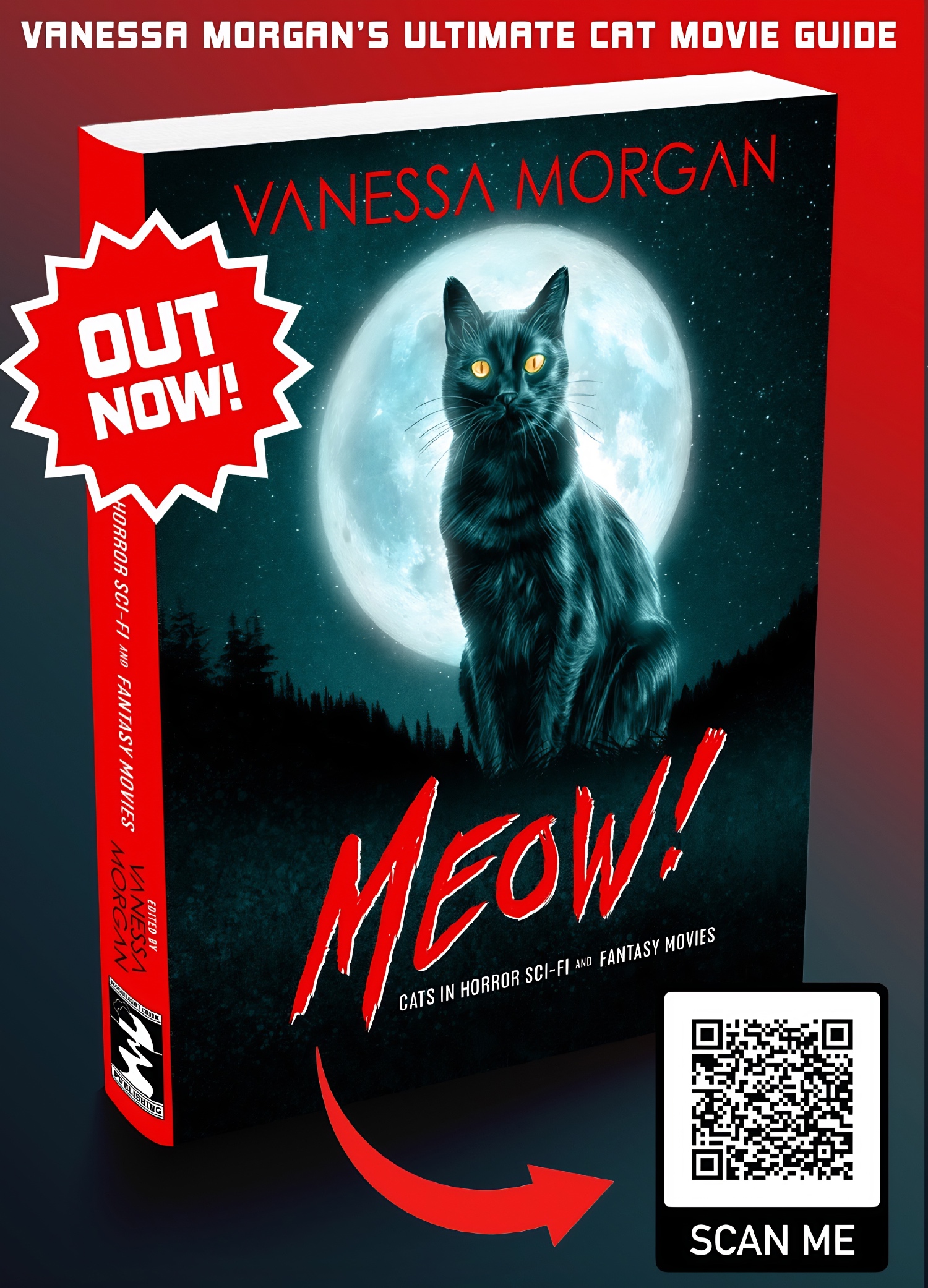
Discover more horror and sci-fi movies with cats in the book Meow! Cats in Horror, Sci-Fi, and Fantasy Movies.





Some people, it seems, can do these kinds of films right.