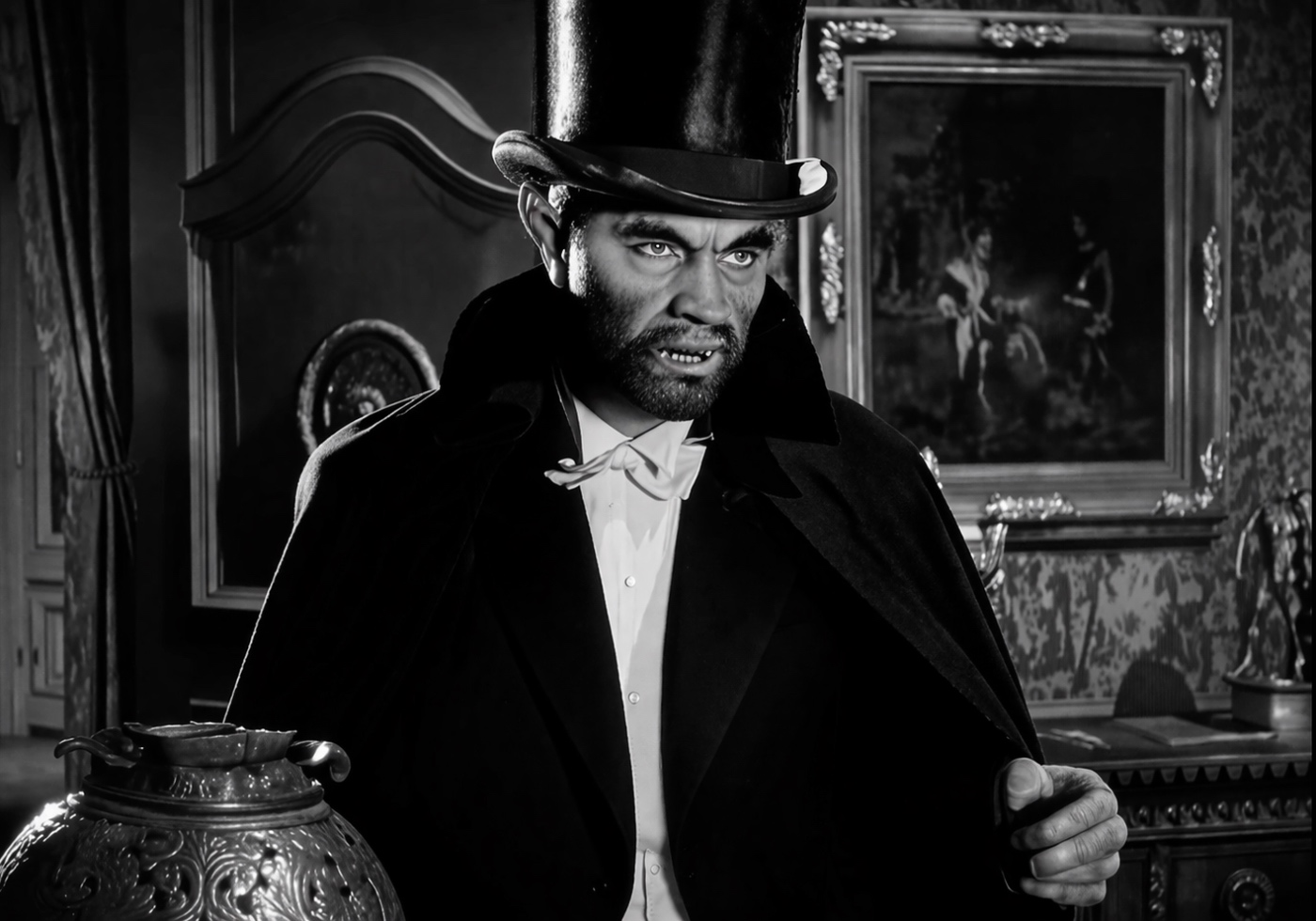
The Catman of Paris (1946): Classic Hollywood Horror with a Werecat Twist
A forgotten Republic Pictures horror film from 1946, The Catman of Paris blends classic Hollywood mystery with ailuranthropy (werecat) lore in a stylish French setting.
The Catman of Paris
Director: Lesley Selander
Country: USA
Murder, madness, and misdirection are the primary ingredients for this mid-1940s programmer from Republic Pictures.
The Catman of Paris served as the second installment of their inaugural horror double-bill, going into production on the San Francisco Valley lot just a day after its co-feature, Valley of the Zombies, wrapped.
It played upon the popularity of Universal’s final classic monster, The Wolf Man (1941), and his role in the “monster rallies,” Frankenstein Meets the Wolf Man (1943), House of Frankenstein (1944), and House of Dracula (1945).
There is also a nod to Val Lewton’s Cat People (1942), also inspired by the success of Lawrence Talbot’s tortured lycanthrope.
Why Republic chose to produce the film the year after Universal’s final monster outing (before their comedy/horror versions featuring Abbott and Costello) is anyone’s guess.
It is no surprise The Catman of Paris is dimly remembered by horror fans, if at all.

Plot Summary: Classic Hollywood Werecat Horror
A Stylish Parisian Setting
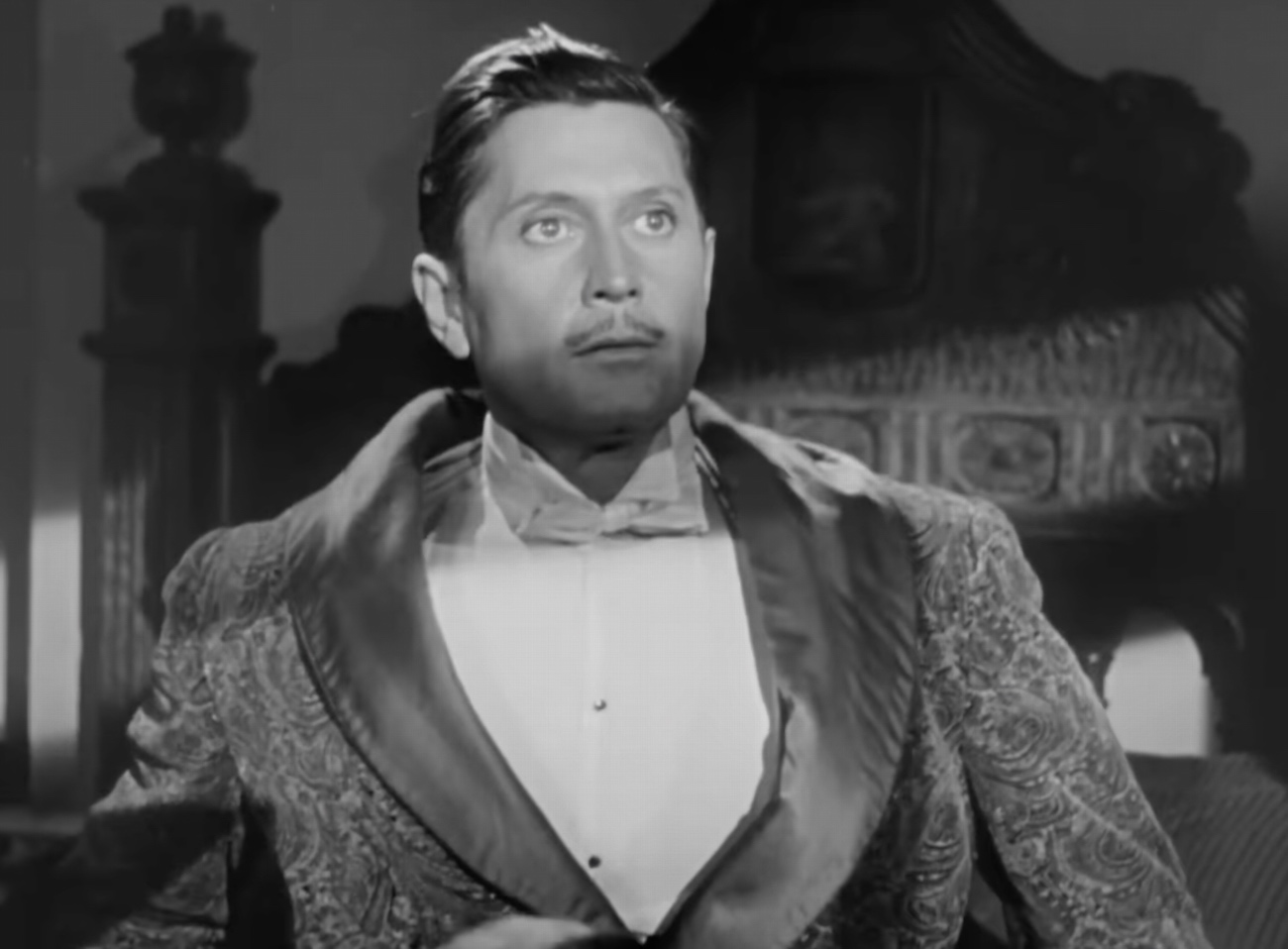
Our story takes place in Paris in 1896. Hotshot author Charles Regnier (Carl Esmond) and his friend/guardian Henry Borchard (Douglass Dumbrille) attend the Café Dubois.
The duo, well-acquainted with the establishment, is ushered to their “usual table” as they prepare to enjoy the latest spectacle—the usual high-stepping French ladies showing off their legs and bloomers to the masses.
The performance is impressive, with plenty of spinning upright somersaults and floor splits, but Charles, plagued by headaches, takes his leave of Borchard to clear his head.
A Mysterious Murder Sparks a Police Investigation
Later that night, Devereaux, a legal librarian from the Ministry of Justice, is mauled to pieces by someone or… something. The Prefect of Police (Fritz Feld) and Inspector Severen (Gerald Mohr) feel that the murder must have something to do with the documents Devereaux was carrying (which are now missing) concerning the “secret trial of Louis Chambuay in 1871.” Coincidentally, this very trial is also the subject of Regnier’s latest literary effort, a scathing indictment of the French government entitled Fraudulent Justice. The officials would like nothing better than to see the author behind bars and his books used to stoke the fireplaces.
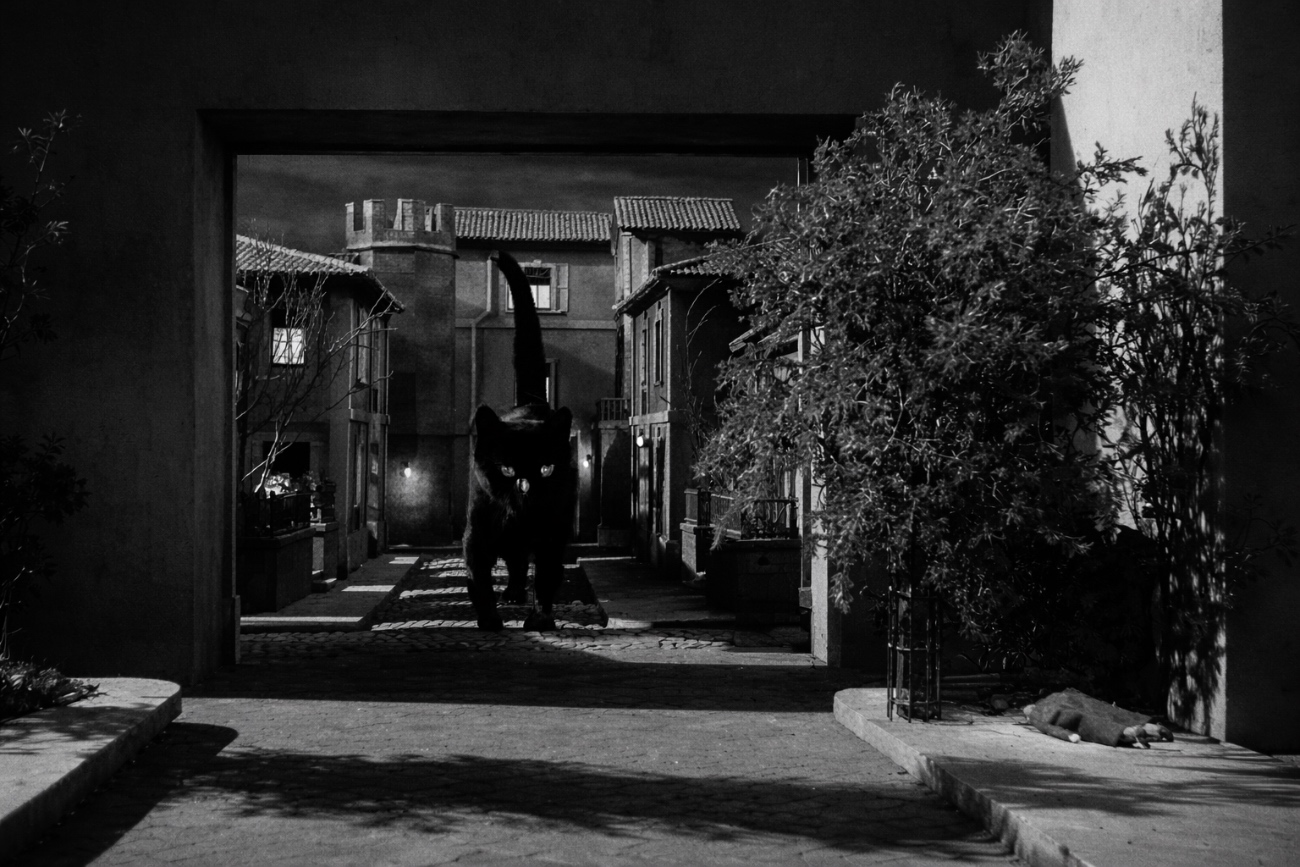
Charles is brought in for questioning, and while there is not enough evidence to hold him, the fact that he does not remember where he was or what he did the night before is troubling. Borchard reminds Charles that he had similar bouts of amnesia when he was in the tropics to write his book. Charles wrote Fraudulent Justice in an almost hallucinatory state, where the facts in the Chambuay case appeared to him “in a dream.” Meanwhile, the press goes wild with the sensational story of a murderous “catman” on the loose, so named because Devereaux’s body has been utterly slashed and torn.
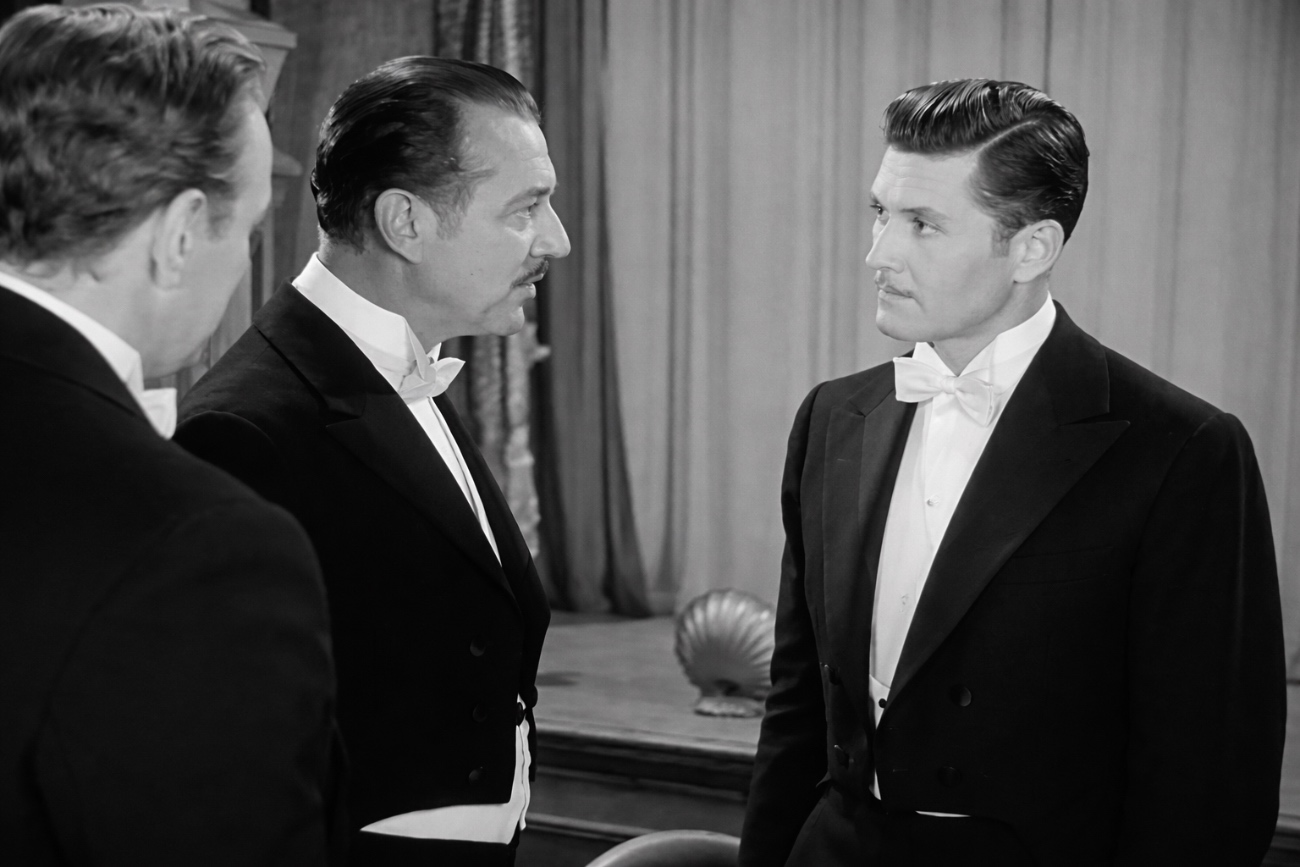
Under the pretense of visiting his editor, Paul Audet (Francis Pierlot), who is thrilled with the success of Fraudulent Justice, Charles seizes the opportunity to reconnect with Audet’s daughter, Marie (Lenore Aubert). During his time abroad, he and Marie have exchanged what he considers “harmless” love letters. He invites her to dinner, whereupon she reminds him of his engagement to Marguerite Duval (Adele Mara). Marie refuses to partake in a scandal despite her evident affection for him. Charles reluctantly agrees, and we can see the regret setting in.
Romantic Entanglements and Deadly Consequences
Later that night, at a dinner party at her parents’ estate, Charles tells Marguerite he wants to end their romantic ties. She refuses, saying she will not tolerate the embarrassment of a broken engagement. She urges Charles to abandon his globetrotting ways and commit to a more settled life, becoming a respectable member of French society.
After their disagreement, Charles feels unwell and leaves the party. As Marguerite travels home, she is murdered. Charles’ bloodstained gloves are found on the carriage floor.
Charles arrives at Marie’s house and invites her to dinner at Café Dubois. Shortly after, a reporter shows up to meet his companions, sharing the news that Marguerite has been found dead, and the police are seeking Charles.
Parisian Chases and Unraveling the Catman Mystery
In an attempt to escape with Marie, our hero is intercepted, leading to an outrageously entertaining fight scene where Charles shows his mettle by whipping the tar out of the quartet of would-be do-gooders. Considering we have come to view him as an intellectual softy, prone to headaches and swooning, this bit of derring-do comes as a surprise and a welcome one at that.
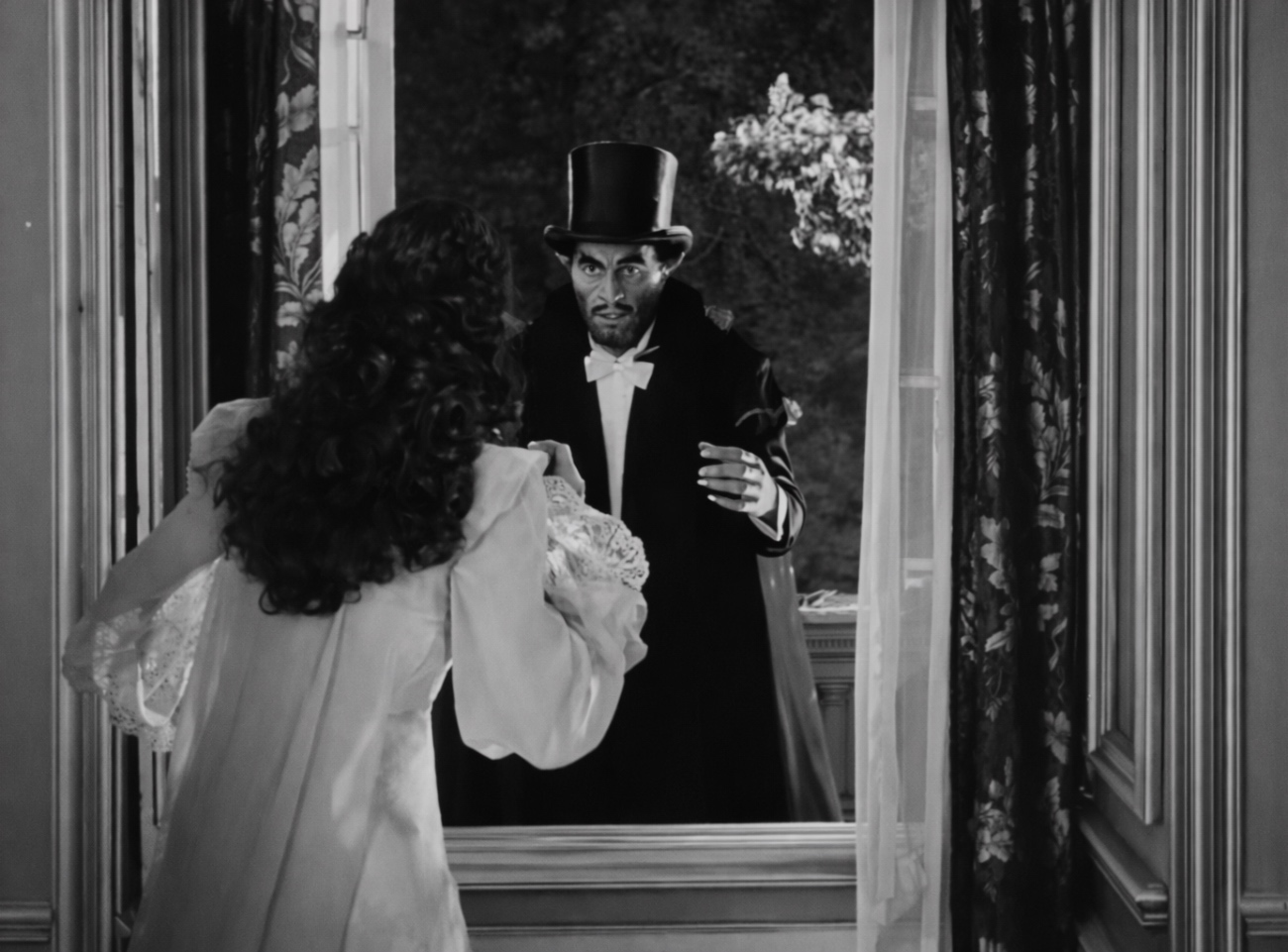
The couple proceeds to hide out at Marie’s, but the news is out about Charles, and Borchard comes to spirit him away.
Marie decides to tag along with her new beau, with Inspector Severen pursuing them in a wingding of a carriage chase that concludes with the Inspector’s vehicle overturning. (Between this and the tavern fight, the final 15 minutes are an action film compared to the preceding events.) Charles has become convinced of his guilt, while Borchard and Marie insist on his innocence. Meanwhile, Severen has procured a ride back to Paris and is soon closing in on the trio with a posse.
I will leave the final revelations for readers to discover because the closing moments hold several surprises that elevate this so-so programmer to “worthwhile” status.
Behind the Scenes of The Catman of Paris (1946): Cast and Crew Highlights
That said, the entire enterprise feels half-hearted on Republic’s part, evidenced in the opening credits, which are very much an afterthought as opposed to the beautifully rendered titles from Universal or Lewton’s efforts with RKO.
Similarly, when one reads the names of those involved in front of and behind the camera, there is no joyful anticipation as with a roster of familiar collaborators.
Lenore Aubert: The Movie Star Who Haunted Horror Fans
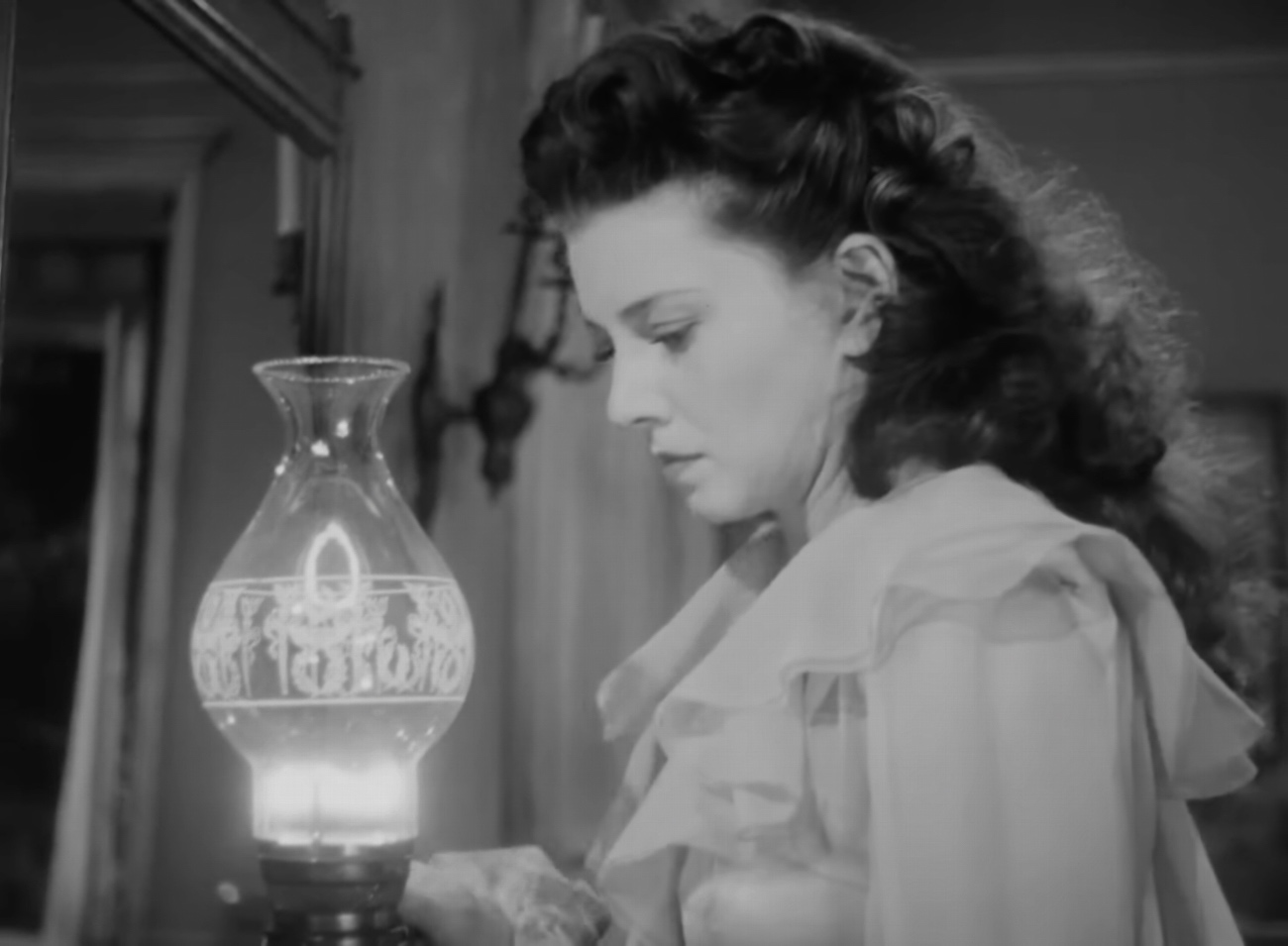
Of the main actors, the only name recognizable to genre fans is Lenore Aubert as Marie, who would ironically show up two years later as the femme fatale Sandra Mornay in Abbott and Costello Meet Frankenstein (1948). She also appeared alongside the comedy team for their follow-up, Abbott and Costello Meet the Killer, Boris Karloff (1949).
She was born Eleanor Maria Leisner in Austria-Hungary in 1918, and her marriage to a man of the Jewish faith obliged her to leave the country as Hitler’s Germany came to power.
Carl Esmond: The Unsung European Actor of Mystery
Her co-star, Carl Esmond, was also born in Austria. While he did not become famous, he worked steadily for film and television in the US and Europe.
He is probably best known to genre fans for playing Jules Verne in the 1958 film adaptation of the author’s From the Earth to the Moon starring Joseph Cotten, George Sanders, and Debra Paget, and directed by Byron Haskin (The War of the Worlds).
Adele Mara: Hollywood’s Glamorous Blonde
Our resident fetching blonde, Adele Mara, appeared in the non-genreThe Tiger Woman (1945), which is only worth mentioning since the titles are similar. (Would you believe another Tiger Woman came out in 1944? Wild.)
Lesley Selander: The Master of Westerns Brings Classic Hollywood Style to the Catman
Outside of The Catman of Paris, director Lesley Selander‘s main claim to genre fame is directing 1951’s Flight to Mars, released the same year as The Day the Earth Stood Still, The Thing from Another World, and When Worlds Collide, and the year after Destination Moon and Rocketship X-M. As such, he found himself at the forefront of the sci-fi explosion.
However, he was more comfortable (or at least his bosses were) out on the dusty trails and battlefields, as he cranked out tons of Westerns and war movies throughout his long career, stretching back to the 1930s.
He ultimately transitioned to television, directing over 50 episodes of Lassie and nearly as many of Laramie, starring Robert Fuller.
Sherman L. Lowe: The Screenwriter Behind This Forgotten Werecat Horror
The screenplay comes from Sherman L. Lowe, who has only a few genre credits (The Monster and The Ape, Valley of the Zombies).
Again, The Catman of Paris feels like a strange assignment for most of the cast and crew, as nobody had made horror films before or since.
The Catman of Paris: A Forgotten Classic Worth Rediscovering?
While the film is rarely mentioned as a classic of the era or genre and undeniably has its shortcomings (such as the French accents being either all over the place or absent, Marie’s revolver containing a seemingly endless supply of ammunition, the unlikely conceit of the Paris police having an overnight crew making miniature models of crime scenes, and the less-than-stellar special effects makeup), it maintains a brisk pace and showcases several inspired moments. The action scenes are well-choreographed, and Charles’ spells of dismay and amnesia possess a vaguely Lewtonesque quality. Lowe’s script appears straightforward but is spiced with twists and turns to keep us on our toes.
The Catman of Paris is no lost gem, but it is no box of kitty litter either.
Where to Watch The Catman of Paris (1946)
The Catman of Paris is currently not available on streaming services.
If you want to experience this quirky piece of classic horror mystery for yourself, the best way is to get the Blu-ray edition issued by Imprint.
The film is also included on Blu‑ray as part of the Republic Pictures Horror Collection (1944–1946), released by Kino Lorber Studio Classics. This two‑disc Blu‑ray set collects four mid‑1940s Republic horror films — The Lady and the Monster, The Phantom Speaks, The Catman of Paris, and Valley of the Zombies — all newly restored from HD masters sourced from 4K scans of the original film elements.
Watch the Trailer
Curious about more feline frights? Explore our full collection of cat horror movies.
About the Author
AARON CHRISTENSEN (aka “Dr. AC”) is a Chicago-based actor, writer, personal trainer, and self-defense instructor. He has viewed and reviewed over 4,000 (and counting) fright flick titles for his popular blog, podcast, and YouTube Channel, HORROR 101 with Dr. AC.
Aaron is the editor of the critically acclaimed guidebooks HORROR 101: The A-List of Horror Films and Monster Movies and HIDDEN HORROR: A Celebration of 101 Underrated and Overlooked Fright Flicks (winner of the 2013 Rondo Hatton Award). He is also a founding member of WildClaw Theatre, Chicago’s only horror-centric theater.
In addition to serving on the writing staff of HorrorHound magazine from 2009-2015, he has contributed to Rue Morgue, Fangoria, Evilspeak, Famous Monsters of Filmland, and Vanessa Morgan’s compendiums, When Animals Attack, Strange Blood, Evil Seeds, and Meow!
Other movie reviews by Aaron Christensen:
You can read more from this author in the following books:
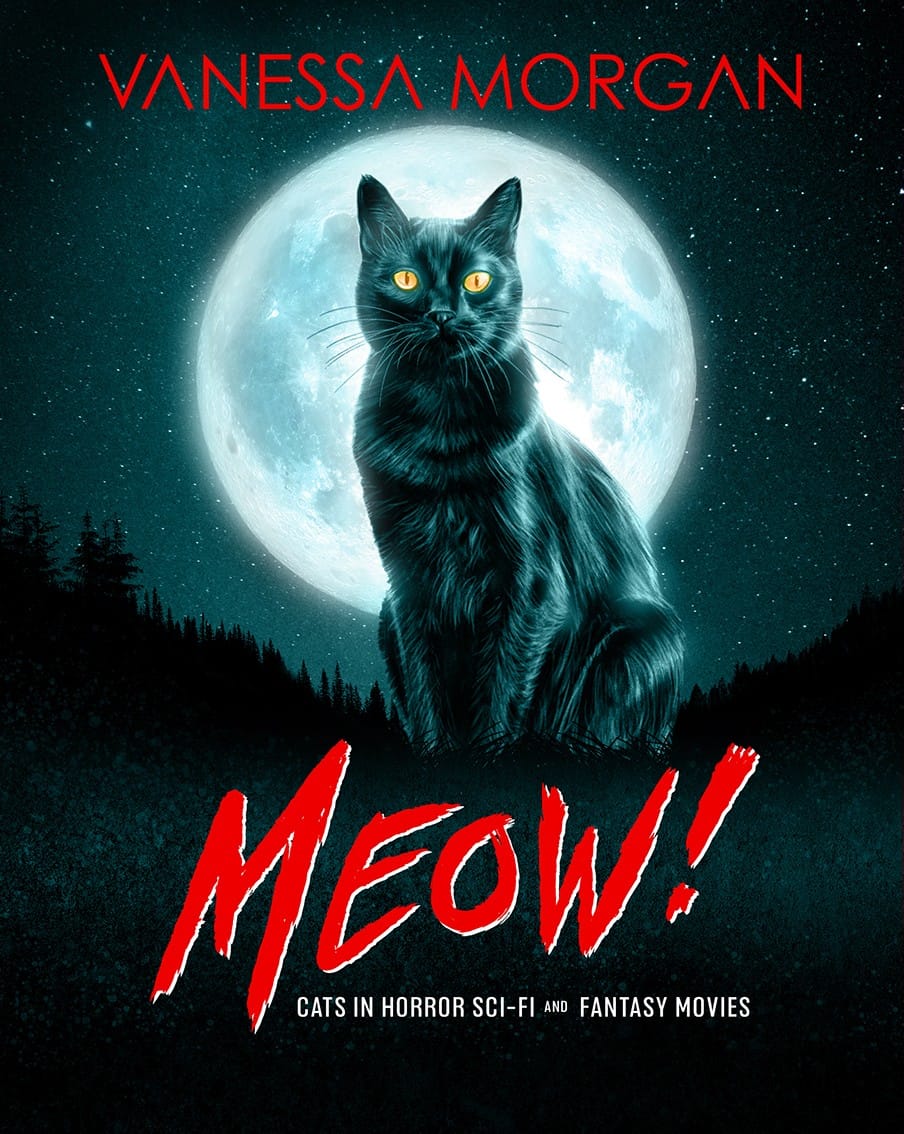
Meow! Cats in Horror, Sci-Fi, and Fantasy Movies
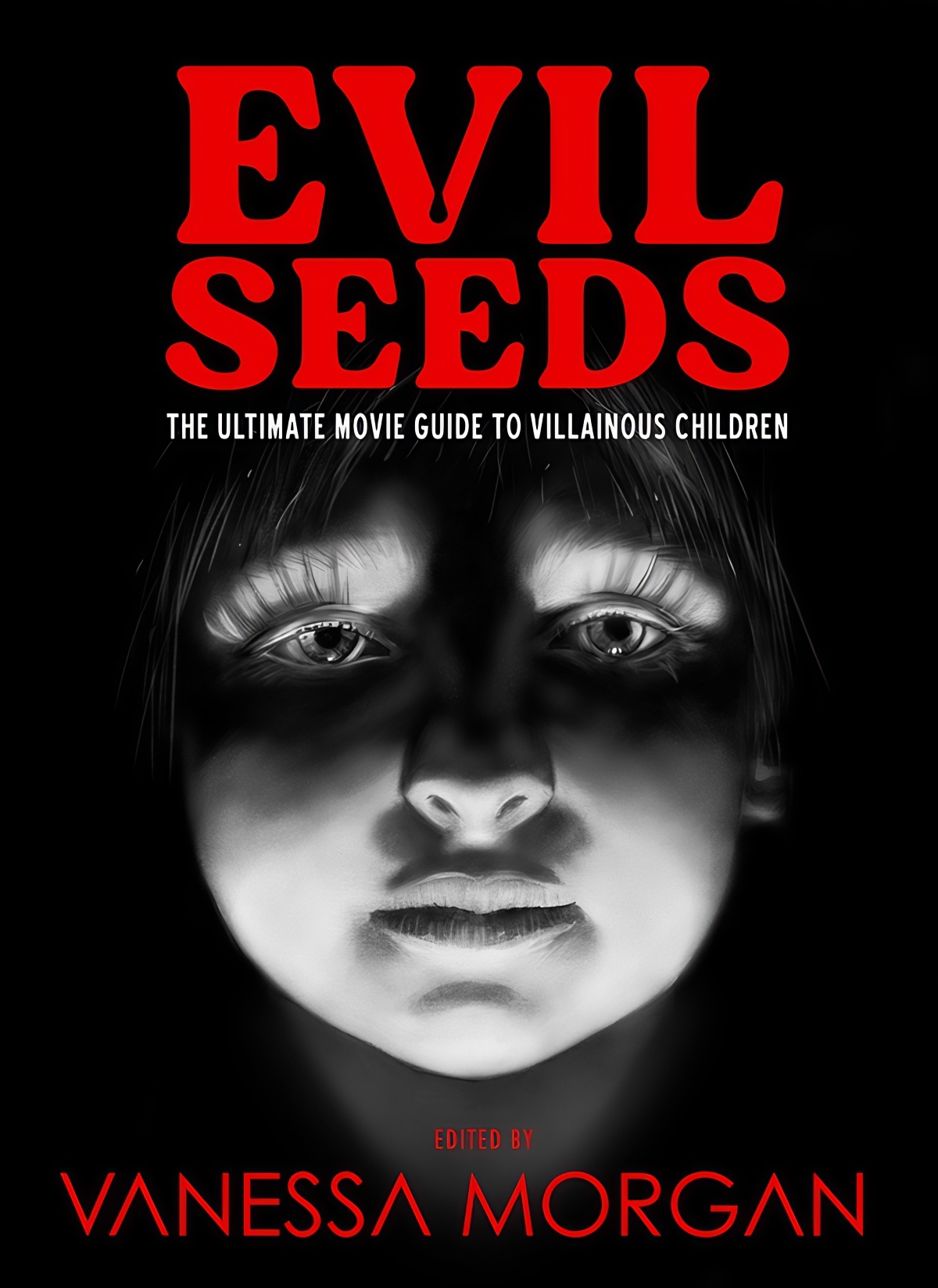
Evil Seeds: The Ultimate Movie Guide to Villainous Children
Strange Blood: 71 Essays on Offbeat and Underrated Vampire Movies