The Black Cat (1981): Lucio Fulci’s Cult Horror Classic
Lucio Fulci’s The Black Cat (1981) follows a medium whose mysterious connection to a vengeful cat unleashes a wave of brutal murders in a quiet English village.
The Black Cat
Director: Lucio Fulci
Countries: Italy, UK
Lucio Fulci’s Career Shift From Giallo Thrillers to Supernatural Horror Masterpieces
During the late 1970s, two films would form the basis of a significant change in Lucio Fulci’s career as a director. The Psychic aka Sette note in nero (1977) saw Fulci steering a thrilling mystery plot straight into the supernatural for the first time. This effort bridged the gap between his two most acclaimed gialli—the lusciously psychedelic, psycho-sexually flavored A Lizard in a Woman’s Skin (1971) and the controversial, sinful shocker Don’t Torture a Duckling (1972)—and the full submersion into otherworldly horrors from his most successful early 1980s chapter.
The other film that solidified this transition was Zombie Flesh Eaters (1979). It gained notorious fame under the title Zombi 2, a name given by Italian producers to capitalize on the success of George Romero’s Dawn of the Dead (1978), which had been co-produced by Dario Argento and released in Europe with a Goblin-scored cut entitled Zombi. Due to its graphic gore effects, Zombie Flesh Eaters established Fulci as a director unafraid to push boundaries.
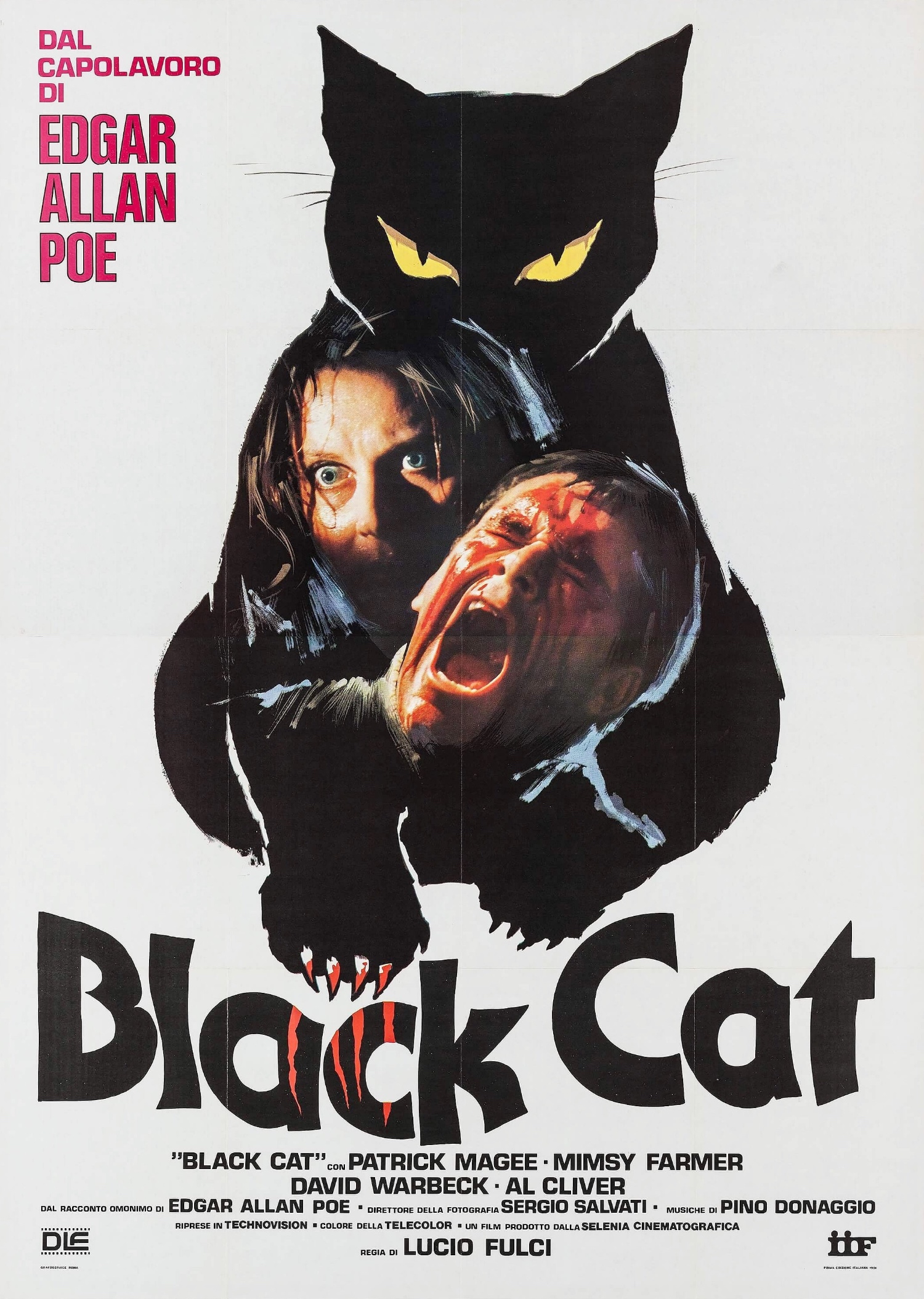
Fulci’s imaginative brand of haunting tales, boosting atmospheric flair and excessive sanguine exploits, would soon be honed to perfection in what many consider his threesome of masterpieces known as the “Gates of Hell” trilogy: City of the Living Dead (1980), The House by the Cemetery (1981), and The Beyond (1981).
During these two years—without even mentioning his poliziottesco outing Contraband (1980)—Fulci also delivered a fourth film that ranks among his best work from the 1980s. For the longest time, however, The Black Cat remained overshadowed by the word-of-mouth popularity of Zombie Flesh Eaters and the critical acclaim for the “Gates of Hell” trilogy.
Re-Appraisal Via DVD, Blu-Ray Restoration, and International Distribution
Although The Black Cat received distribution, both theatrical and on the VHS rental market, it was not until the film was restored for re-release on DVD and Blu-ray that it would receive more acknowledgment and appreciation. The Black Cat also secured something none of the above Fulci films managed to pull off: a distribution deal on Dutch cable TV broadcasting networks.
Perhaps this additional distribution feat can be attributed to the involvement of London-based associate producer Harry Alan Towers—a frequent Jesús Franco collaborator— as it was the only time he became associated with a Fulci film (together with Italian producer Giulio Sbarigia).
Speculations aside, the fact remains that not too much is known about how production for The Black Cat came together. Allegedly, Fulci took on directing duties as a favor to the producers. However, he had not worked with them before this film, nor would he do so after.
Gothic England Meets Italian Horror: Filming Locations and Visual Atmosphere
Production-wise, The Black Cat‘s atmosphere benefits enormously from various UK filming locations, including the small village of Hambleden and the West Wycombe Park area. Other scenes, mainly interiors, were filmed in Rome, Italy.
What makes all these sequences match perfectly into a visually attractive and consistently moody whole is the film’s first secret weapon and why The Black Cat is up there with Fulci’s more accomplished films: Sergio Salvati’s cinematography.
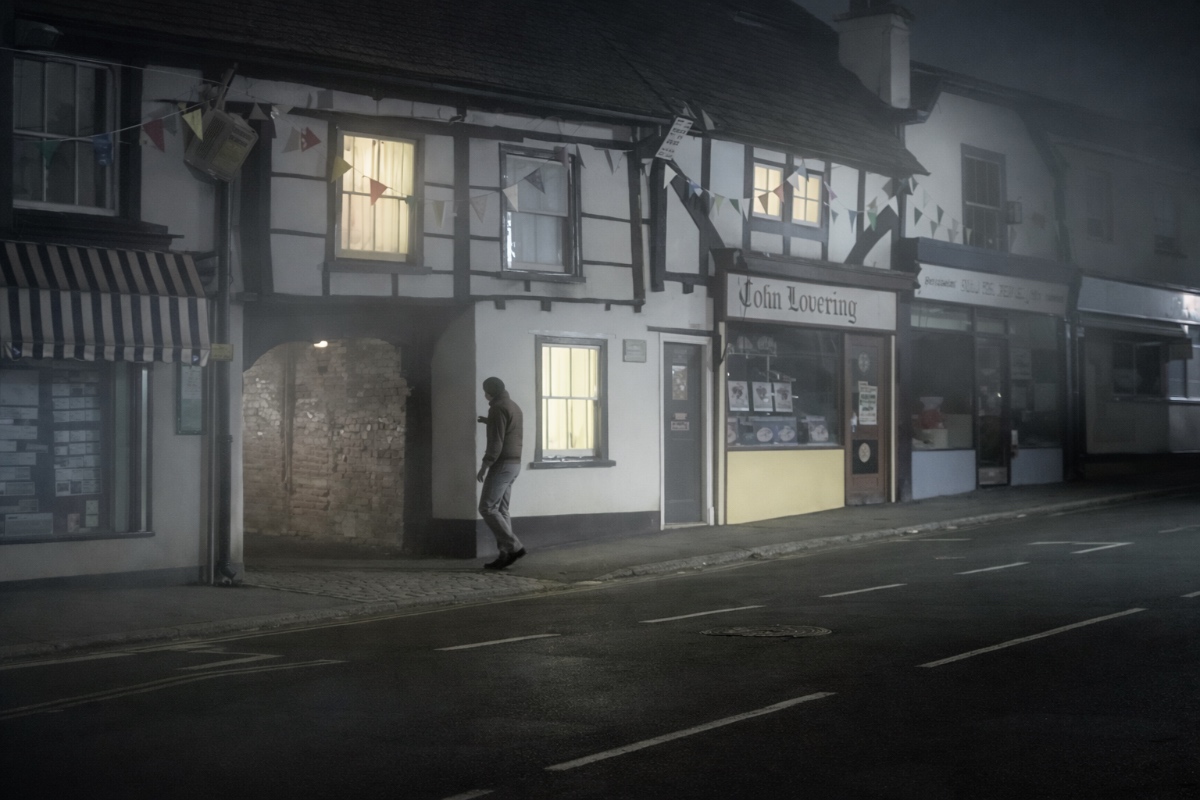
The plot is surprisingly straightforward, making it a more accessible film. Still, Fulci applies some delicious nightmarish logic in certain scenes, often with great visual flair, enhanced by Salvati’s keen eye for shadowy lighting setups. At other times, common sense is thrown out the window—usually in scenes where police officers visit the crime scene and draw conclusions.
Freely Adapted From Edgar Allan Poe’s Short Story
The opening titles mention “freely adapted from Edgar Allan Poe’s short story,” which is, by all means of intent, a respectful announcement. Poe’s original story, written from a first-person point of view, is an anxious descent into madness. It is a psychologically claustrophobic tale of a man who is at odds with his cat, losing his mind in a ghastly fashion during the process, and ultimately murdering his wife. Writer Biagio Proietti’s deviating screenplay constructs a much broader story, with the village’s residents contributing to the supernatural revenge plot.
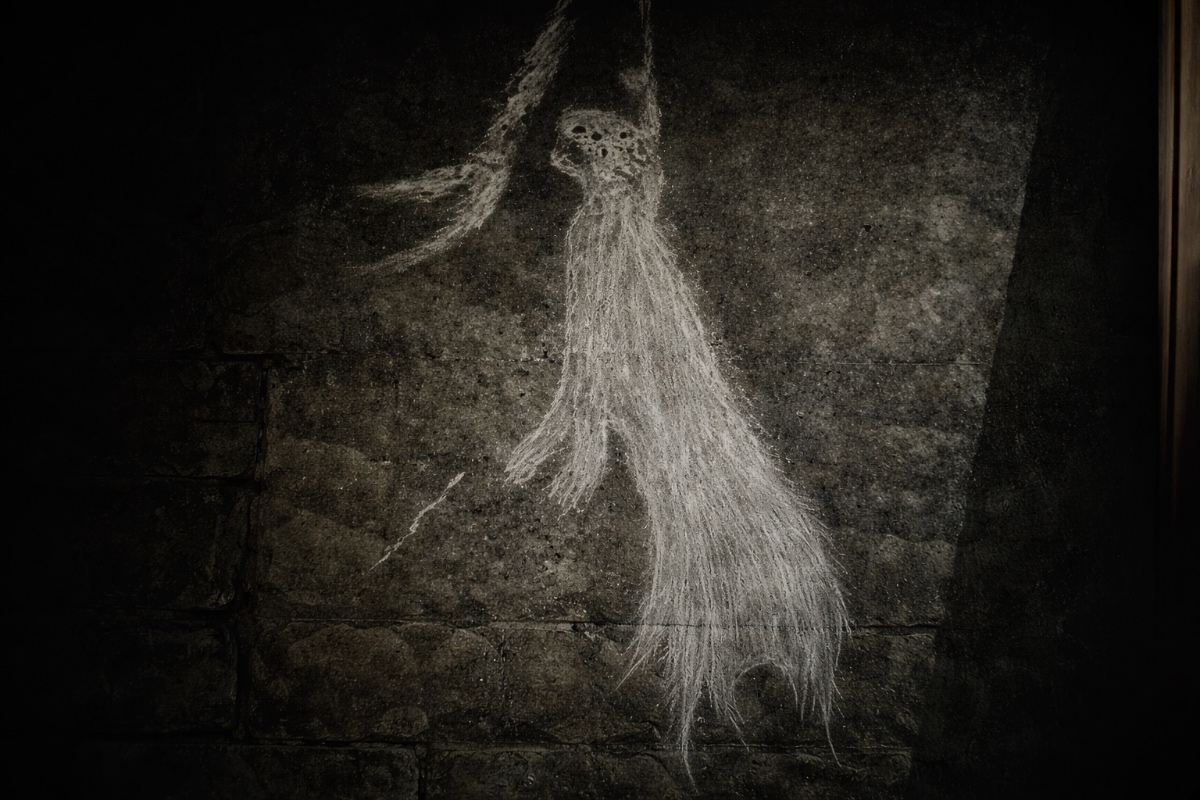
Fulci also finds moments to draw vividly from Poe’s source material, especially those that inspire strong visual adaptations. He translates these parts imaginatively onto the screen, like the shadows of a roped cat on a wall (after it died, hung from a tree) and the revelatory find of a walled-in victim (when the cat’s cries alert police officers about the crime). Our dark feline is played out like a solid thread, tying the mystery of murders together. And when it comes to the animal’s screen time, you will get your money’s worth.
This evil cat performs a narrative function like the black-gloved assailant in a giallo or the stalking killer in a slasher. So rest assured, there are enough gruesome creative, well-timed deaths, and the black cat is responsible for all of them. A few highlights among the slaughtered villagers: a fiery car crash has the driver bursting through the windshield, a horny teenage couple suffocates, their corpses munched on by rats, a drunk bar customer falls to his death, impaled on spikes, and a woman is set on fire before jumping out a second-floor window.
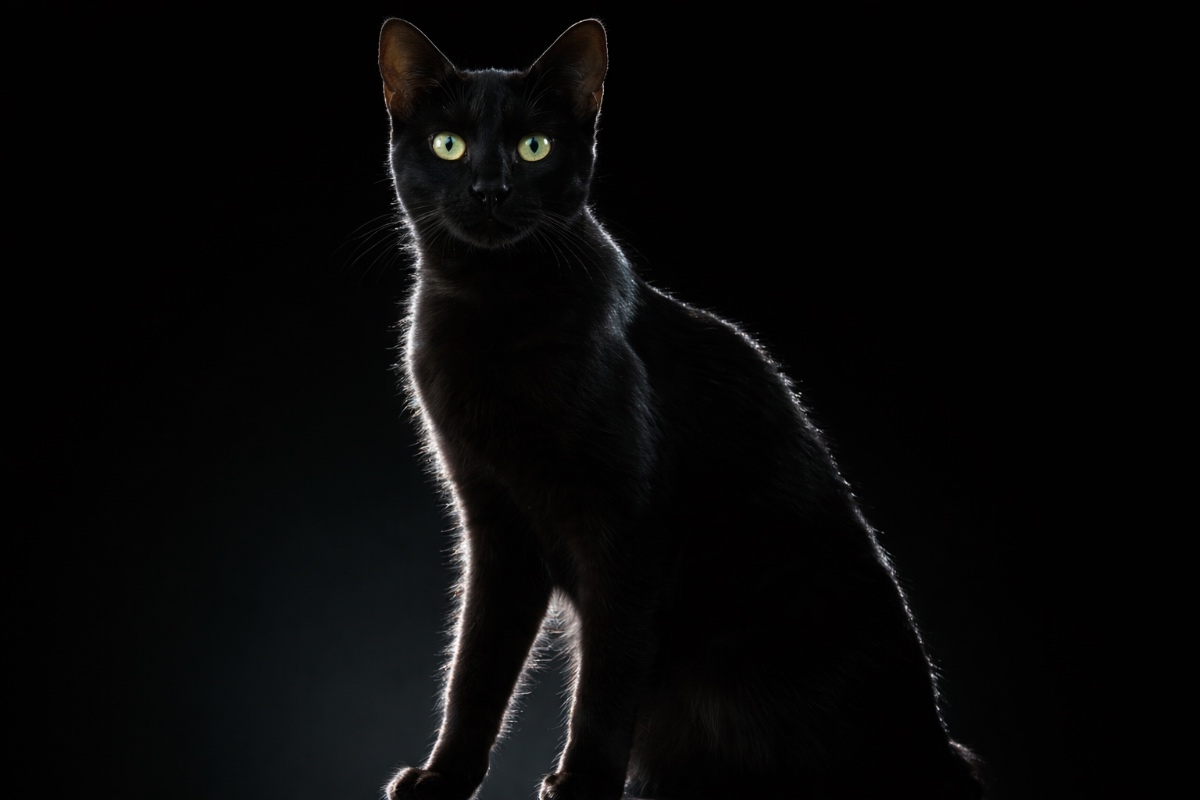
The opening credits are likely to stay with you as well. They present the title logo superimposed over a lean black cat strolling over the picturesque Hambleden rooftops, through the narrow village streets, and into an old mansion on the outskirts of the village.
And while our black furry lead guides us, we are accompanied by the film’s second secret weapon: Pino Donaggio’s music score. It is frivolous, inviting, and charming at first. Then, later on, it adequately provides more classic-sounding thrills on strings for suspense.
Innovative Cat POV Cinematography
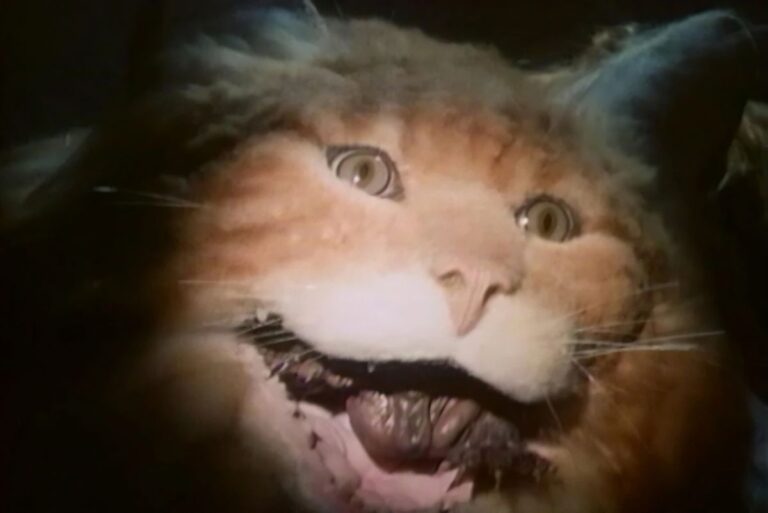
Thanks to the cinematographer’s inventive efforts, our black furriness also comes with a cat-cam or cat-vision. Whenever the cat goes on the prowl, we occasionally see things from its point of view—the camera moving around slowly, subjective POV shot close to the ground, with a special filter on the lens. It works well in building up tension before the killings occur.
As a supernatural feline entity, its skills are unfathomable. It can pass through a tightly locked grill, blow a fuse, and steal a key; it can turn off an air conditioning ventilator and set a house on fire; it can be hanged and buried, then come back to life and continue its merry killing ways. This cat can even hypnotize you and magically appear and disappear. Whatever it does, the outcome remains the same: you see this cat, you die.
However, why it goes on a killing spree across town is more complicated.
Patrick Magee as Robert Miles: Occult Medium and Gothic Villain
Enter the only character somewhat transported from Poe’s original story: Robert Miles (Patrick Magee). He is a former college professor and spiritual medium able to communicate with the dead. He has become a disgruntled recluse, and his aura is suspiciously morbid. Magee marvels at being sinister, uttering lofty dialogue with his deep, gravelly voice.
Our black cat has an extrasensory connection with Miles, and here is where things get a little fuzzy. It is not explained as a telepathic link but as an evil manifestation of Miles’ hatred toward the villagers. He uses the cat as a vessel for an evil force and applies hypnosis to exercise his will over it. Powers from beyond the grave must also be involved, given Miles’ conversions with the dead and the fact that the killer cat can move about almost ghostly.
However, Miles and the cat are not on friendly terms. In an early scene, the latter attacks and scratches him during an unsettling try to hypnotize Jill Trevers (Mimsy Farmer). His subsequent futile attempt to kill the black cat only worsens the evil powers that bind them to the point they become too strong for Miles to control. As a result, our black feline cheats death itself and now has a score to settle with Miles.
The Cast: David Warbeck, Mimsy Farmer, and Al Cliver
A Scotland Yard detective (David Warbeck) comes to the village to investigate. The first thing he does—after he arrives on his motorcycle and gets a speeding ticket—is go to the local pub for some beers. Contrary to his drinking habits, his remarks remain surprisingly sober: “Hmm. An epidemic of accidents. And all of them pretty weird.” Warbeck is nonetheless good and visibly comfortable in his role as Inspector Gorley.
Moreover, Fulci has also gone on record, stating that he has always had a good understanding with Warbeck, with whom he has had the most pleasant working collaborations.
Mimsy Farmer is equally no stranger to Italian genre cinema and provides a welcome addition to the cast as Jill Trevers, an American photographer visiting the village’s ruins and crypts for a reportage. Her character is by far the most sensible and her portrayal the most sensitive. More open-minded to the village’s supernatural goings-on, her investigating efforts will have her discovering things before anyone else.
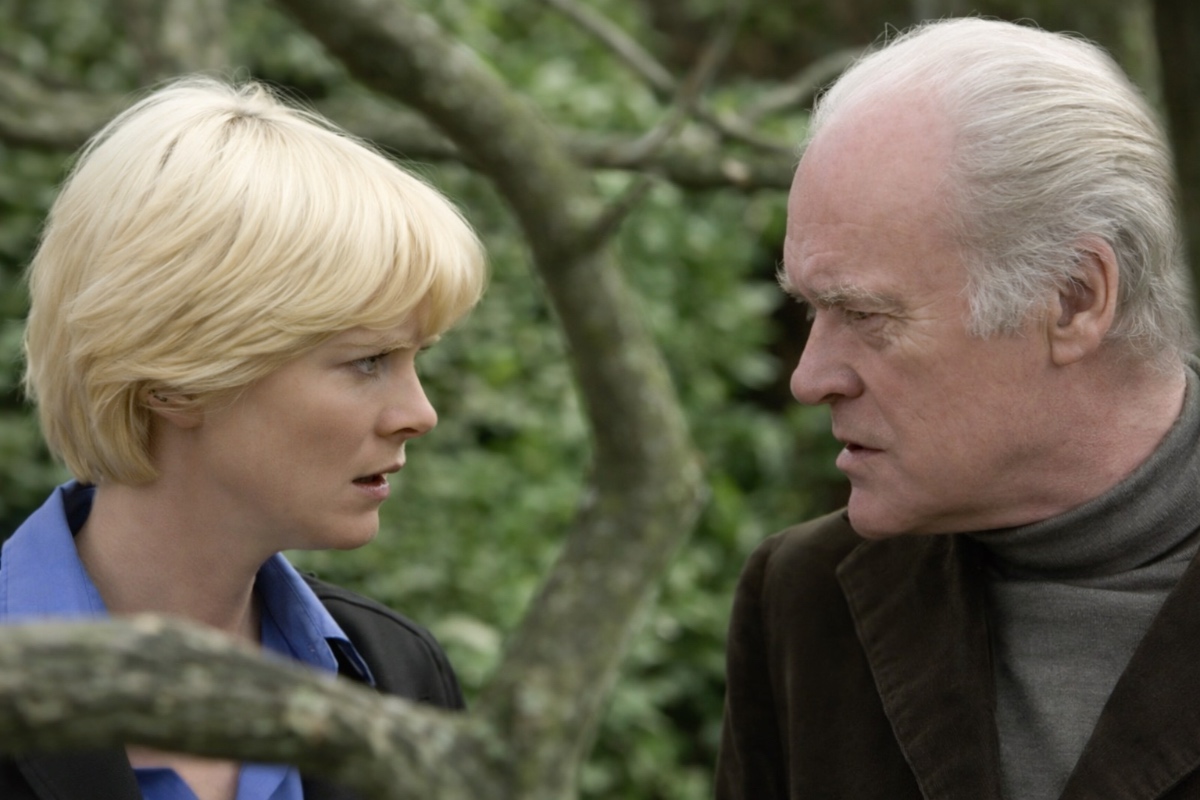
The casting of Warbeck and Farmer and the parts they play are well-balanced. Farmer gets a first-name appearance over Warbeck during the opening credits, and Jill Trevers is also introduced first, while Inspector Gorley does not appear until approximately 20 minutes into the movie.
The two have some entertaining interactions. In a scene where Gorley is at Jill’s place, discussing her discoveries, he says, “Do you honestly expect me to go down to London and tell them all this? Hmm. I know what my boss would have to say. I haven’t been off the bottle since I have been down here.” Then Mimsy replies, “Maybe you wouldn’t say that if you drank a little bit less.” This pretty much translates to: I acknowledge your drinking problem, but I will sleep with you anyway. Several cheesy lines of dialogue later, she kisses him.
Gorley does not escape the black cat’s murderous attempts either. After those moments of intimacy at Jill’s place, he walks the nightly streets home. The black cat appears, attacking and scratching his face. It inexplicably shifts places left and right, above and below. It stares him down and mesmerizes him, then causes a car to smash into him—a fine transition cut from the feline’s eyes to the approaching car’s headlights. Gorley should have stayed the night and enjoyed breakfast with Jill.
Italian actor Pierluigi Conti—also known as Al Cliver, a regular in many Fulci films—stands out as a pleasant addition to the cast. He plays Sgt. Wilson, the bicycle-riding officer who welcomes Gorley with a speeding ticket. With his thick British countryside accent—dubbed by voice actor and editor Nick Alexander—Wilson comes across as a jolly good chap. His calm and friendly demeanor is fun to watch, especially when he quips that the dead around here “are not very hospitable” before cheerfully wishing Farmer a good day.
Is Fulci’s The Black Cat (1981) Worth Watching?
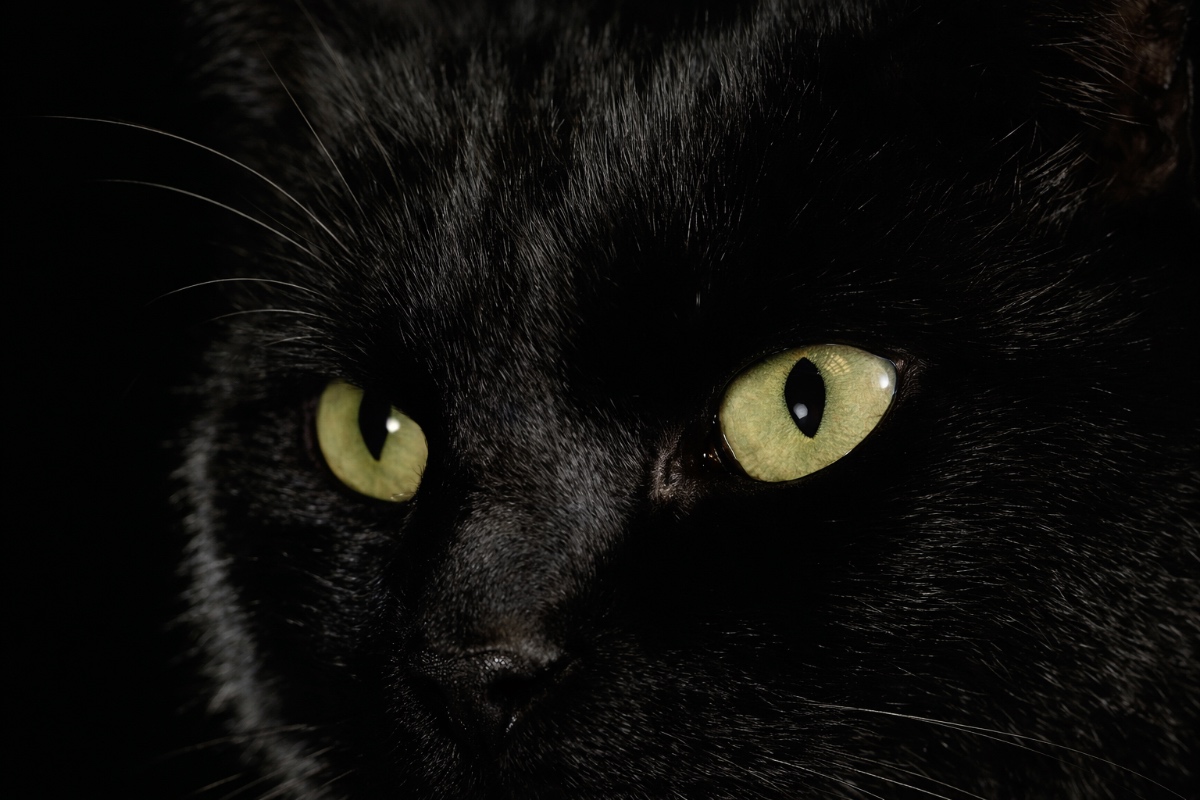
Be prepared for the terrible amount of eye communication. Fulci’s use of eye close-ups exceeds and transcends the trademark visual style from the Italian western genre (where it was used for tension-building) and differs from his gory focus on eyeball mutilations in films like Zombi 2 and The Beyond.
In The Black Cat, however, he uses it as a visual narrative tool to form connections between characters and events. Even regular dialogue scenes apply intense close-ups of people’s eyes instead of the more conventional over-shoulder shots. This becomes relevant when the conversations reveal valuable information or delve into hypnotizing trickery.
Feline-loving audiences can rejoice, too, as there are many shots of the black cat’s eyes whenever it appears.
The Black Cat (1981) Movie Trailer
Where to Watch Fulci’s The Black Cat (1981)? Blu-ray, Streaming, and Collector’s Editions
Here are the current ways to watch or own The Black Cat (1981):
Streaming and Digital Viewing
You can stream an uncut version of The Black Cat on the subscription horror service Shudder. However, it is not listed on Amazon Prime Video.
Physical Media — Blu‑Ray and DVD
The Black Cat is available for purchase on both Blu-ray and DVD. As of now there is no official 4K Ultra‑HD release of The Black Cat (1981) .
Explore More Horror Movies Featuring Black Cats
Looking for more horror movies about black cats? Start with these entries below:
About the Author
GERT VERBEECK is a Belgian writer, director, producer, and musician. He received his film education at LUCA School of Arts, Brussels, and continued with The Polish National Film School, Lodz. He likes his literature, motion pictures, and music diverse, nuanced, and intense.
His independent production floor, Amoeba Pictures, offers non-exclusive creative contributions to local projects and international co-productions. Sharksploitation (Sitges Film Festival 2023, official selection) and Backgammon (BIF Market 2023, WIP section) are among the more recent collaborations.
Gert was co-founder and chief editor of the alternative genre film website Cult Reviews (2008-2016). His writings include contributions to the bi-monthly printed HorrorHound magazine (2011-2012) and 23 film essays published in five movie reference books (2007-2021).
He is also a frequent collaborator behind the scenes of the HORROR 101 with Dr. AC film podcast series.
Other cat movie reviews by the same author:
Check out Gert Verbeeck’s latest writings in the book Meow! Cats in Horror, Sci-Fi, and Fantasy Movies.